
Steel sculpture for Filey - A High Tide In Short Wellies, by artist Ray Lonsdale, The Beach Rd, Filey, North Yorkshire, England, UK, YO14 9LW
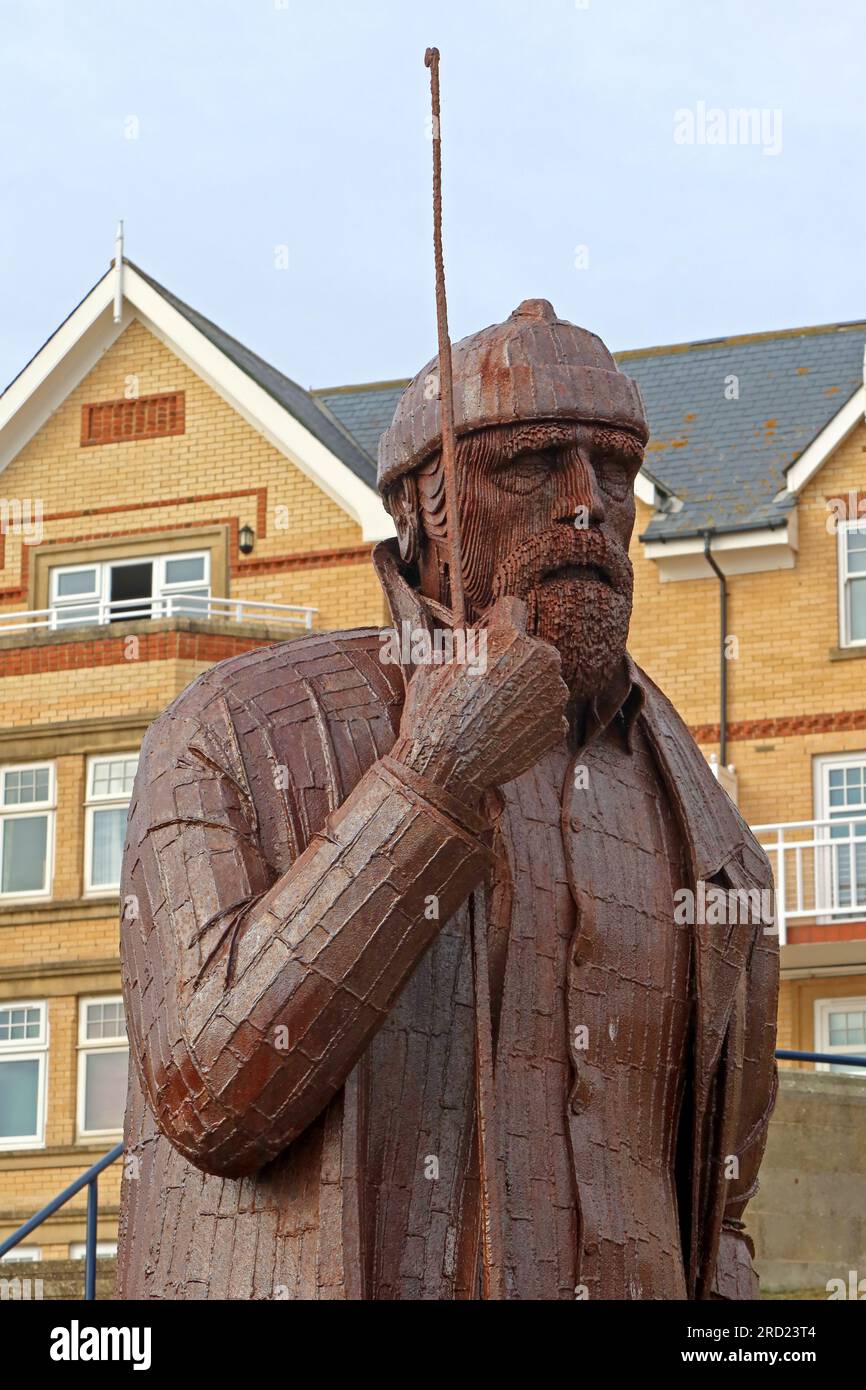
Image details
Contributor:
Tony SmithImage ID:
2RD23T4File size:
57.1 MB (2.1 MB Compressed download)Releases:
Model - no | Property - noDo I need a release?Dimensions:
3648 x 5472 px | 30.9 x 46.3 cm | 12.2 x 18.2 inches | 300dpiDate taken:
25 September 2022Location:
The Beach Rd, Filey, North Yorkshire, England, UK, YO14 9LWMore information:
. Steel sculpture for Filey - A High Tide In Short Wellies, by artist Ray Lonsdale, The Beach Rd, Filey, North Yorkshire, England, UK, YO14 9LW. Photographed on 25 September 2022. A larger than life 12 feet weathering steel figure of a fisherman holding a fishing rod whilst gazing out to sea. At his feet is a fish wrapped in paper. Ray Lonsdale's A High Tide in Short Wellies is a larger-than-life weathering-steel fisherman, about 12 feet high, installed at Filey's Coble Landing. The figure looks towards the North Sea with a fishing rod, while a wrapped fish at his feet refers to the town's fishing tradition and the decline of the old inshore industry. The sculpture is both public art and an interpretation of Filey's working maritime past, using rust-coloured steel that weathers naturally in the coastal environment. The historical context is that art in public and historic settings adds another layer to the built environment; Sculpture, mosaic, painting and street art can interpret heritage, provoke debate, memorialise communities or create landmarks, and images preserve works that may later change or disappear. Looking at the subject's development, landscape photographs record more than scenery: buildings, vegetation, weather, transport and land use combine to show how a place appeared at a specific moment; Repeated views can later become valuable evidence of development, environmental change and shifting patterns of use. From a heritage perspective, popular destinations are shaped by repeated waves of visitors, transport investment and changing ideas of leisure; Beaches, resorts, historic streets and attractions can therefore be read as both travel imagery and social history. The subject remains topical in 2026 because contemporary interest in public art is closely linked to regeneration and cultural tourism. Other closely matched search terms include mural, artwork, visual culture, cultural identity, place-making, community art, and urban art.

