
NIdirect e-car chargepoint at Main St, Bushmills, county Antrim, Northern Ireland, UK, BT57 8QB
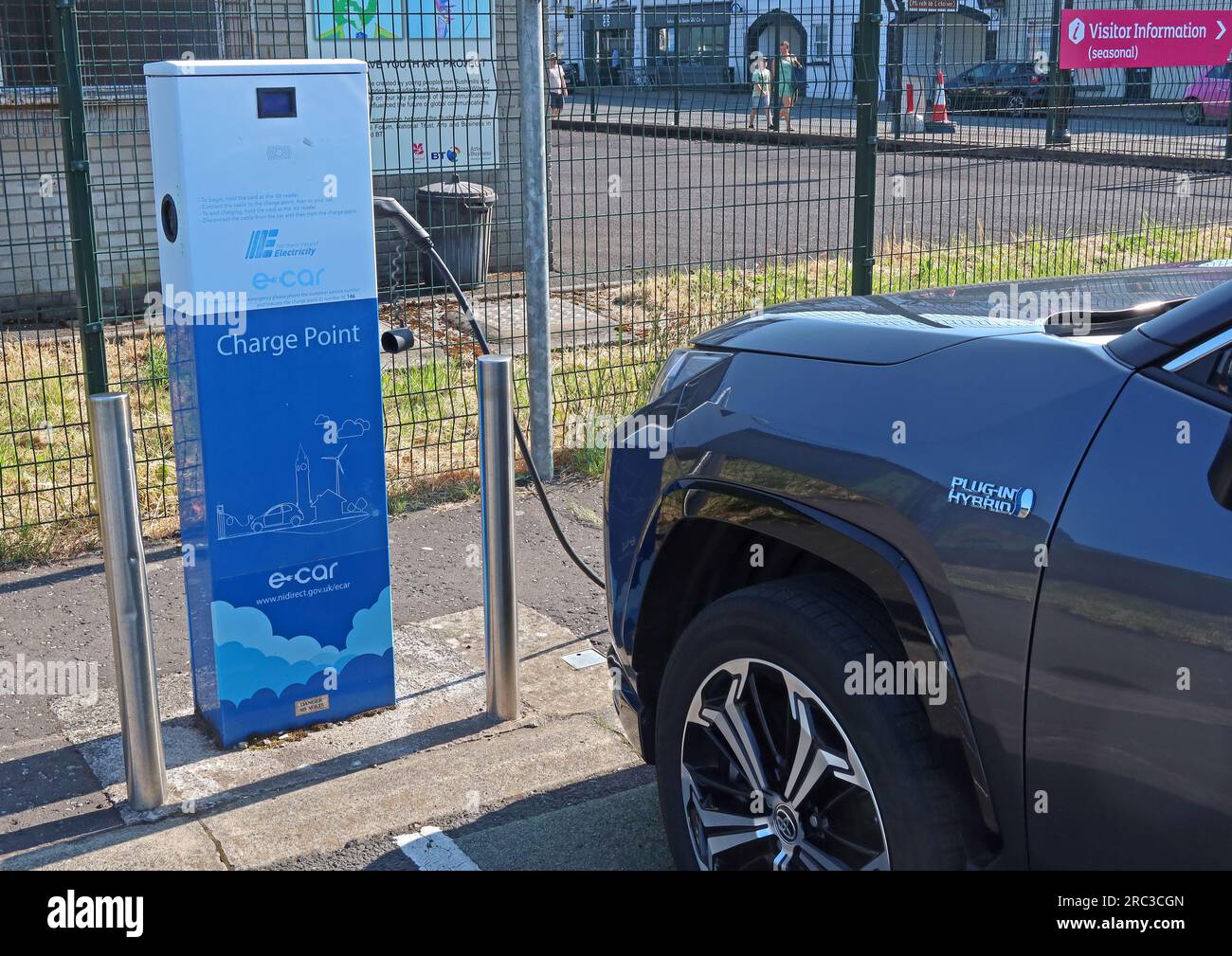
Image details
Contributor:
Tony SmithImage ID:
2RC3CGNFile size:
53.9 MB (2.9 MB Compressed download)Releases:
Model - no | Property - noDo I need a release?Dimensions:
5160 x 3648 px | 43.7 x 30.9 cm | 17.2 x 12.2 inches | 300dpiDate taken:
22 June 2023Location:
Main Street, Bushmills, Northern Ireland, BT57 8QBMore information:
. NIdirect e-car chargepoint at Main St, Bushmills, county Antrim, Northern Ireland, UK, BT57 8QB. Photographed on 22 June 2023. The recorded location is Main Street, Bushmills, Northern Ireland, BT57 8QB. The electric vehicle (EV) publicly-accessible charge point network in Northern Ireland is operated on a commercial basis, with the majority of charge points owned by the Electricity Supply Board (ESB). The historical context is that public electric-vehicle charging developed from a small number of early demonstration networks into national infrastructure as battery cars became mainstream; Older charging posts record the first phase of transition away from petrol and diesel, including differing networks, connectors, branding and payment systems. The historical context is that everyday journeys depend on an evolving network of vehicles, stops, stations and roads; Buses, cars, ferries and trams can become historical subjects within a few years as operators rebrand, fleets are replaced and infrastructure is rebuilt. The historical context is that cars and garage equipment are part of twentieth-century material culture; Imported American models, British registrations, oil-company branding and automated car washes each represent different aspects of the expanding motoring economy. The subject remains topical in 2026 because public charging is established transport infrastructure across the UK, with Department for Transport statistics tracking rapid expansion month by month; Coverage, reliability, pricing and access remain significant issues, particularly in rural areas and for drivers without off-street parking. The subject remains topical in 2026 because transport is undergoing a gradual shift towards lower-emission vehicles, better public-transport integration and active travel; Earlier buses, cars and infrastructure therefore help illustrate both continuity and technological transition.

