
Kendalls Hall apartments, a converted historic building on New End in Hampstead, north London, England, UK , NW3 1DR
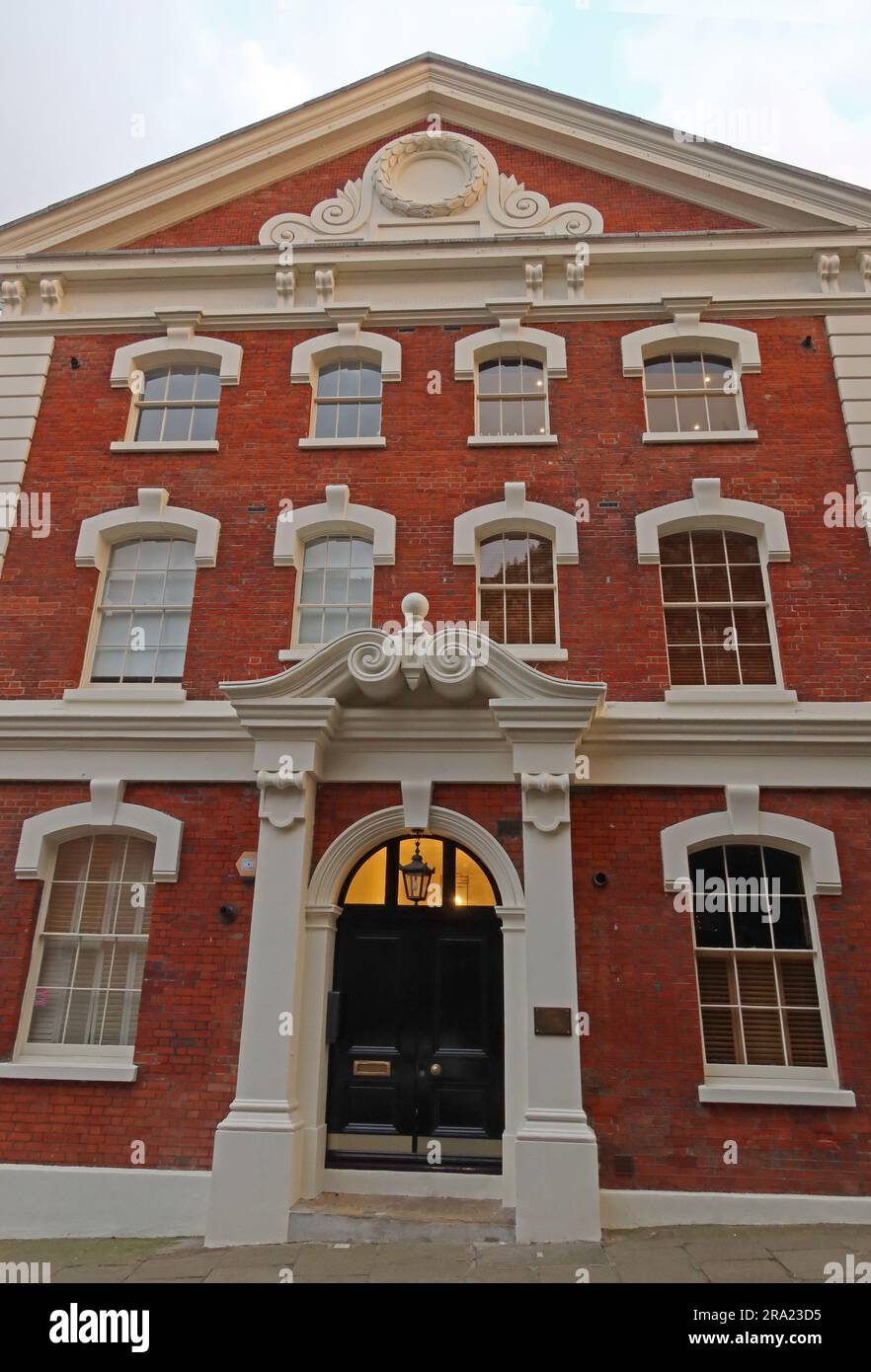
Image details
Contributor:
Tony SmithImage ID:
2RA23D5File size:
56.1 MB (1.7 MB Compressed download)Releases:
Model - no | Property - noDo I need a release?Dimensions:
3648 x 5376 px | 30.9 x 45.5 cm | 12.2 x 17.9 inches | 300dpiDate taken:
19 May 2023Location:
Kendalls Hall Apartments, 8 New End, Hampstead, London, England, United Kingdom , NW3 1DRMore information:
The exterior of Kendalls Hall Apartments at 8 New End in Hampstead, north London. The red brick building features a formal, symmetrical facade with white stone dressings, sash windows and a prominent central entrance framed by classical detailing, reflecting the architectural language of late Georgian or early Victorian institutional buildings. Originally constructed for non-residential use, the building has since been converted into private apartments, a common pattern in Hampstead where historic structures have been adapted for contemporary residential living. Its location on New End places it within one of Hampstead’s conservation areas, characterised by a mix of village-scale streets, period buildings and long-established residential use. Photographed in natural daylight, the image documents the reuse of historic architecture within London’s housing stock. It illustrates themes of heritage preservation, adaptive reuse, and the continuing demand for residential space within established north London neighbourhoods. Features : Red brick facade with white stone detailing, Central entrance with classical pediment Symmetrical sash windows Residential conversion signage by form and use. Kendalls Hall at 8 New End, Hampstead is a substantial late-Georgian / early-Victorian institutional building whose formal red-brick façade and classical detailing reflect its original use for organised communal or educational purposes rather than private housing. Like many large buildings in Hampstead, it was later rendered obsolete by changes in social provision and land use, and during the 20th century was converted into private apartments, a process that preserved its external architectural character while adapting the interior for residential living. Today the building stands as a typical example of Hampstead’s pattern of adaptive reuse, where former institutional architecture has been absorbed into the area’s residential fabric, retaining a strong visual link to history

