
We always knew who was Essential - The working class, 96-98 High St, Belfast , Northern Ireland, UK, BT1 2AG
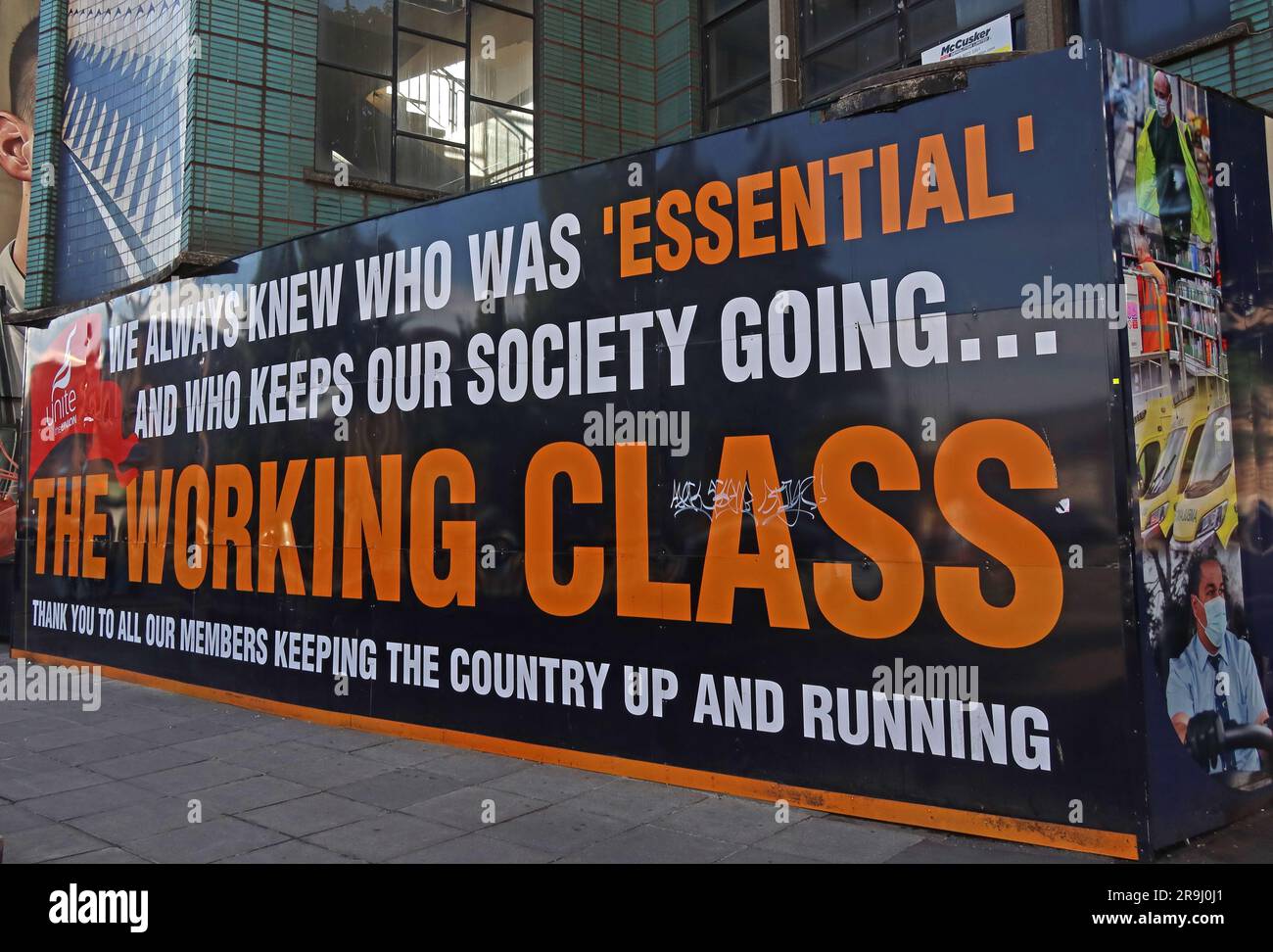
Image details
Contributor:
Tony SmithImage ID:
2R9J0J1File size:
47.9 MB (1.5 MB Compressed download)Releases:
Model - no | Property - noDo I need a release?Dimensions:
4968 x 3372 px | 42.1 x 28.5 cm | 16.6 x 11.2 inches | 300dpiDate taken:
24 June 2023Location:
96-98 High St, Belfast , Northern Ireland, UK, BT1 2AGMore information:
A key worker, critical worker or essential worker is a public-sector or private-sector employee who is considered to provide an essential service. The term has been used[when?] in the United Kingdom in the context of workers who may find it difficult to buy property in the area where they work. The term was also used by the UK government during announcements regarding school shutdowns invoked in response to the COVID-19 pandemic to indicate parents whose occupations entitled them to continue sending their children to schools which were otherwise shut down by government policy, as well as teachers and LSAs at those schools. A key worker is a public sector or private sector employee who is considered to provide an "essential service". Key workers jobs that cannot be done remotely:- Energy. Many of the jobs in this field, which includes mining and oil extraction, cannot be done remotely. First responders. These are the people communities depend on in emergencies, such as paramedics, firefighters and police. Education and child care. Making sure children can grow academically even during a pandemic means vaccinating teachers, their support staff, and daycare employees. Agriculture and food production. Many of the outbreaks at the onset of the pandemic were in meatpacking facilities and other food-processing plants. Critical retail. (i.e. grocery stores, hardware stores, auto mechanics etc.). Keeping supermarket employees safe makes it possible for others to stay fed while restaurants are temporarily shut down. Critical trades. (i.e. construction workers, electricians, plumbers, etc.) Manufacturing. These jobs (producing goods) cannot be done remotely. Corrections workers. Prisons are the types of closed facilities where the coronavirus can spread quickly. Postal Service workers. This group makes sure vital packages get delivered, along with providing other key services. Public transit workers.

