
BT British Telecom public telephone, at platform 4, Crewe railway station, Nantwich Road, Crewe, Cheshire, England, UK, CW2 6HR
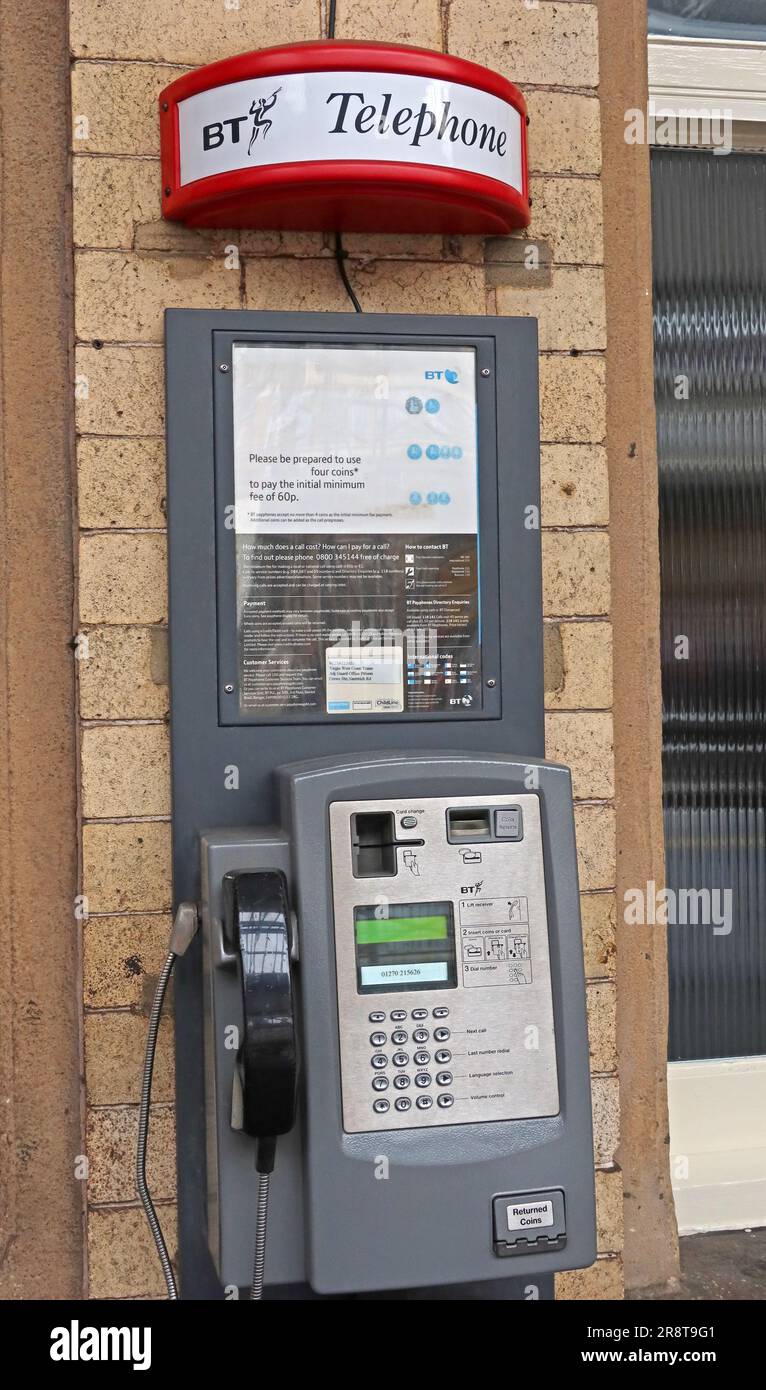
Image details
Contributor:
Tony SmithImage ID:
2R8T9G1File size:
48.2 MB (2.3 MB Compressed download)Releases:
Model - no | Property - noDo I need a release?Dimensions:
3152 x 5344 px | 26.7 x 45.2 cm | 10.5 x 17.8 inches | 300dpiDate taken:
19 May 2023Location:
Nantwich Road, Crewe, Cheshire, England, UK, CW2 6HRMore information:
Public British Telecom payphone located on platform 4 at Crewe railway station on Nantwich Road, Crewe, Cheshire. The telephone represents a once-familiar passenger facility from the period before mobile phones became widely available, when travellers relied on station payphones to contact relatives, arrange onward journeys, report delays or make urgent calls while away from home. The image can be interpreted as a “last chance to phone” scene, reflecting the declining presence of public telephones across railway stations, town centres and other shared public spaces. For much of the twentieth century, coin-operated and card-operated payphones formed an important part of Britain’s communications infrastructure. They offered access to telephone services for people without a home landline and provided a practical connection for passengers waiting between trains. The payphone’s location on a station platform places older telecommunications technology within a busy transport environment. Crewe has long been one of Britain’s most important railway junctions, and public telephones would once have been a routine feature among waiting rooms, ticket offices, refreshment facilities and passenger information points. Their use declined sharply as personal mobile phones and smartphones became the normal means of communication. Surviving station payphones now have historical and nostalgic interest as examples of everyday public infrastructure approaching obsolescence. They also raise questions about emergency access, digital exclusion and the continuing needs of passengers who may not own a mobile phone, have sufficient battery power or receive a reliable signal. The photograph is suitable for editorial coverage of British Telecom, public payphones, railway station facilities, communications history, technological change, mobile phone adoption, disappearing street furniture, analogue equipment, transport heritage and the transition from shared public services to personal digita

