
Grave of 78 sisters of Bethany, who died between 1912-1962, buried in Highgate Cemetery, London, Swain's Lane, N6 6PJ
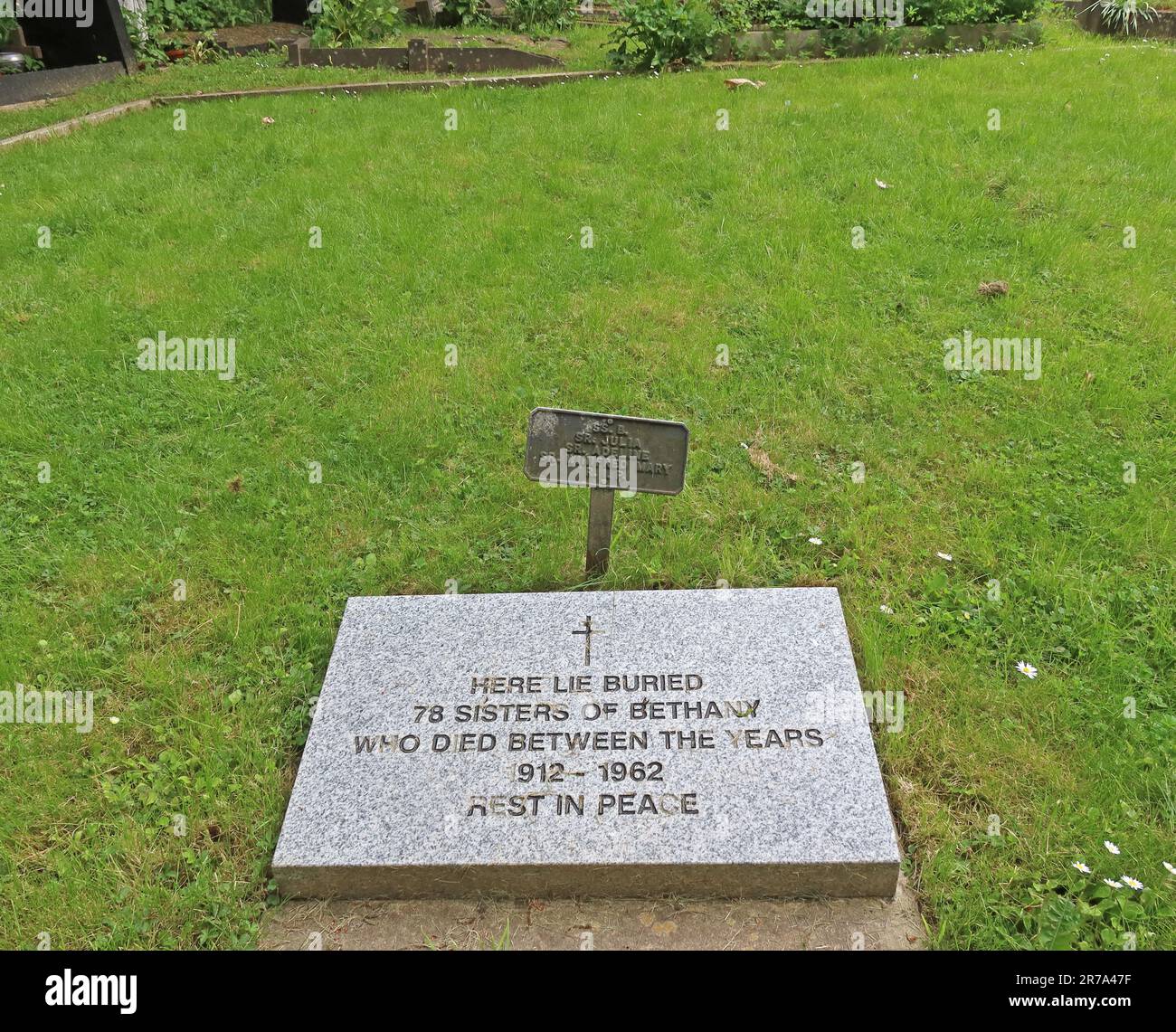
Image details
Contributor:
Tony SmithImage ID:
2R7A47FFile size:
47.1 MB (3.5 MB Compressed download)Releases:
Model - no | Property - noDo I need a release?Dimensions:
4512 x 3648 px | 38.2 x 30.9 cm | 15 x 12.2 inches | 300dpiDate taken:
19 May 2023Location:
Highgate Cemetery, Swain's Lane, London, England, UK, N6 6PJMore information:
. Grave of 78 sisters of Bethany, who died between 1912-1962, buried in Highgate Cemetery, London, Swain's Lane, N6 6PJ. Photographed on 19 May 2023. The recorded location is Highgate Cemetery, Swain's Lane, London, England, UK, N6 6PJ. The Sisters of Bethany, an order of Benedictine nuns affiliated with a convent beside the Tomb of Lazarus during the Crusades. The historical context is that historic inscriptions provide unusually direct documentary evidence; Names, dates, dedications and symbolic imagery can connect a present-day location with former residents, workers, congregations or wartime casualties, making the object relevant to both genealogy and wider social history. The subject remains topical in 2026 because interest in local history, genealogy and the conservation of memorials remains strong, while weathering, redevelopment and vandalism can threaten smaller monuments and inscriptions; Detailed photographs help preserve lettering, names and physical condition before further weathering or alteration. Historically, memorials and inscriptions are primary sources for community and family history, preserving names, dates, occupations, military service and the language of remembrance; They range from private graves to civic monuments and can reveal how communities chose to commemorate loss in different periods. In historical terms, commemorative plaques, gravestones and monuments transform individual or collective memory into a permanent feature of the landscape; Their wording, materials and location can illuminate genealogy, social history, military service and changing attitudes to public remembrance. From a heritage perspective, historic inscriptions provide unusually direct documentary evidence; Names, dates, dedications and symbolic imagery can connect a present-day location with former residents, workers, congregations or wartime casualties, making the object relevant to both genealogy and wider social history.

