
Royal Iris Mersey ferry, crosses the Liverpool waterfront panorama from Woodside, Birkenhead, Wirral, Merseyside, England, UK, CH41 6DU
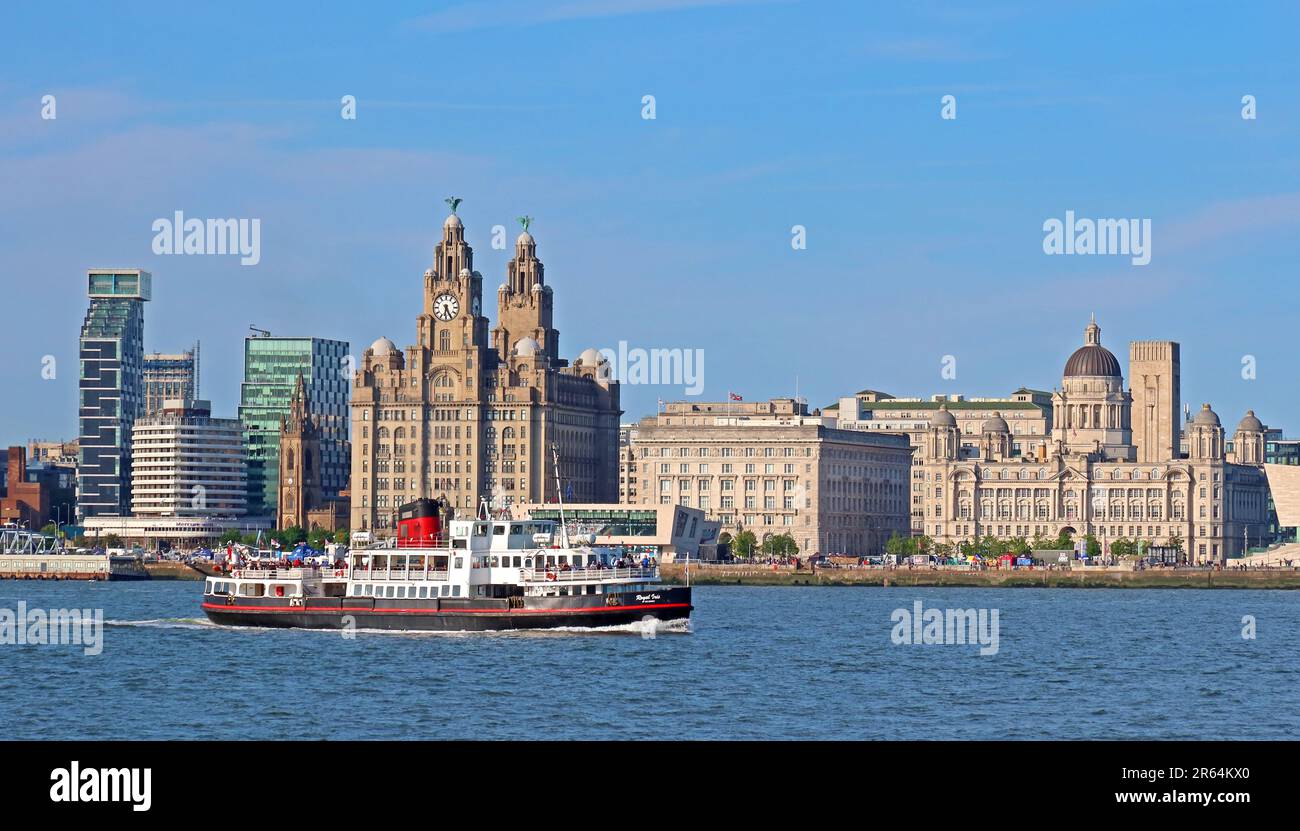
Image details
Contributor:
Tony SmithImage ID:
2R64KX0File size:
38.5 MB (1.5 MB Compressed download)Releases:
Model - no | Property - noDo I need a release?Dimensions:
4860 x 2772 px | 41.1 x 23.5 cm | 16.2 x 9.2 inches | 300dpiDate taken:
27 May 2023Location:
MV Royal Iris of the Mersey ferry passes Liverpool’s Three Graces waterfront skyline on the River MeMore information:
MV Royal Iris of the Mersey, a Mersey Ferry, seen operating on the River Mersey in front of Liverpool’s famous waterfront skyline, with the Three Graces visible behind: the Royal Liver Building, Cunard Building and Port of Liverpool Building at Pier Head. The ferry was originally launched in Devon in 1959 as MV Mountwood and carried that name until a major refurbishment in 2001, after which she returned to service in April 2002 as Royal Iris of the Mersey. Mersey Ferries describes the vessel as having a traditional white, black and red livery and a top speed of 12 knots. This image has strong editorial value for coverage of Liverpool tourism, Mersey Ferries, ferry across the Mersey heritage, river transport, sightseeing cruises, waterfront regeneration, maritime history, public transport, city breaks and the visual identity of the Liverpool City Region. The bright daylight, blue sky, calm river and clean panoramic view give the photograph broad use for travel features, guidebooks, transport stories, nostalgia pieces, heritage articles and stock searches connected with Liverpool’s port history. The Royal Liver Building’s clock towers and Liver Birds, together with the wider Pier Head frontage, place the scene firmly within one of Britain’s best known urban waterfronts. The image can also illustrate the cultural meaning of the Mersey ferry service, from everyday crossings and tourist cruises to the wider mythology of Liverpool music, docklands and maritime life. As Royal Iris of the Mersey has been one of the most recognisable vessels in the modern Mersey Ferries fleet, the photograph also works for stories about older passenger craft, ferry maintenance, heritage transport, local identity, river leisure and changing waterfront skylines. With no identifiable close-up passengers, the picture remains flexible for editorial and documentary use while the ferry name, skyline and location provide clear search value.

