
Early summer barley field growing in the Cheshire countryside, England
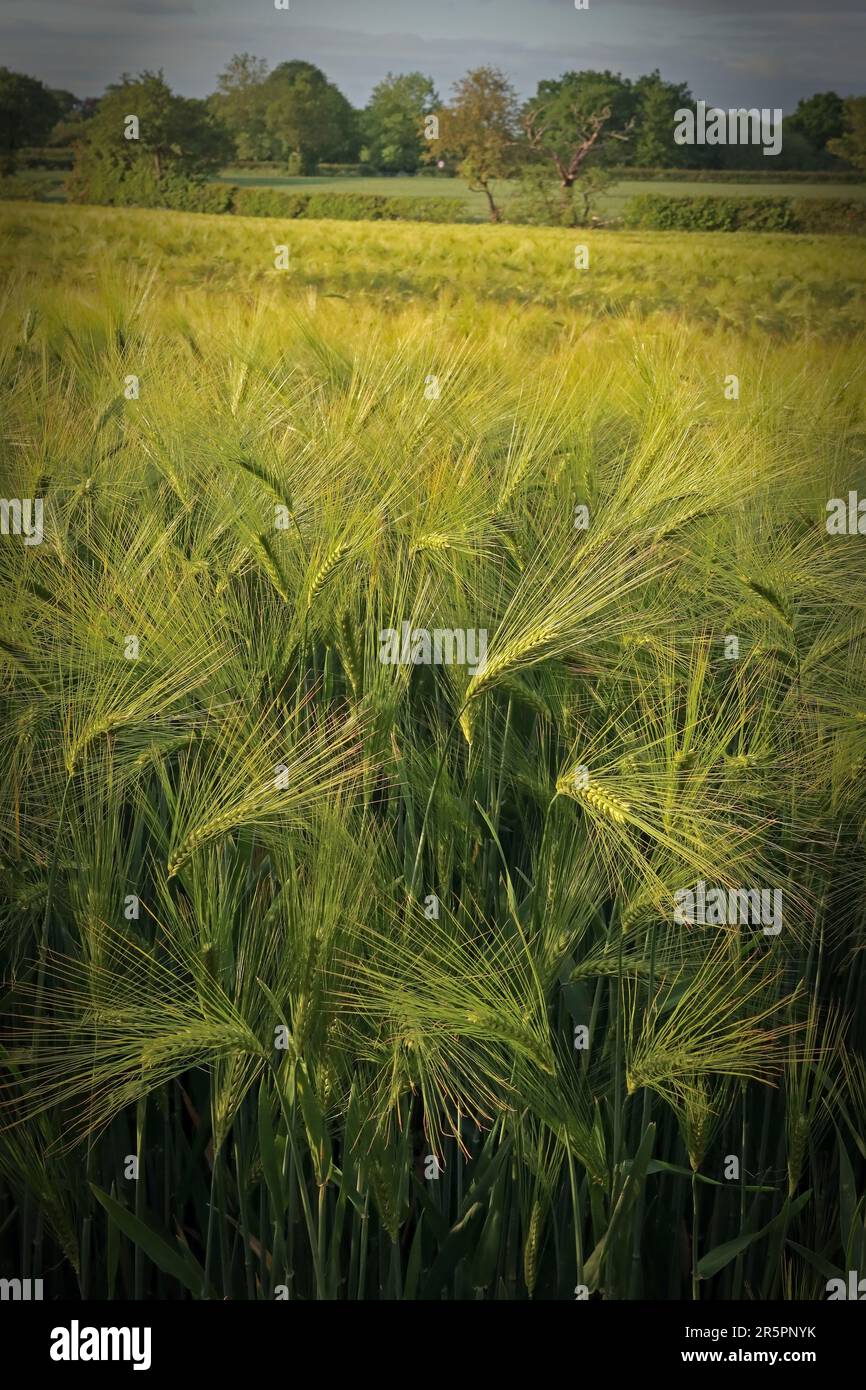
Image details
Contributor:
Tony SmithImage ID:
2R5PNYKFile size:
57.1 MB (3.2 MB Compressed download)Releases:
Model - no | Property - noDo I need a release?Dimensions:
3648 x 5472 px | 30.9 x 46.3 cm | 12.2 x 18.2 inches | 300dpiDate taken:
1 June 2023Location:
Cheshire, England, United KingdomMore information:
. Early summer barley field growing in the Cheshire countryside, England. Photographed on 1 June 2023. The recorded location is Cheshire, England, United Kingdom. This image shows a barley field in early summer, with green ears of barley beginning to form as the crop develops toward maturity. The photograph was taken in Cheshire, England, a county known for its mix of arable farming and pastoral agriculture. Barley is a key UK cereal crop, widely grown for food production, animal feed, and brewing, and its distinctive awns create a textured, wind-swept appearance during late spring and early summer. The soft light and shallow depth of field emphasise the density and vitality of the crop, conveying themes of seasonality, growth, and rural productivity. For food production, the historical context is that plants and seasonal countryside details provide precise markers of the agricultural and botanical year; Flowering, harvest, autumn colour and winter dormancy can all be used to compare changing seasonal patterns over time. Looking at regional food, the longer history is that packaging and utensils also matter: corks, bottles and branded labels preserve evidence of production and trade alongside the food or drink itself. The background to livestock is that livestock farming has diversified beyond traditional cattle and sheep as smallholders and specialist farms introduced llamas, alpacas and other animals for fibre, breeding, tourism or land management. For food production, the 2026 context is that farming is closely connected with debate about food security, climate adaptation, water use, biodiversity and farm economics; Images of crops and irrigation can illustrate the practical effects of changing weather and input costs. In 2026, regional food remains relevant because hospitality and food retail continue to adapt to higher costs, delivery platforms and changing diets, making older restaurant and product images useful evidence of consumer trends.

