
Historic sundial sculpture depicting a Moor figure at Dunham Massey, a National Trust estate near Altrincham, Greater Manchester
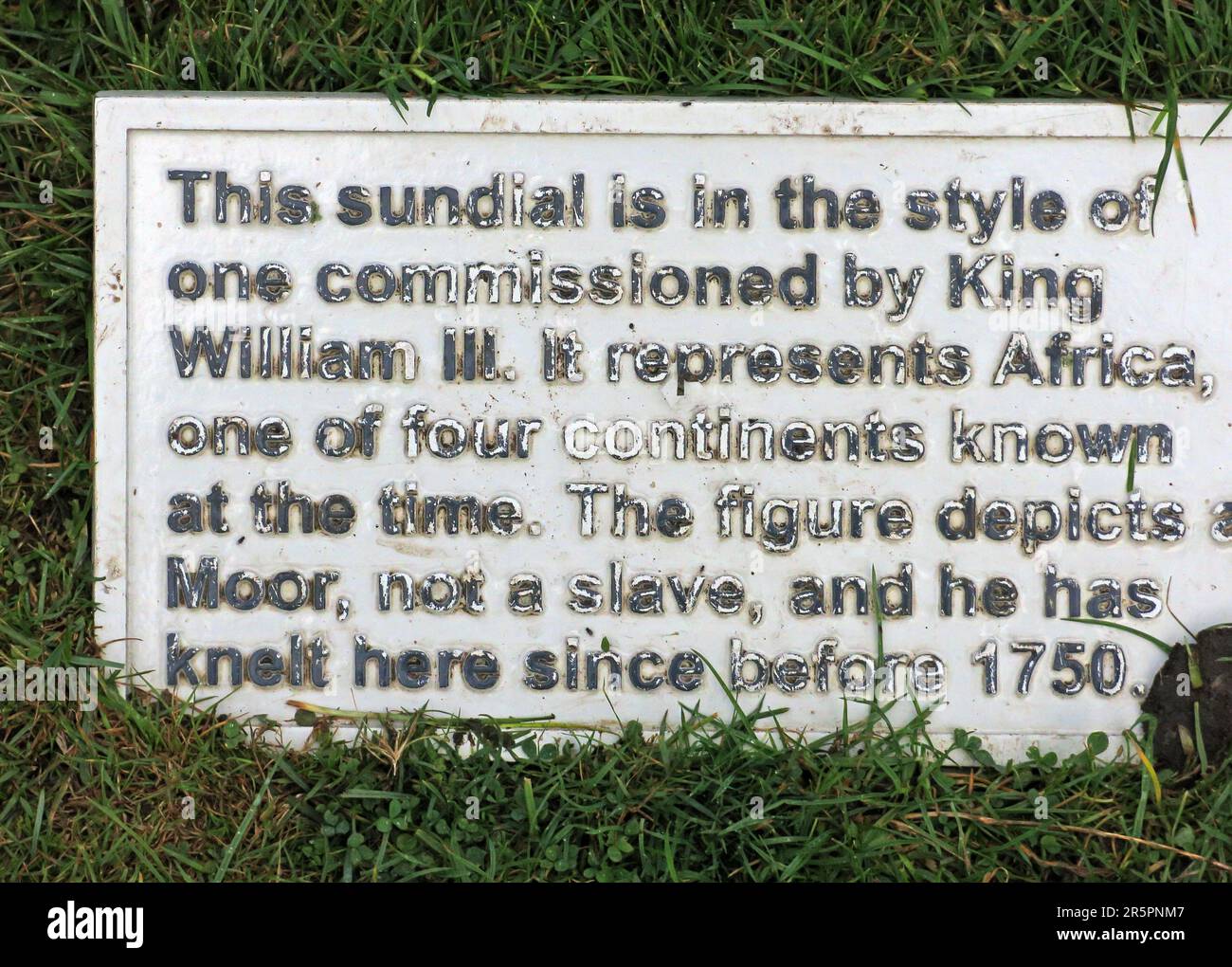
Image details
Contributor:
Tony SmithImage ID:
2R5PNM7File size:
28.3 MB (1.5 MB Compressed download)Releases:
Model - no | Property - noDo I need a release?Dimensions:
3716 x 2660 px | 31.5 x 22.5 cm | 12.4 x 8.9 inches | 300dpiDate taken:
15 September 2013Location:
Dunham Massey, Dunham Massey Park, Altrincham, Greater Manchester, England, UK, WA14 4SJMore information:
These images show a historic sundial sculpture depicting a Moor figure at Dunham Massey, near Altrincham in Greater Manchester (postcode WA14 4SJ). The sculpture forms part of the estate’s historic garden landscape and is accompanied by an interpretive plaque explaining its origins and symbolism. According to the plaque, the sundial is in the style of one commissioned during the reign of King William III and represents Africa as one of the four continents recognised in European thought at the time. The figure is described as a Moor rather than an enslaved person and is believed to have been positioned at the site since before 1750. Such figures, often referred to historically as “Blackamoor” sculptures, were common decorative elements in European gardens and interiors during the 17th and 18th centuries. Today, they are understood within a broader historical and cultural context, prompting discussion about representation, colonial perspectives, and the values embedded in historic art and landscape design. The sculpture is shown holding a metal sundial aloft, set against the backdrop of the red-brick mansion and formal grounds of Dunham Massey. The inclusion of the explanatory plaque reflects the National Trust’s approach to interpreting historic objects transparently and responsibly. Photographed in daylight, these images are well suited to editorial use covering historic estates, garden sculpture, heritage interpretation, National Trust properties, art history, and contemporary engagement with complex historical narratives.

