
Neon sign for The Rolling Scones Cafe at God’s Own Junkyard in Walthamstow,East London, an independent café operating within the famous neon art venue
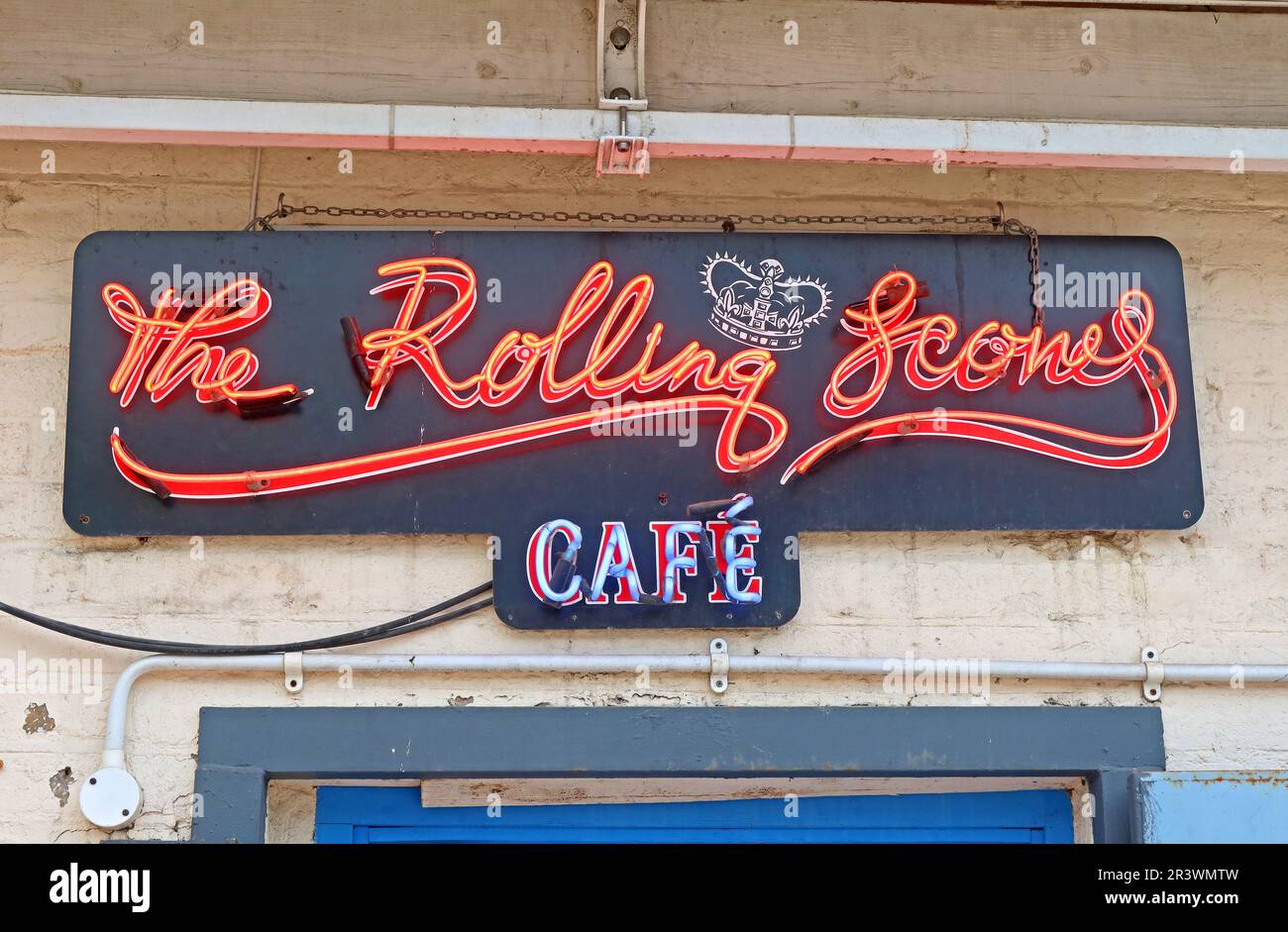
Image details
Contributor:
Tony SmithImage ID:
2R3WMTWFile size:
52.7 MB (2.1 MB Compressed download)Releases:
Model - no | Property - noDo I need a release?Dimensions:
5302 x 3474 px | 44.9 x 29.4 cm | 17.7 x 11.6 inches | 300dpiDate taken:
21 May 2023Location:
God’s Own Junkyard, Ravenswood Industrial Estate, Walthamstow, London Borough of Waltham Forest, LonMore information:
This image shows the illuminated neon sign for The Rolling Scones Cafe, located within God’s Own Junkyard on the Ravenswood Industrial Estate in Walthamstow, East London. The café forms an integral part of the visitor experience at the venue, providing food and drink amid one of London’s most distinctive collections of neon signage. God’s Own Junkyard is internationally recognised for its dense, immersive displays of vintage and custom-made neon signs, many of which have appeared in films, television, and music videos. The Rolling Scones Café sits among this visual overload, serving visitors, photographers, and tourists who come to experience the space as both an art installation and a cultural attraction. The sign itself uses flowing red neon script spelling “The Rolling Scones”, with a smaller illuminated “Cafe” panel beneath, mounted against industrial brickwork typical of former light-industrial buildings in the area. The contrast between utilitarian architecture and expressive neon typography reflects the wider character of the Junkyard, where commercial signage is recontextualised as art. Photographed in daylight, the image highlights the continued relevance of neon signage in contemporary creative spaces. It is well suited to editorial use covering London cafes, independent hospitality, creative venues, neon art, cultural tourism, and the adaptive reuse of industrial estates in East London.

