
Multi-faith prayer room sign, for various faiths and religions, Manchester International Airport, terminal2, England, UK, M90 1QX
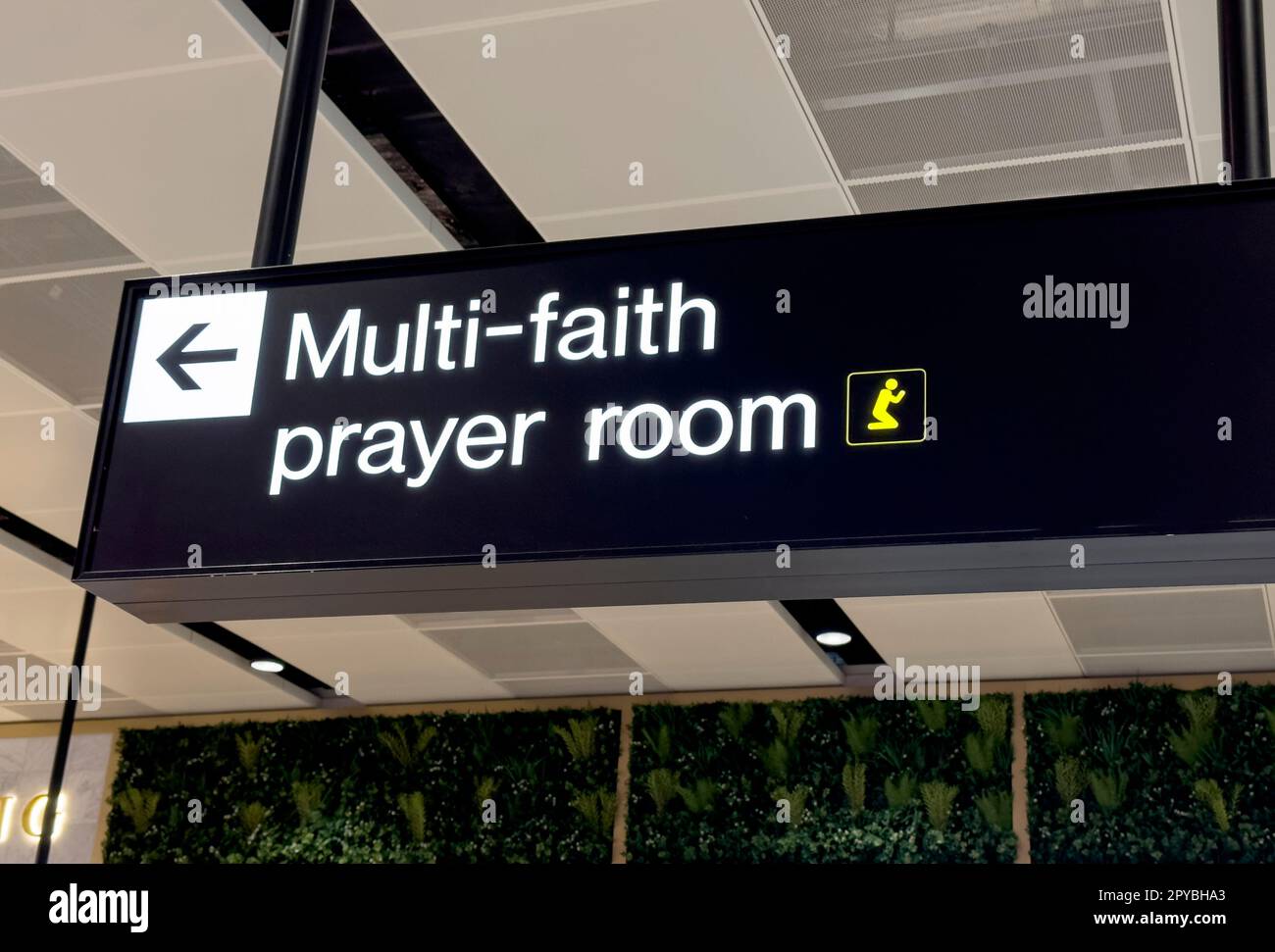
Image details
Contributor:
Tony SmithImage ID:
2PYBHA3File size:
27.3 MB (661.2 KB Compressed download)Releases:
Model - no | Property - noDo I need a release?Dimensions:
3752 x 2544 px | 31.8 x 21.5 cm | 12.5 x 8.5 inches | 300dpiDate taken:
27 April 2023Location:
Manchester Airport, England, UK, M90 1QXMore information:
. Multi-faith prayer room sign, for various faiths and religions, Manchester International Airport, terminal2, England, UK, M90 1QX. Photographed on 27 April 2023. The recorded location is Manchester Airport, England, UK, M90 1QX. A Prayer Room is an opportunity to draw aside, take time out and meet with God. It is a dedicated space where people can go to pray and seek God, to intercede and petition. Jesus withdrew to pray (Mt 14:13. Jn 6:14-16), not at the expense of serving the Father but in order to be more effective in that. The key is not about the physical space but about making space for relationship with God who from the beginning of time longs to be with His people and connect with them. We know that God is everywhere and we can meet with God anywhere and everywhere, but a Prayer Room with time and place set aside can be an important part of growing in relationship with God. It's a great addition to be part of continual prayer in local church life and helpful being in a place with no distractions with focuses for prayer. The background to airport apron is that airport infrastructure is highly specialised: aprons, hydrant refuelling, ground vehicles and boarding systems support aircraft turnarounds that passengers rarely see; Photographs of these processes document the industrial side of air travel. Within the history of information sign, temporary and permanent notices are valuable social-history evidence because they capture the rules and assumptions of a particular moment, from parking and access to opening times, safety and public-service instructions. In relation to historic fabric, historical context shows that churches combine worship with architecture, local memory and centuries of community history; Stonework, stained glass, memorials, furnishings and churchyards often record successive periods of rebuilding, Victorian restoration, local benefactors and family history.

