
GMEX Metrolink tram stop platform Manchester, now Deansgate Castlefield, central Manchester, England, UK, M3 4LG
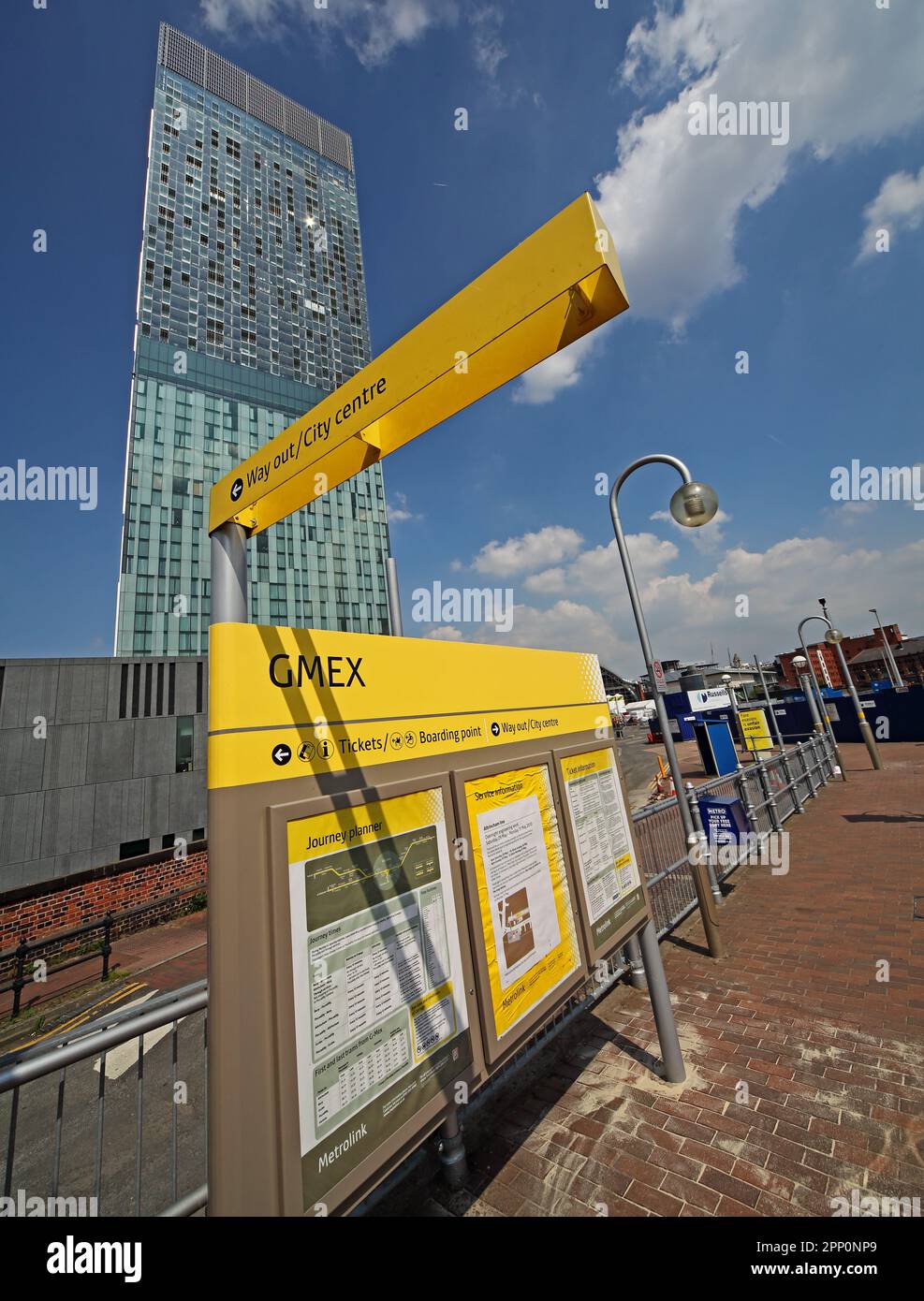
Image details
Contributor:
Tony SmithImage ID:
2PP0NP9File size:
52.8 MB (1.9 MB Compressed download)Releases:
Model - no | Property - noDo I need a release?Dimensions:
3744 x 4928 px | 31.7 x 41.7 cm | 12.5 x 16.4 inches | 300dpiDate taken:
22 May 2010Location:
Deansgate Castlefield, central Manchester, England, UK, M3 4LGMore information:
. GMEX Metrolink tram stop platform Manchester, now Deansgate Castlefield, central Manchester, England, UK, M3 4LG. Photographed on 22 May 2010. G-Mex is to the rear of the G-Mex Centre (Greater Manchester Exhibtion Centre). This opened in 1986, following conversion from the former Manchester Central station which had closed in 1969. The tram stop sits at southern edge of the former station throat, and the Altrincham/Eccles line travels south from here along the former Cheshire Lines Committee viaduct. The platforms here are staggered""the end of each platform marks the point where trams switch between street running mode and segregated running mode. There is a footbridge over Whitworth Street, connecting G-Mex and its tram stop to Deansgate railway station, which sits atop a parallel viaduct. Within the history of station architecture, stations are both functional transport interchanges and pieces of civic architecture; Their canopies, footbridges, booking halls, signal boxes and signage reveal how passenger expectations and railway technology changed from steam-era operation to today's increasingly digital network. In relation to sustainable transport, historical context shows that public transport networks continually evolve as operators change, fleets are replaced and routes are reorganised; Buses, trams and local services can become historical subjects surprisingly quickly because liveries, ticketing and vehicle types have short working lives. For the story of digital access, it is useful to note that museums turn objects into interpreted past, while archives preserve documents that may have little value until researchers connect them with people, buildings or events; Interiors therefore record both collections and changing curatorial practice. Against the 2026 backdrop for station architecture, rail reform, fares, accessibility and passenger information remain central issues as government develops the Great British Railways model; Photographs of.

