
Historic Columbian Gutenberg printing press, John Rylands Research Institute and Library, 150 Deansgate, Manchester, England, UK, M3 3EH
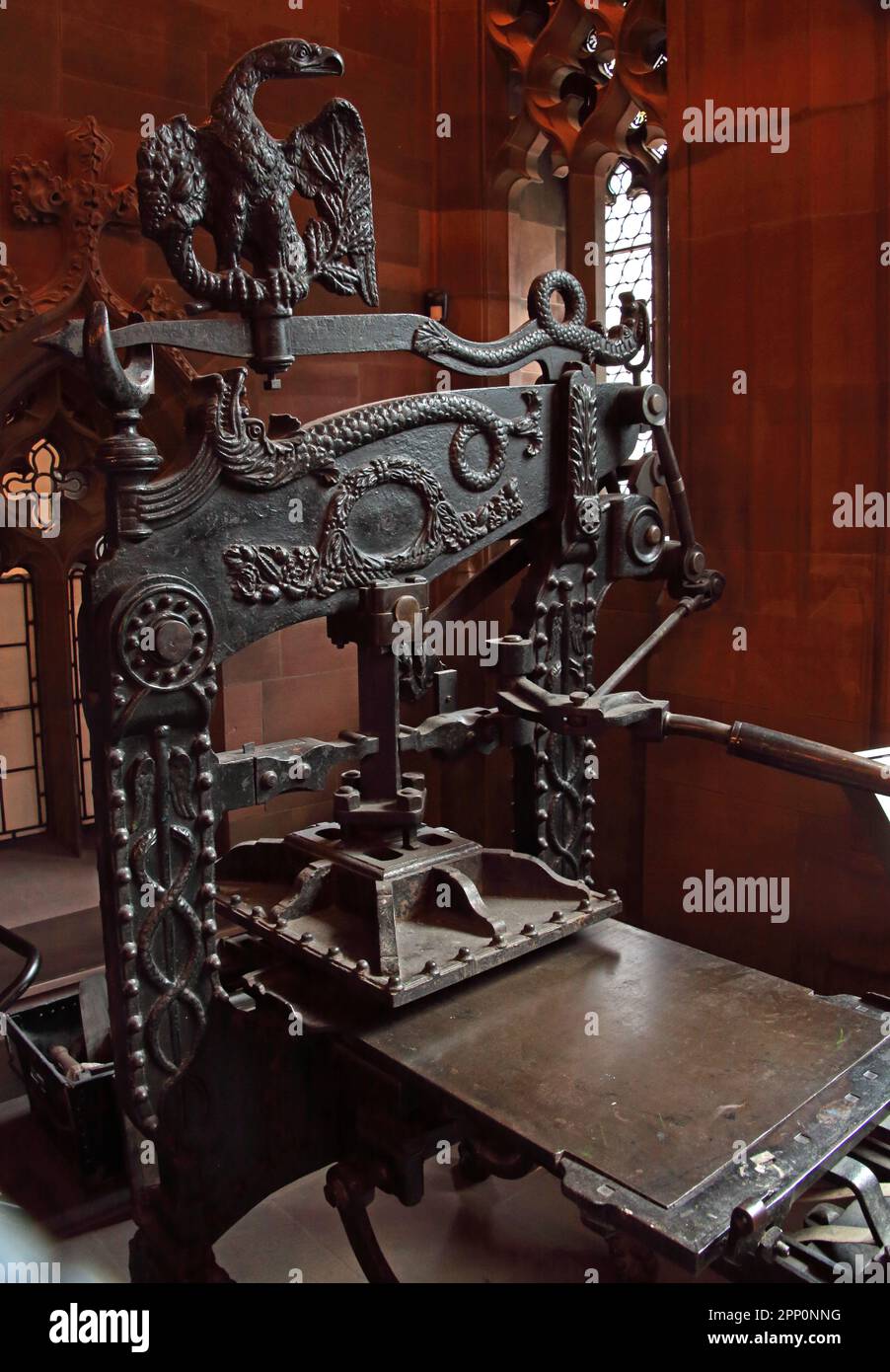
Image details
Contributor:
Tony SmithImage ID:
2PP0NNGFile size:
57.8 MB (1.8 MB Compressed download)Releases:
Model - no | Property - noDo I need a release?Dimensions:
3744 x 5392 px | 31.7 x 45.7 cm | 12.5 x 18 inches | 300dpiDate taken:
22 May 2010Location:
John Rylands Research Institute and Library, 150 Deansgate, Manchester, England, UK, M3 3EHMore information:
. Historic Columbian Gutenberg printing press, John Rylands Research Institute and Library, 150 Deansgate, Manchester, England, UK, M3 3EH. Photographed on 22 May 2010, this spring image records the subject in its real-world setting and provides a contemporary visual reference for the place, activity, object or organisation shown. The recorded location is John Rylands Research Institute and Library, 150 Deansgate, Manchester, England, UK, M3 3EH, adding precise geographical context for editorial, documentary, travel and local-history searches. Key searchable subjects associated with the scene include Research Institute, M3 3EH, history, historic, Columbian, Gutenberg, machine, printer, printers, ornate, old, Latin America, providing natural SEO coverage without losing the specific documentary identity of the photograph. Architecturally, the scene records the form, materials, scale and public-facing character of the built environment, making it useful for coverage of design, planning, conservation, development and urban identity. The image has value for architectural and place-based research because buildings and interiors can be refurbished, repurposed, demolished or substantially altered, while streets and public spaces also evolve. The heritage dimension gives the photograph relevance to local history, conservation, collective memory, historic buildings and objects, civic identity and the ways in which earlier generations are represented in today's public realm. As a contemporary record of a historic subject, it can illustrate preservation, interpretation, restoration, tourism and debates about how cultural and industrial heritage is maintained and reused. The frame provides a detailed documentary record of the subject as it appeared at the time of photography, preserving the surrounding context as well as the principal feature. The composition retains practical contextual detail for news, feature, documentary, educational and historical use.

