
Cheshire Constabulary, Rural Watch sign on a fence, Thelwall , Warrington, Cheshire, England, UK, WA4
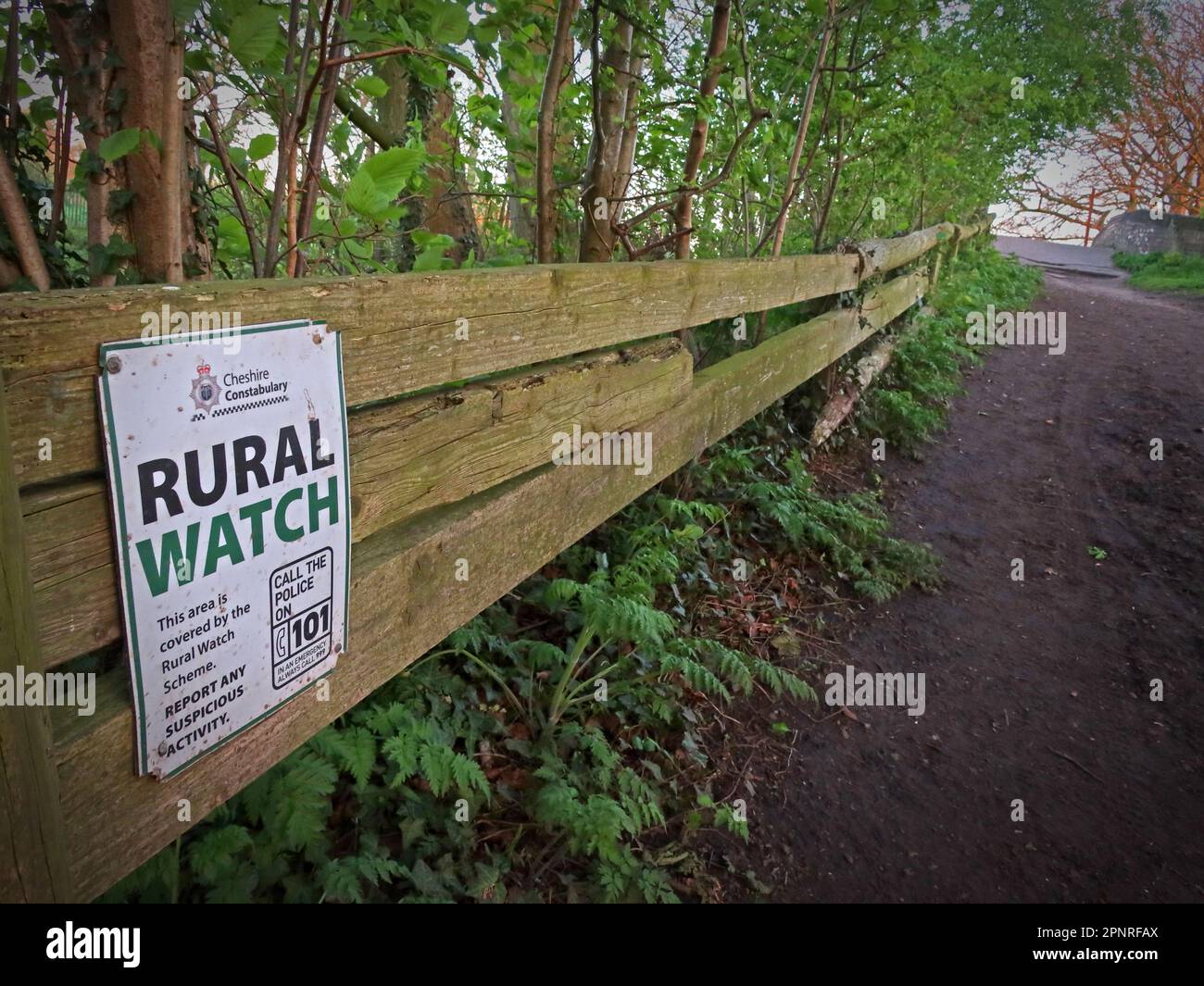
Image details
Contributor:
Tony SmithImage ID:
2PNRFAXFile size:
50.7 MB (2.1 MB Compressed download)Releases:
Model - no | Property - noDo I need a release?Dimensions:
4860 x 3648 px | 41.1 x 30.9 cm | 16.2 x 12.2 inches | 300dpiDate taken:
18 April 2023Location:
Thelwall , Warrington, Cheshire, England, UK, WA4More information:
. Cheshire Constabulary, Rural Watch sign on a fence, Thelwall , Warrington, Cheshire, England, UK, WA4. Photographed on 18 April 2023. Rural Watch is a free scheme set up to support communities in the fight against rural crime. If you live, work or visit rural communities you are our eyes and ears. Join our police officers and a network of people who share information about crimes in rural areas. The main aims of the Rural Watch scheme are to:. reduce local opportunities for crime and vandalism. reinforce community spirit so that everyone can contribute towards the protection of their property. introduce early warning systems in the farming and countryside areas. improve the intelligence flow between rural communities and police. Together we can actively take steps to prevent crime, report suspicious incidents and provide education and reassurance on the issues that matter the most to rural communities. Seen through public sector estate, the earlier context is that courts and police buildings are physical expressions of the justice system; Their entrances, crests and signs identify the institutions responsible for criminal and civil proceedings, public order and local administration. For vintage watch, the historical context is that railway watches were valued for reliable timekeeping because timetables and safe train operation depended on consistent clocks long before electronic systems. Looking at streetscape, the longer history is that place-based photography helps document the relationship between named locations and the people or businesses associated with them, especially where formal architectural records are limited. The 2026 relevance of public sector estate comes from the fact that accessibility and clear public information are increasingly important expectations for justice buildings; Ramp signs, bilingual wording and wayfinding can therefore illustrate inclusive design as well as law, courts and public administration.

