
Baptismal font at Liverpool Cathedral, St James' Mount, Liverpool, Merseyside, England, UK, L1 7AZ
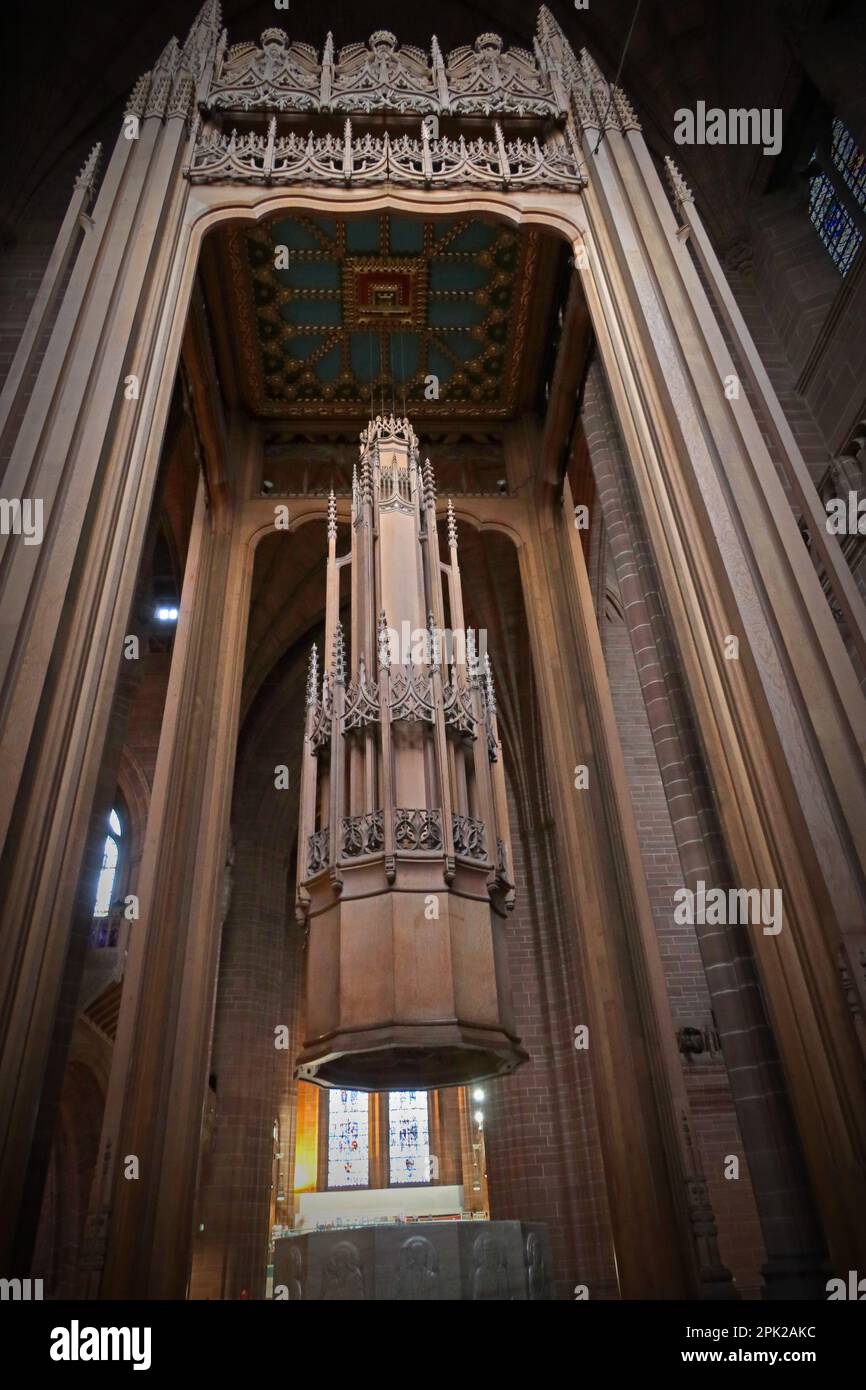
Image details
Contributor:
Tony SmithImage ID:
2PK2AKCFile size:
57.1 MB (1.7 MB Compressed download)Releases:
Model - no | Property - noDo I need a release?Dimensions:
3648 x 5472 px | 30.9 x 46.3 cm | 12.2 x 18.2 inches | 300dpiDate taken:
1 April 2023Location:
St James' Mount, Liverpool, Merseyside, England, UK, L1 7AZMore information:
. Baptismal font at Liverpool Cathedral, St James' Mount, Liverpool, Merseyside, England, UK, L1 7AZ. Photographed on 1 April 2023. The font stands in the south west transept, known as the Baptistry. It is made of unusual buff-coloured French marble and has the figures of an apostle carved in relief on each of its twelve sides. The floor surround is made of marble, inlaid with breaking waves and a circle of green fishes - the fish being a symbol of Christianity. For church interior, the historical context is that churches combine worship with architecture, local memory and centuries of community history; Stonework, stained glass, memorials, furnishings and churchyards often record successive periods of rebuilding, Victorian restoration, local benefactors and family history. For church interior, the 2026 context is that many historic churches face the practical challenge of maintaining listed fabric while remaining active community buildings, visitor attractions and venues for worship, music and local events; Conservation, heating costs and new uses are therefore part of the modern story of these ancient places. Related search language includes ecclesiastical architecture, parish church, Christian heritage, sacred art, religious symbolism, place of worship, architectural conservation, local history, faith community, historic fabric, religious heritage, St James Mount, Church of England, Anglican, and CofE. Associated subject terminology includes baptise, baptised, English, tourist, tourism, christened, christening, religious, religion, and inside. Looking at place of worship, the longer history is that churches combine worship with architecture, local memory and centuries of community history; Stonework, stained glass, memorials, furnishings and churchyards often record successive periods of rebuilding, Victorian restoration, local benefactors and family history. Its wider context brings together parish church, Christian heritage and sacred art.

