
Disabled lavatory in a mess, not checked, or cleaned on a regular basis, UK
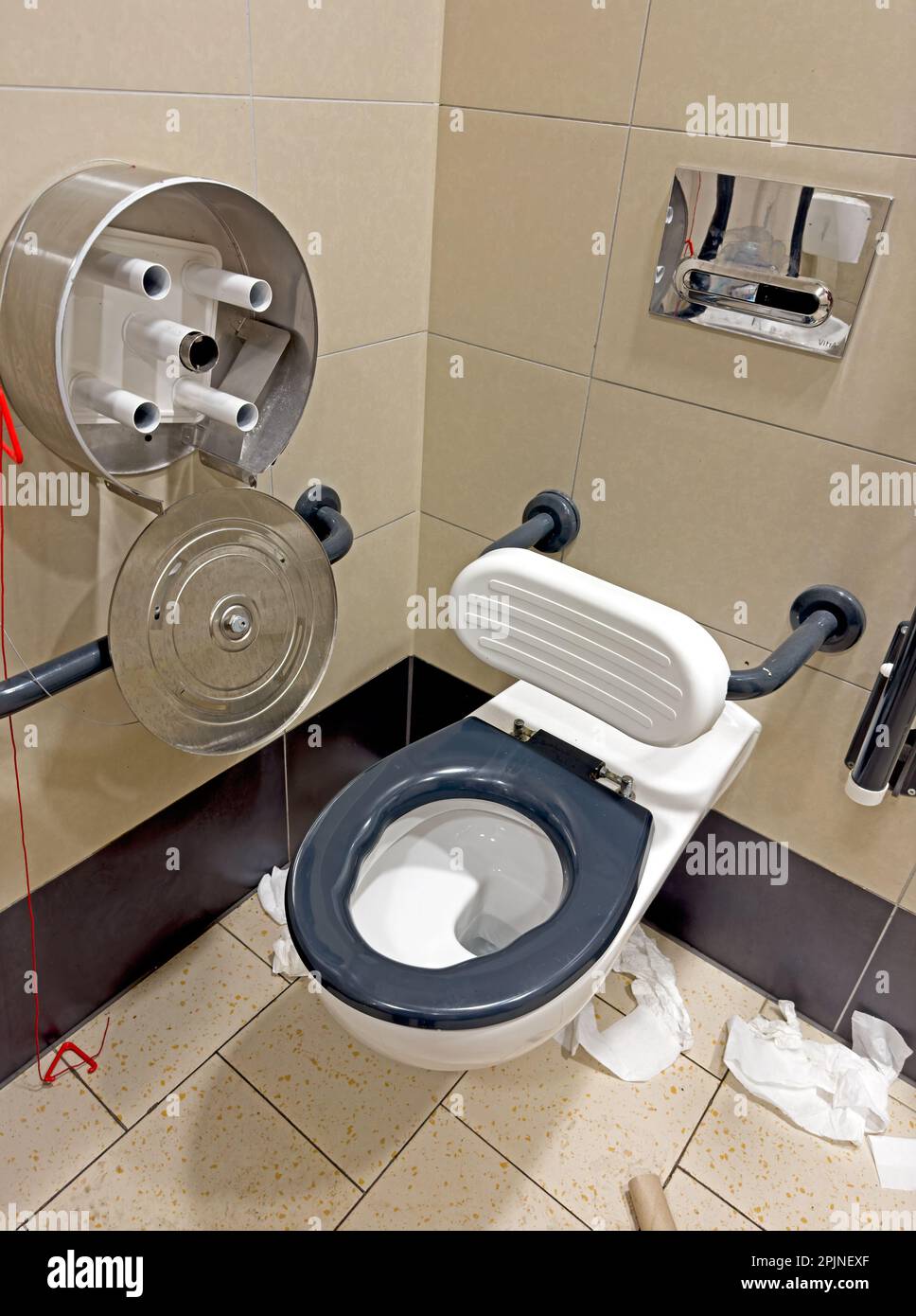
Image details
Contributor:
Tony SmithImage ID:
2PJNEXFFile size:
74.2 MB (1.6 MB Compressed download)Releases:
Model - no | Property - noDo I need a release?Dimensions:
4396 x 5901 px | 37.2 x 50 cm | 14.7 x 19.7 inches | 300dpiDate taken:
26 July 2018Location:
United KingdomMore information:
Neglected accessible toilet cubicle in the United Kingdom, with loose and used toilet tissue scattered across the tiled floor around a raised white lavatory fitted with a dark contrasting seat. The untidy and apparently unhygienic condition suggests that the facility has not been inspected, cleaned or replenished frequently enough. For a disabled visitor who may depend upon this specially adapted space, such poor maintenance can turn an essential public facility into an unpleasant, undignified and potentially unsafe environment. The cubicle includes several features intended to support wheelchair users and people with limited mobility. Horizontal blue grab rails run along the tiled walls, while a padded fold-down support rail is positioned behind the toilet. A stainless steel flushing panel is mounted above the WC, and a large circular toilet-paper dispenser is fixed to the adjacent wall. However, the dispenser appears open or incomplete and several cardboard tubes remain exposed, while torn paper and debris are visible on the floor. Accessibility equipment alone does not provide genuine inclusion when basic cleanliness, consumable supplies and routine supervision are missing. Accessible toilets can be crucial to a person’s ability to travel, work, shop, attend appointments and participate independently in everyday public life. Their condition therefore concerns more than ordinary housekeeping. A dirty or unusable disabled lavatory may create additional barriers for wheelchair users, older people, carers and anyone requiring extra space or support. It can also communicate that their comfort, health and dignity have been treated as a lower priority. UK workplace guidance requires sanitary facilities to be maintained in a clean and orderly condition, while organisations providing services must consider reasonable adjustments and equal access for disabled people. Regular inspection records, responsive cleaning arrangements, replenished supplies and prompt reporting

