
FILE - This file photo provided by the Centers for Disease Control and Prevention (CDC) shows a feeding female Anopheles stephensi mosquito crouching forward and downward on her forelegs on a human skin surface, in the process of obtaining its blood meal through its sharp, needle-like labrum, which it had inserted into its human host. Scientists said Tuesday, Nov. 1, 2022 that the invasive mosquito species Anopheles stephensi was likely responsible for a large outbreak of malaria in Ethiopia earlier this year, a finding that one expert called a worrying sign that progress against the disease i
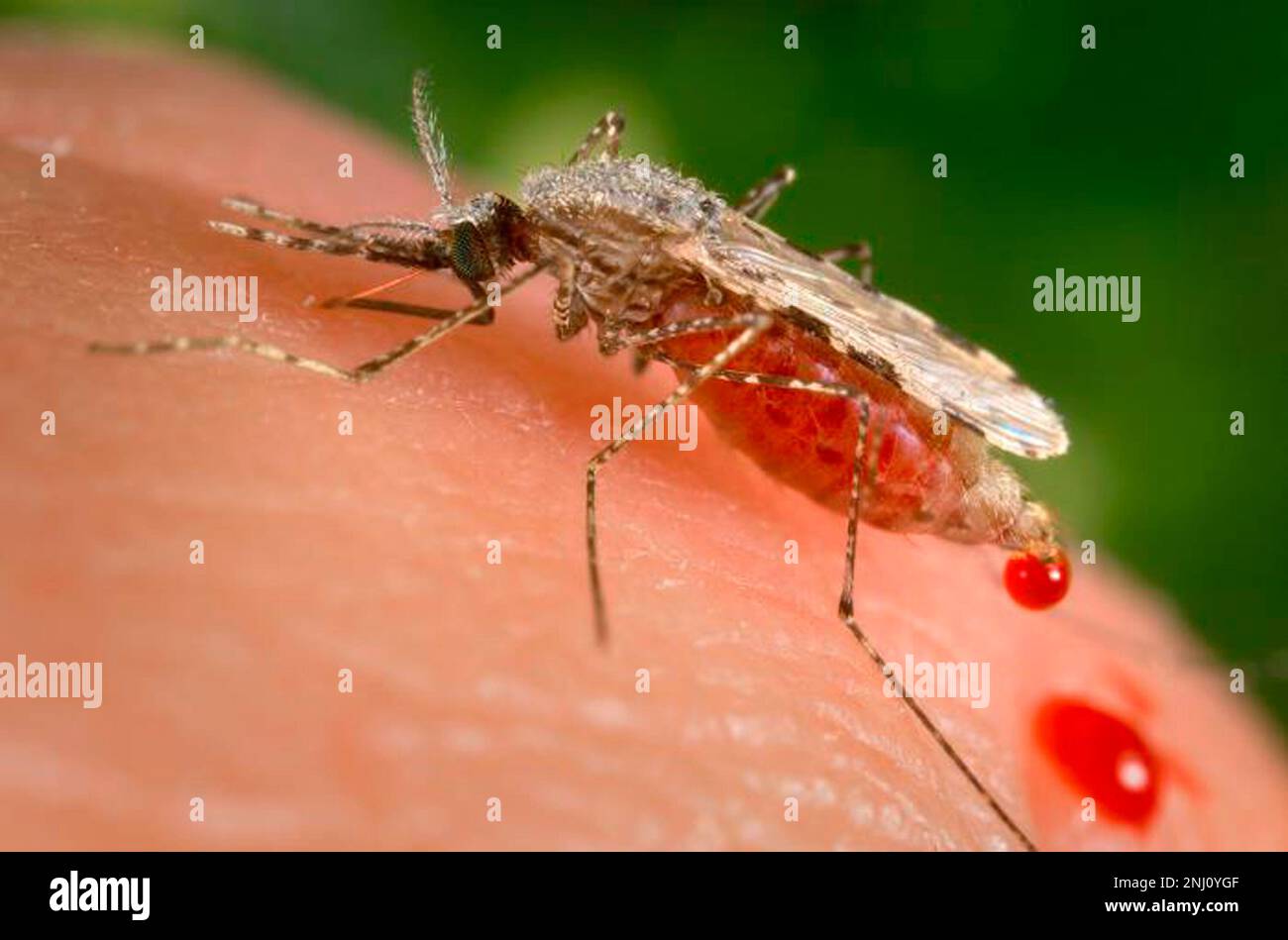
Image details
Contributor:
Associated PressImage ID:
2NJ0YGFFile size:
17 MB (236.3 KB Compressed download)Releases:
Model - no | Property - noDo I need a release?Dimensions:
3000 x 1984 px | 25.4 x 16.8 cm | 10 x 6.6 inches | 300dpiDate taken:
23 November 2015Photographer:
James GathanyMore information:
This image could have imperfections as it’s either historical or reportage.
Not available to licence for any broadcast or streaming service, video on demand, film, national newspaper or to create a NFT. This content is intended for editorial use only. For other uses, additional clearances may be required. Handout - Government Produced FILE - This file photo provided by the Centers for Disease Control and Prevention (CDC) shows a feeding female Anopheles stephensi mosquito crouching forward and downward on her forelegs on a human skin surface, in the process of obtaining its blood meal through its sharp, needle-like labrum, which it had inserted into its human host. Scientists said Tuesday, Nov. 1, 2022 that the invasive mosquito species Anopheles stephensi was likely responsible for a large outbreak of malaria in Ethiopia earlier this year, a finding that one expert called a worrying sign that progress against the disease is at risk of unraveling. (James Gathany/CDC via AP, File)

