
Graffiti - Disobey, Memory of Darragh Moran 1977-2019, Dublin, Eire, Ireland
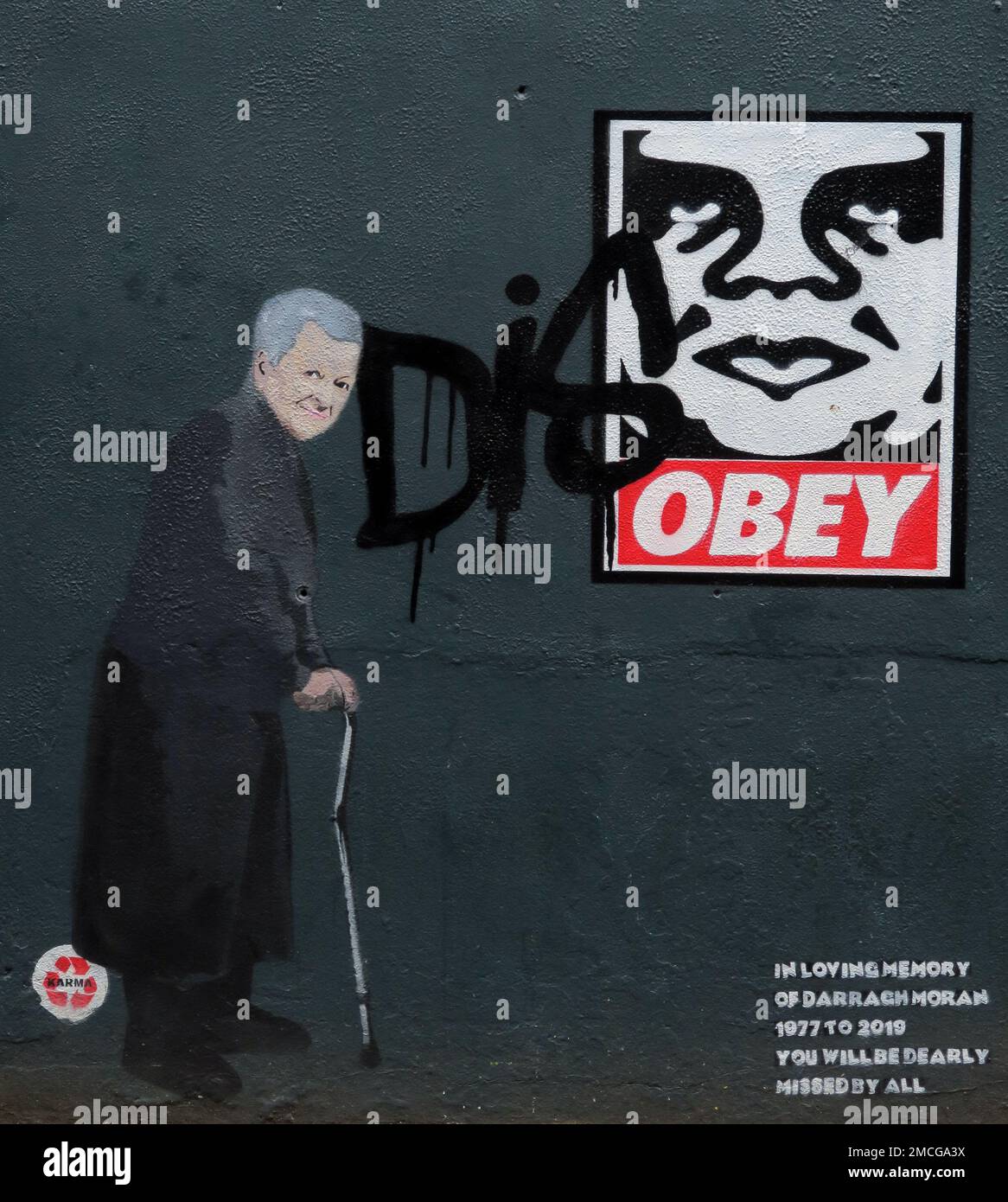
Image details
Contributor:
Tony SmithImage ID:
2MCGA3XFile size:
35.7 MB (1.6 MB Compressed download)Releases:
Model - no | Property - noDo I need a release?Dimensions:
3344 x 3728 px | 28.3 x 31.6 cm | 11.1 x 12.4 inches | 300dpiDate taken:
11 September 2019Location:
Dublin, Eire, IrelandMore information:
. This scene at Dublin, Eire, Ireland in 2019 forms part of the visual history of the locality, documenting the named subject together with aspects of how the area looked and functioned at the time. The main point of reference is Graffiti - Disobey, Memory of Darragh Moran 1977-2019, Dublin, Eire, Ireland. The image also relates to historic townscape, conservation interest, community identity, mural culture, public art, changing land use, local history, heritage asset, urban graphics, visual archive, visual street culture, before-and-after reference, public realm, and urban artwork. From a 2025-onward perspective, graffiti policy and creative districts are closely linked to this subject, alongside the role of murals in giving neighbourhoods a distinctive identity. The wider contemporary story combines heritage conservation, planning control and the value of architectural landmarks to local identity. Small period details of public access and movement at Dublin, Eire, Ireland may become more significant with time, particularly following later reinterpretation. Further associations within the scene are documentary photography, period architecture, regional identity, architectural character, historic streetscape, period building, public-realm art, and built heritage. Elements such as Moran, Memory, Darragh, Disobey, and Dublin add documentary specificity and may become increasingly useful when compared with later records. Around Dublin, Eire, Ireland, apparently routine details can become historically useful once businesses close, buildings change use or familiar features disappear. Its period value extends to graffiti policy and the role of murals in giving neighbourhoods a distinctive identity as part of the longer story of Dublin, Eire, Ireland. The location additionally provides evidence of adaptive reuse and the balance between conservation and modern commercial use when considered against later change at Dublin, Eire, Ireland.

