
Kenco, Coffee Machine Pods, in a basket, more waste, difficult to recycle, destination: Landfill
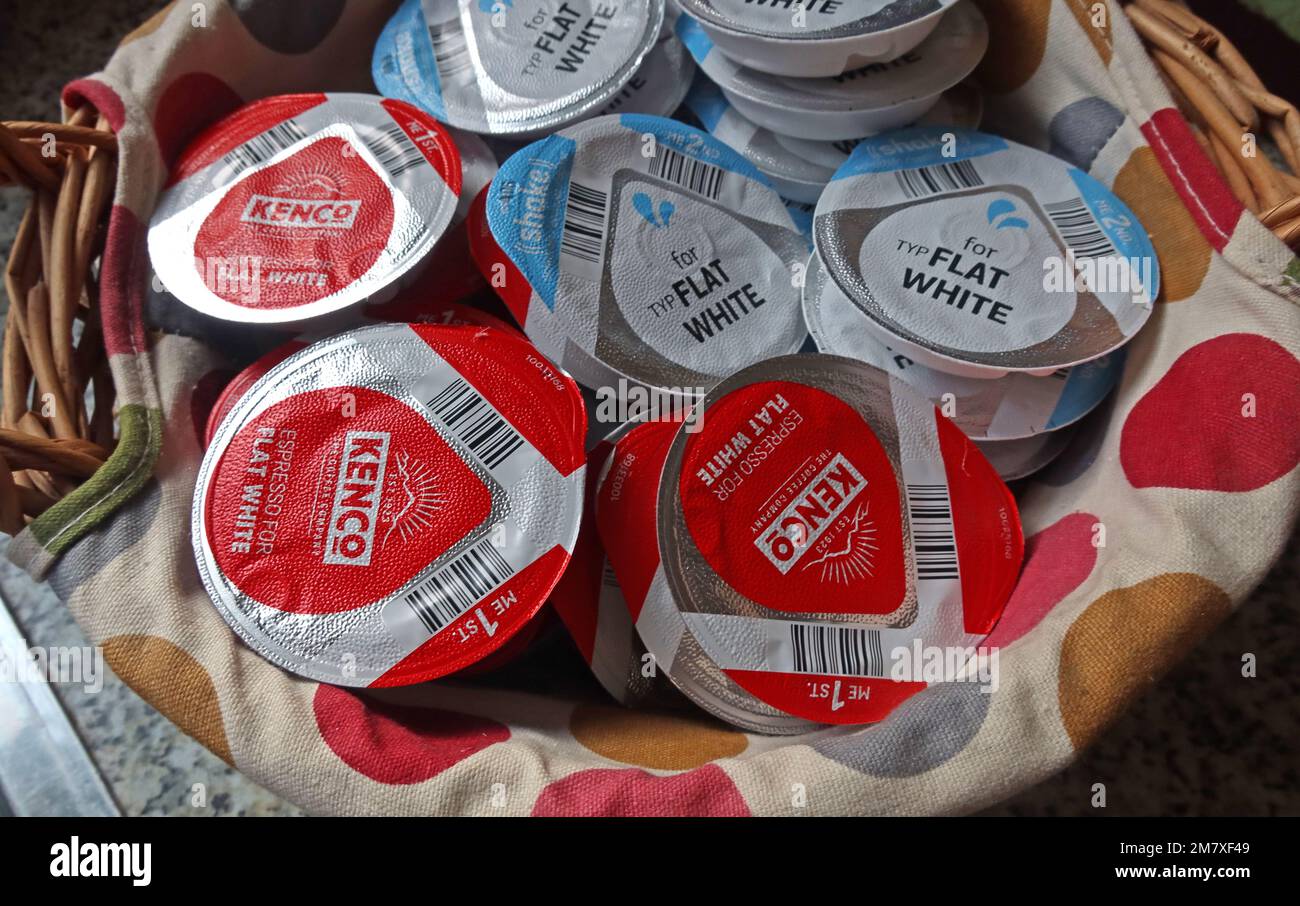
Image details
Contributor:
Tony SmithImage ID:
2M7XF49File size:
49.2 MB (1.8 MB Compressed download)Releases:
Model - no | Property - noDo I need a release?Dimensions:
5232 x 3288 px | 44.3 x 27.8 cm | 17.4 x 11 inches | 300dpiDate taken:
4 January 2023Location:
United KingdomMore information:
. Kenco, Coffee Machine Pods, in a basket, more waste, difficult to recycle, destination: Landfill. Photographed on 4 January 2023. The recorded location is United Kingdom. Critics say that some types of coffee pods can't be recycled easily because they are often made of a mixture of plastic and aluminium making them difficult to process in standard recycling plants. In the longer view, food photographs can document changing tastes, brands and methods of preparation as effectively as they illustrate a meal; Regional products, traditional recipes, independent food businesses and packaging all carry information about consumer culture and local identity. Looking at the subject's development, recycling systems developed in response to landfill pressure, resource use and environmental targets, but different local collection schemes often created confusion about what belonged in each container; Images of bins, packaging and difficult-to-recycle products document that transition. In the longer view, industrial heritage links machinery and architecture with the lives of workers who operated mines, mills, potbanks, foundries and factories; As production declined or modernised, many sites were demolished, adapted or preserved, making photographs an important record of manufacturing landscapes and engineering culture. Current 2026 relevance comes from the fact that current food coverage frequently combines lifestyle with questions of price, health, sourcing and environmental impact; Older packaging and products also provide useful evidence of how branding, portioning and consumer expectations have changed. For the 2026 context, england introduced a major change on 31 March 2026 through Simpler Recycling, requiring consistent core household waste streams including food and garden waste, paper and card, other dry recyclables and residual waste, subject to limited transitional arrangements; That gives older photographs of multiple bins or confusing recycling systems.

