
Motorcise ,Armchair Exercise Centre entrance, health club, 26 Cleveland Street, Wolverhampton, West Midlands, England, UK, WV1 3HT
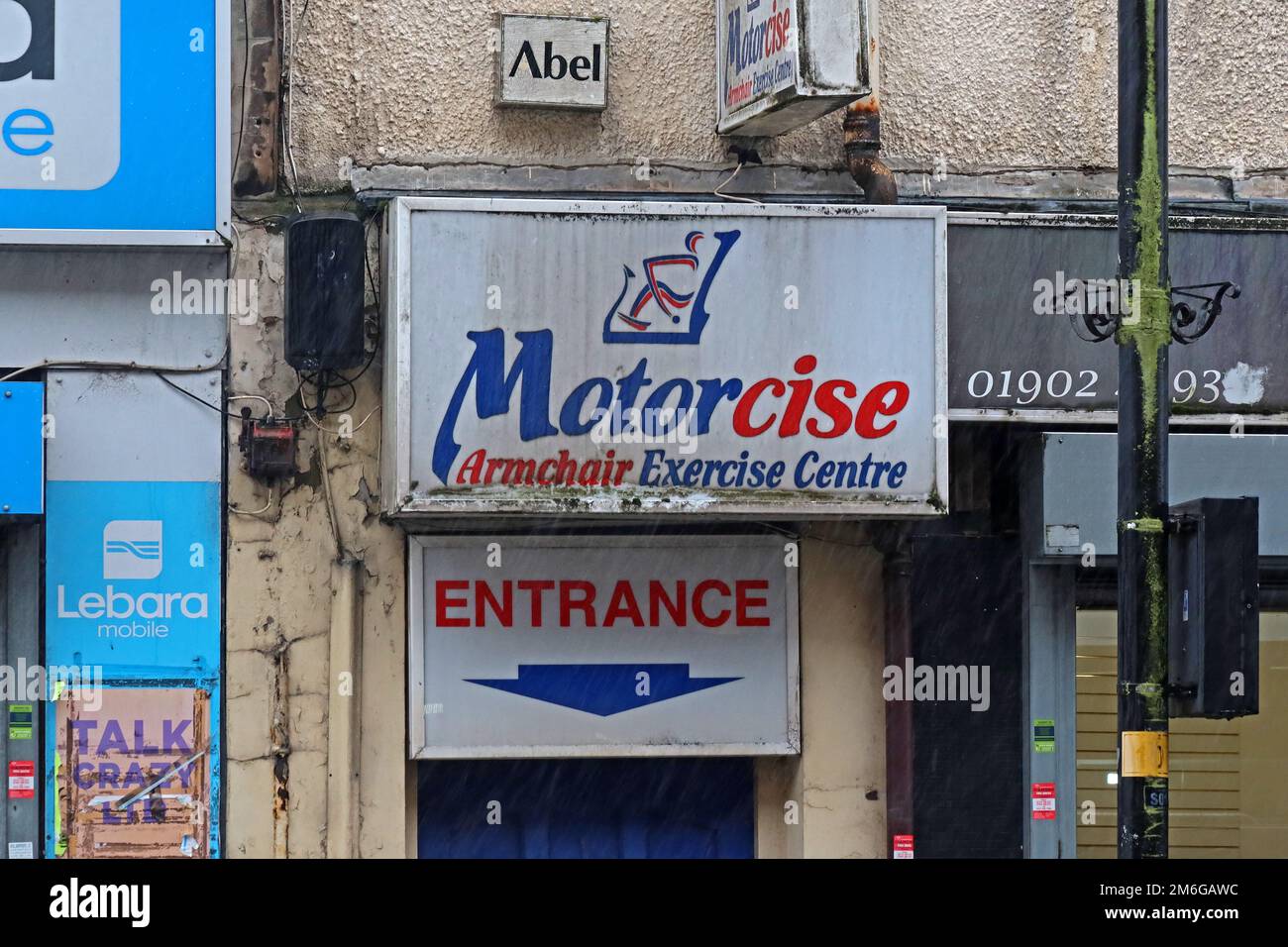
Image details
Contributor:
Tony SmithImage ID:
2M6GAWCFile size:
57.1 MB (2.2 MB Compressed download)Releases:
Model - no | Property - noDo I need a release?Dimensions:
5472 x 3648 px | 46.3 x 30.9 cm | 18.2 x 12.2 inches | 300dpiDate taken:
5 October 2022Location:
26 Cleveland Street, Wolverhampton, West Midlands, England, UK, WV1 3HTMore information:
. Motorcise , Armchair Exercise Centre entrance, health club, 26 Cleveland Street, Wolverhampton, West Midlands, England, UK, WV1 3HT. Photographed on 5 October 2022. Motorcise Healthy Living Centres are designed for people who find health clubs and gymnasiums intimidating. The Motorcise exercise machines are motorised - a completely new system that makes exercise easy and fun to do. Historically, everyday health culture includes formal medicine as well as exercise, diet, personal habits and preventive messages; Photographs of these subjects can therefore illustrate both individual behaviour and wider changes in public-health policy. Historically, city-centre photography documents both designed space and informal use; Architecture, signage, traffic, public art and pedestrian movement together reveal how people experience a place, often providing a more useful record of urban change than landmark images alone. In 2026, prevention remains a major theme in UK health policy, covering smoking reduction, physical activity, healthy diet and earlier intervention; Images of earlier health practices can help illustrate how advice, regulation and expectations have shifted. In 2026, current regeneration programmes make older urban photographs particularly useful; They allow comparison of high streets, underpasses, shopping areas and public spaces before redevelopment, while also documenting local identity that may not survive physical change. The historical context is that medical and wellbeing scenes document how healthcare is delivered and understood; Clinical tools, health clubs, food advice and regulated behaviours all reflect evolving ideas about prevention, risk and personal responsibility. Current 2026 relevance comes from the fact that public health increasingly emphasises prevention and reducing long-term demand on services; Subjects involving smoking, exercise, nutrition or clinical care therefore have relevance beyond the immediate scene.

