
Iron Bridge 1813, crossing river Goyt, in Brabyns Park, Marple, Stockport, Cheshire, England, UK, SK6 5DT
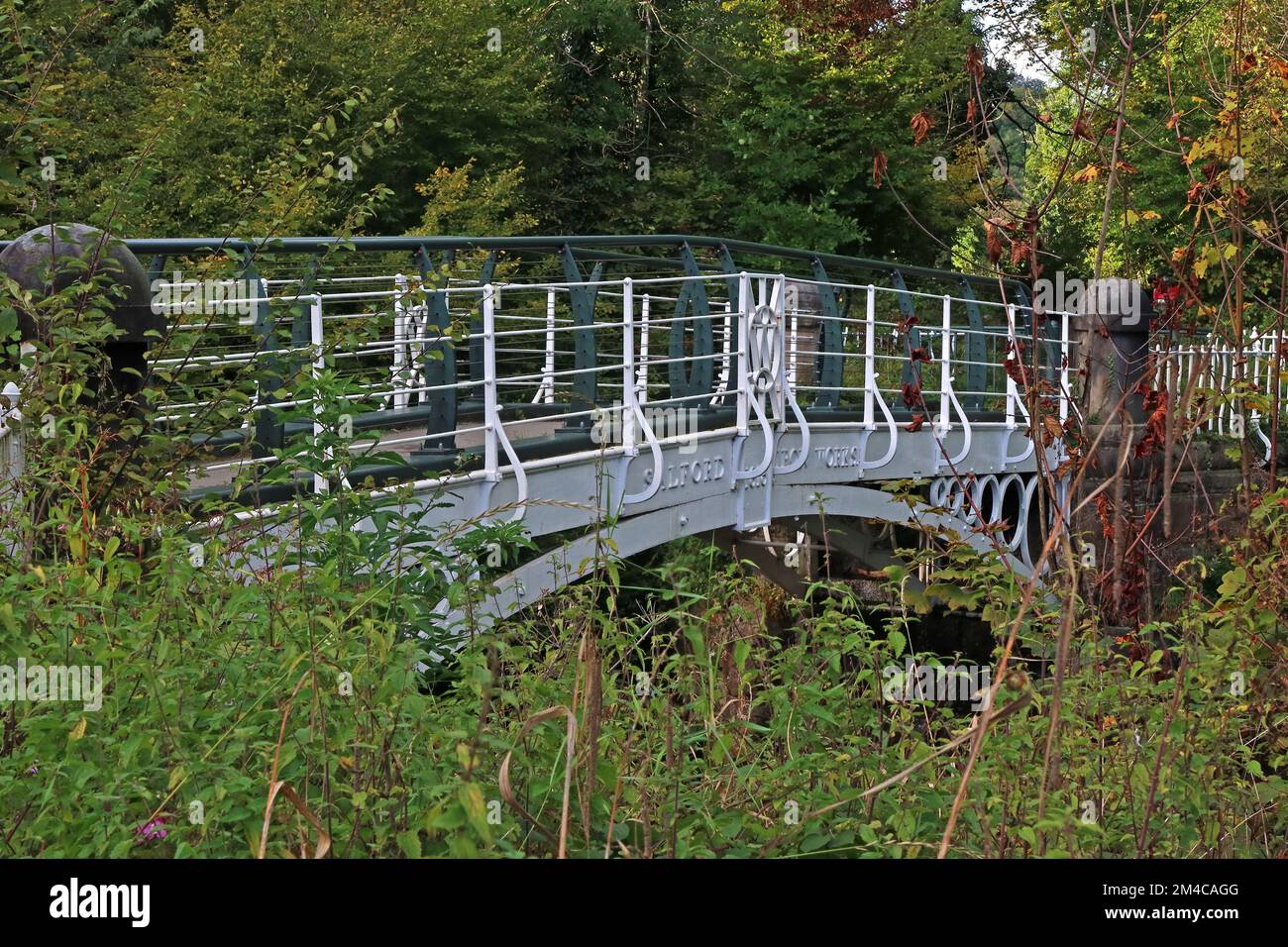
Image details
Contributor:
Tony SmithImage ID:
2M4CAGGFile size:
57.1 MB (3.5 MB Compressed download)Releases:
Model - no | Property - noDo I need a release?Dimensions:
5472 x 3648 px | 46.3 x 30.9 cm | 18.2 x 12.2 inches | 300dpiDate taken:
1 October 2022Location:
Brabyns Park, Marple, Stockport, Cheshire, England, UK, SK6 5DTMore information:
. Iron Bridge 1813, crossing river Goyt, in Brabyns Park, Marple, Stockport, Cheshire, England, UK, SK6 5DT. Photographed on 1 October 2022. Spanning the River Goyt close to its confluence with the River Etherow about one kilometre north of Marple Bridge. New rails have been built on the inside of the originals. It is now more difficult to jump into the river. The cast-iron bridge in Brabyns Park was built in 1813 for estate owner Nathaniel Wright to carry a private carriage drive over the River Goyt. Historic England lists it at Grade II and records that it was fabricated by Salford Iron Works, with three cast-iron arches and distinctive circular openings in the spandrels. It is an unusually early survivor of iron bridge construction and was restored in the twenty-first century; Stockport Council still highlights it as a principal historic feature of Brabyns Park in 2026. Looking at the subject's development, older buildings and artefacts provide tangible evidence that written records cannot fully replace; Their wear, construction, signage and setting help researchers understand local history, design, industry and social life across different periods. For the 2026 context, heritage remains economically and culturally significant through tourism, education and place-making, while the cost of maintaining historical fabric creates continuing debate about conservation and reuse. The wider historical story is that historic objects and places gain meaning through survival; Materials, craftsmanship, inscriptions and later alterations can reveal how a building, machine or everyday item was made, used and valued, while preservation decisions show which parts of the past communities choose to retain. In 2026, heritage remains economically and culturally significant through tourism, education and place-making, while the cost of maintaining historic fabric creates continuing debate about conservation and reuse.

