
Visit Downing Street, Whitehall, City of Westminster, London, England, UK, SW1
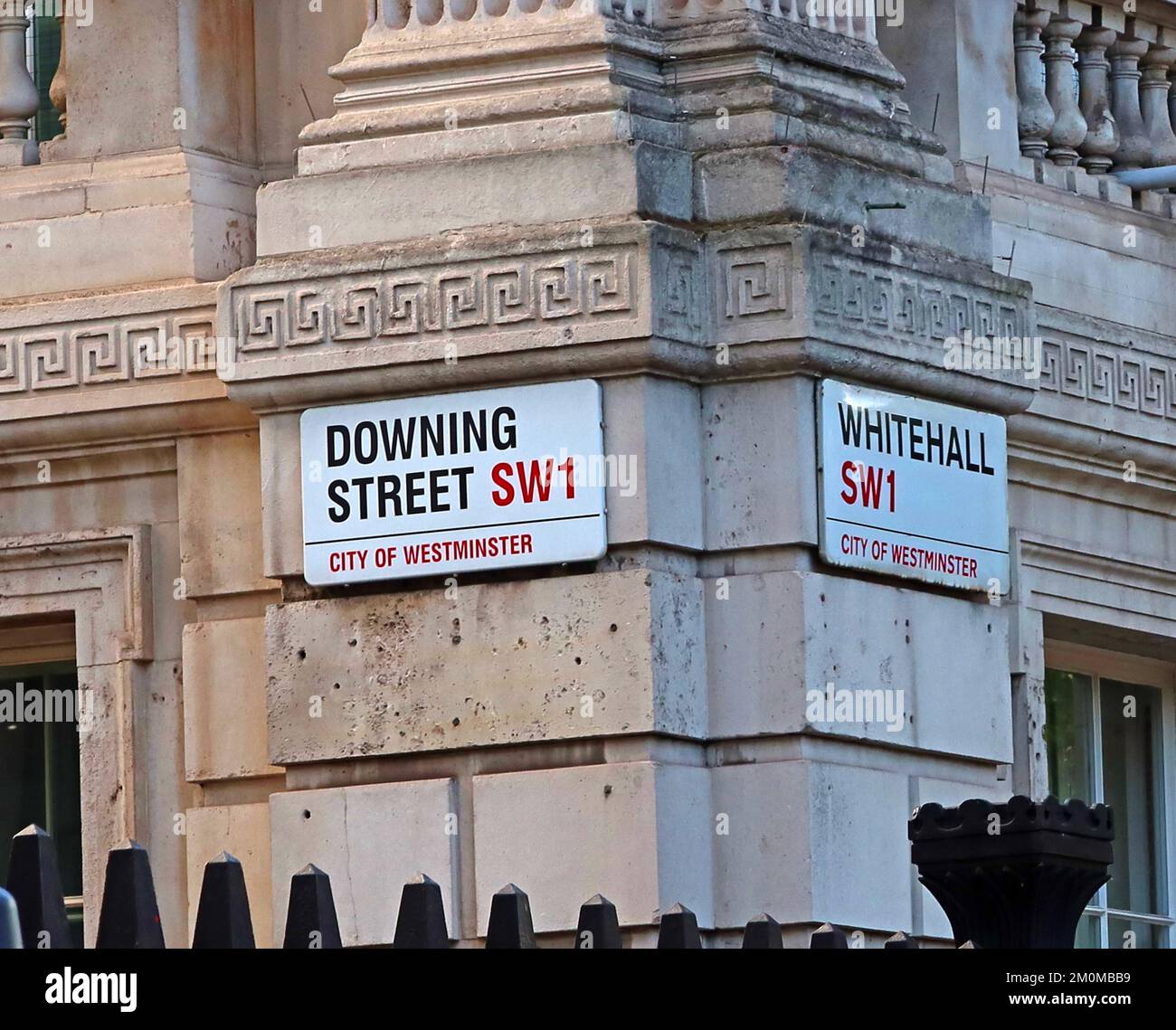
Image details
Contributor:
Tony SmithImage ID:
2M0MBB9File size:
42.6 MB (1.3 MB Compressed download)Releases:
Model - no | Property - noDo I need a release?Dimensions:
4296 x 3468 px | 36.4 x 29.4 cm | 14.3 x 11.6 inches | 300dpiDate taken:
23 July 2022Location:
Downing Street, Whitehall, City of Westminster, London, England, UK, SW1More information:
Street name signs for Downing Street and Whitehall are fixed to the ornate stonework of a government building at their famous junction in Westminster, central London, on 17 July 2026. The close-up view places two of the best-known addresses in British politics together, with the black, red and white City of Westminster signs marking the entrance to the heavily secured street containing Number 10, the official office and residence associated with the United Kingdom prime minister. The image provides a strong editorial illustration of a major change in national political leadership after Andy Burnham was formally confirmed as leader of the governing Labour Party, succeeding Keir Starmer. Burnham was prime minister-designate on this date and was expected to formally take office on Monday 20 July following the constitutional transfer of power. The former mayor of Greater Manchester had returned to Parliament and emerged as the sole Labour leadership candidate after winning overwhelming support among the party’s MPs. Downing Street, built in the late seventeenth century and named after diplomat Sir George Downing, has become a global shorthand for the British government and executive power. Number 10 has served as the official residence of the First Lord of the Treasury, normally the prime minister, since the eighteenth century. Whitehall forms the centre of the UK government district and links Trafalgar Square with Parliament Square, passing major departments, memorials and the Cenotaph. Photographed in summer daylight, the architectural detail, weathered Portland stone and prominent SW1 lettering create a recognisable London political backdrop suitable for coverage of Labour leadership, a change of prime minister, the transition from Starmer to Burnham, Westminster government, constitutional procedure and the arrival of a new administration at Number 10

