
Wooden industrial bulb thermometer, showing cold temperature in Fahrenheit - factory act 1937 Section 3 copyright,
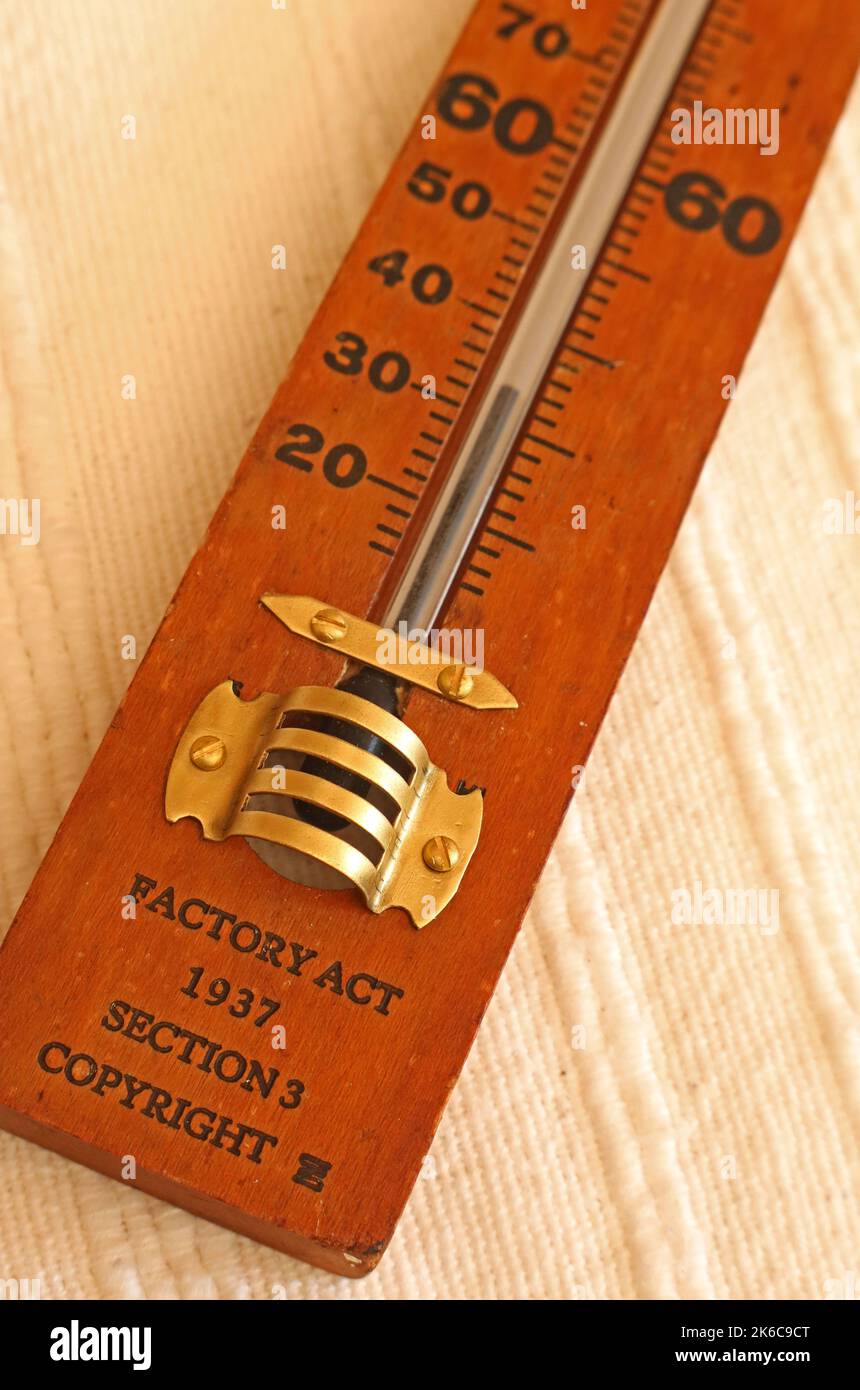
Image details
Contributor:
Tony SmithImage ID:
2K6C9CTFile size:
47.4 MB (1.2 MB Compressed download)Releases:
Model - no | Property - noDo I need a release?Dimensions:
3312 x 5004 px | 28 x 42.4 cm | 11 x 16.7 inches | 300dpiDate taken:
13 October 2022Location:
England, Great Britain , UKMore information:
. This location-specific image from England, Great Britain , UK in 2022 provides a visual record of the subject in everyday context, useful for both contemporary editorial work and later historical comparison. The image documents Wooden industrial bulb thermometer, showing cold temperature in Fahrenheit - factory act 1937 Section 3 copyright, . The surrounding context encompasses period detail, before-and-after reference, contemporary social history, independent retail, customer footfall, specialist retailer, small business, visual archive, social history, everyday life, local enterprise, bricks-and-mortar retail, community identity, and specialist shop. From a 2025-onward perspective, footfall and business rates are closely linked to this subject, alongside how commercial property costs affect small retailers. The archival value lies partly in recording equipment and working practice around England, Great Britain , UK before refurbishment alters the character of the place. Further associations within the scene are street-level business, public realm, changing streetscape, documentary photography, regional identity, place identity, archival record, and shopfront economy. References to temperature, Section, industrial, Wooden, and Fahrenheit give the picture a strong period identity and tie it closely to its named subject. The wider setting at England, Great Britain , UK matters because ordinary visual details often provide the strongest evidence of how a place actually looked and functioned. Another useful connection is footfall and the contribution of independents to distinctive high streets without losing the local specificity of England, Great Britain , UK. The scene further reflects independent business and how shopfronts become short-lived records of changing businesses in a form that can be compared with future views of England, Great Britain , UK. The view records a point of historical comparison before later change alters the scene.

