
Entrance gates to the City of Wolverhampton Market, Cleveland St, Wolverhampton, West Midlands, England, UK, WV1 3HH
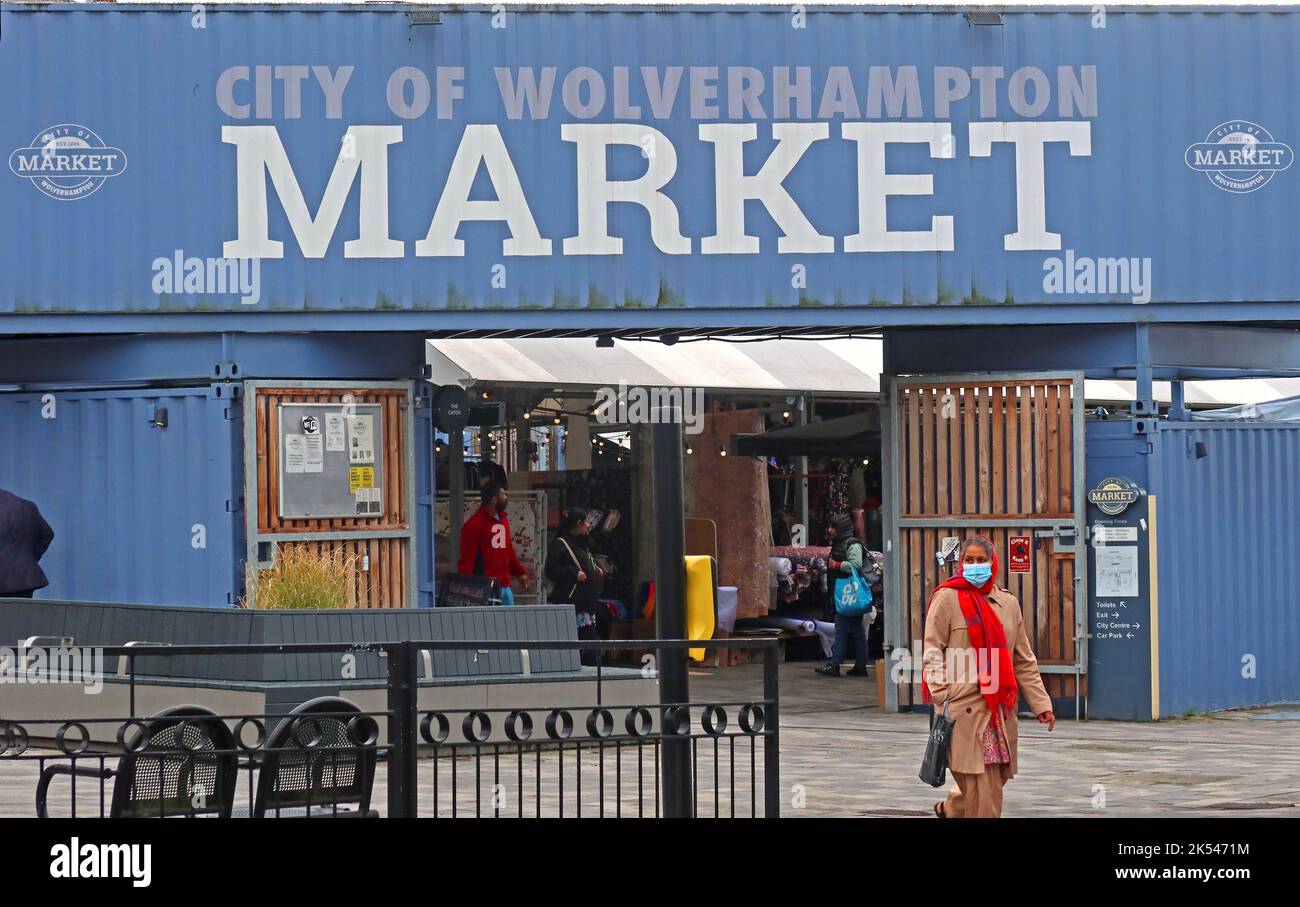
Image details
Contributor:
Tony SmithImage ID:
2K5471MFile size:
53.3 MB (1.9 MB Compressed download)Releases:
Model - no | Property - noDo I need a release?Dimensions:
5444 x 3424 px | 46.1 x 29 cm | 18.1 x 11.4 inches | 300dpiDate taken:
5 October 2022Location:
Cleveland St, Wolverhampton, West Midlands, England, UK, WV1 3HHMore information:
Entrance gates to the City of Wolverhampton Market on Cleveland Street in Wolverhampton city centre, West Midlands, England. The broad gateway is framed by blue corrugated metal cladding and dominated by oversized white MARKET lettering beneath the City of Wolverhampton name. Circular market emblems appear on either side, giving the modern frontage a strong civic identity. Open timber screens reveal covered stalls and customers inside, while pedestrians pass behind black metal street railings. A woman in a red scarf and protective face covering provides a vivid focal point against the blue, white and grey architecture. Other shoppers beneath the canopies record an ordinary day of city-centre trading and the role of markets in community life. The purpose-built market was completed in 2018 after Wolverhampton’s historic outdoor market was relocated from Market Place to Cleveland Street, opposite the Wulfrun Centre. The regeneration scheme created a prominent retail location close to shops, public transport and city-centre footfall. Permanent cabins, traditional stalls and sheltered trading spaces modernised the market while retaining the informal character of open-market shopping. Traders offer fresh food, fruit and vegetables, meat, fish, clothing, household goods, specialist products and everyday merchandise. Photographed in daylight beneath an overcast sky, the image combines municipal branding, retail architecture, shoppers and public-realm details. It illustrates independent trading, affordable local shopping, urban regeneration and the survival of traditional market culture within a changing Black Country city centre. The visible face coverings place the scene within the social history of public shopping during heightened health precautions. The photograph supports editorial themes concerning British markets, small businesses, retail recovery, consumer behaviour, town-centre renewal, community commerce and Wolverhampton’s urban identity.

