
Nigel Adams, Tory MP for Selby & Ainsty, constituency office at 17 high St, Tadcaster, North Yorkshire, England, UK, LS24 9AP
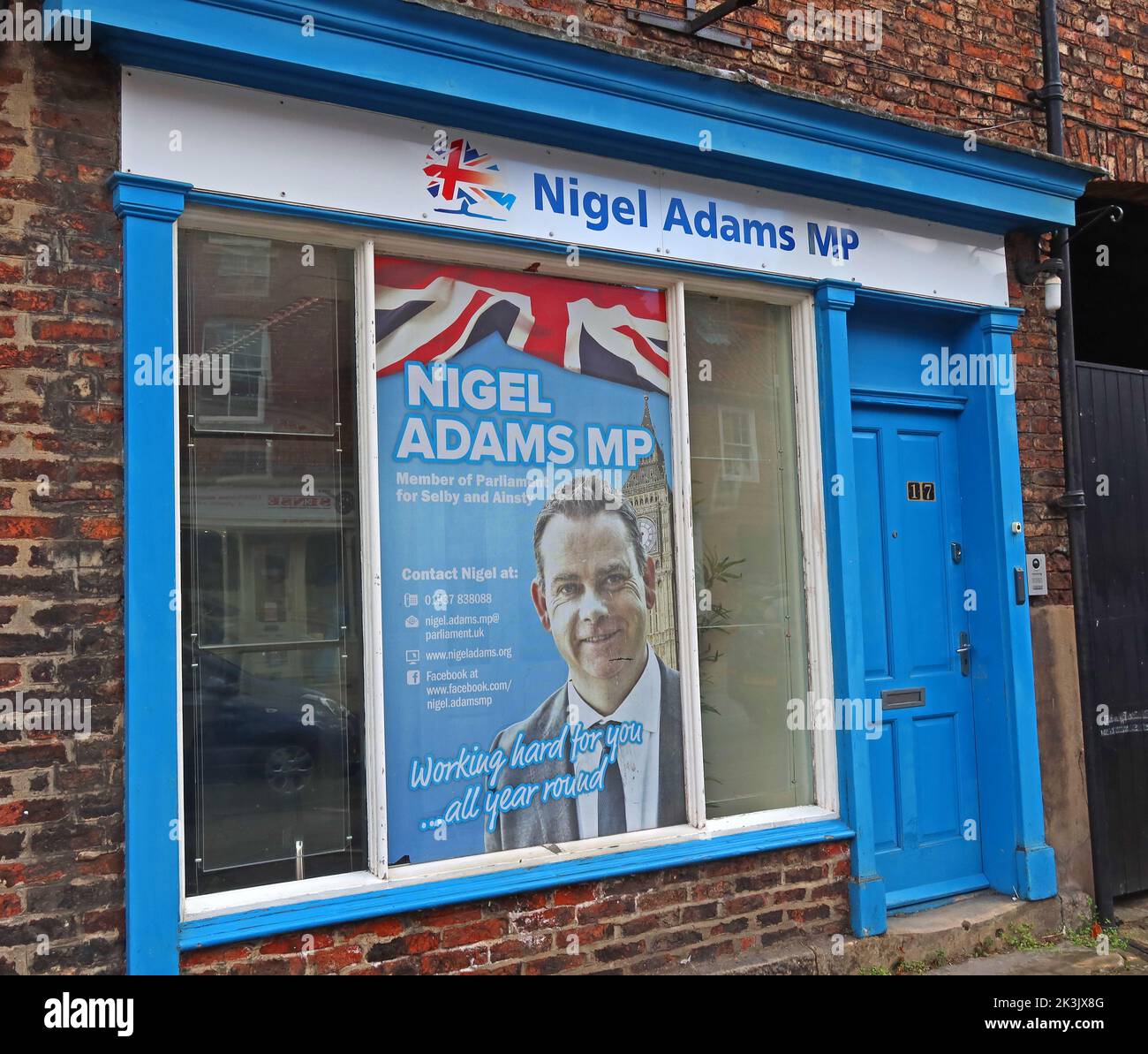
Image details
Contributor:
Tony SmithImage ID:
2K3JX8GFile size:
44.8 MB (1.8 MB Compressed download)Releases:
Model - no | Property - noDo I need a release?Dimensions:
4296 x 3648 px | 36.4 x 30.9 cm | 14.3 x 12.2 inches | 300dpiDate taken:
26 September 2022Location:
17 high St, Tadcaster, North Yorkshire, England, UK, LS24 9APMore information:
Taken on 26 Sep 2022, the photograph focuses on Nigel Adams, Tory MP for Selby & Ainsty, constituency office at 17 high St, Tadcaster, North Yorkshire, England, UK, LS24 9AP. The thumbnail shows a shopfront, service counter, vehicle, pub frontage or ordinary commercial street scene, so the description is rooted in recognisable local services, high street change and documentary evidence of everyday business. Tadcaster is a long-established Yorkshire brewing town on the River Wharfe, and its streets still carry the visual imprint of beer production, coaching routes, stone buildings, flood risk and local trade. For stock photography use, the value is in the precise subject: Nigel Adams, Tory MP for Selby & Ainsty, constituency office at 17 high St, Tadcaster, North Yorkshire, England, UK, LS24 9AP. It can support articles and publications about parish church history, stained glass research, religious art, genealogy, local families, Anglican heritage, memorial inscriptions, church tourism, architectural detail, conservation, as well as more specific searches using Tadcaster, Selby & Ainsty, constituency, Nigel Adams, Conservative, Tory, Tories, party, Rt Hon, house of commons, Yorkshire, LS24 9AP, LS24, 17, high St, North Yorkshire, member of parliament, MP. The composition also gives space for tighter crops, captions, web thumbnails, report illustrations and social media use, while the Alamy reference 2K3JX8G and the row caption help connect the image to a real place rather than a vague concept. The picture can be used by writers covering heritage, conservation, planning, tourism, retail, transport, public services, nostalgia, local identity, architectural survival, industrial change and the way familiar objects or buildings continue to carry meaning in modern Britain. The church setting, memorial detail or glasswork makes the photograph suitable for features on parish l

