
Pre-digital offices Old Cohen & Wilks Ltd receipts and invoices from Manchester, illustrating manual paper-based accounting and administrative systems
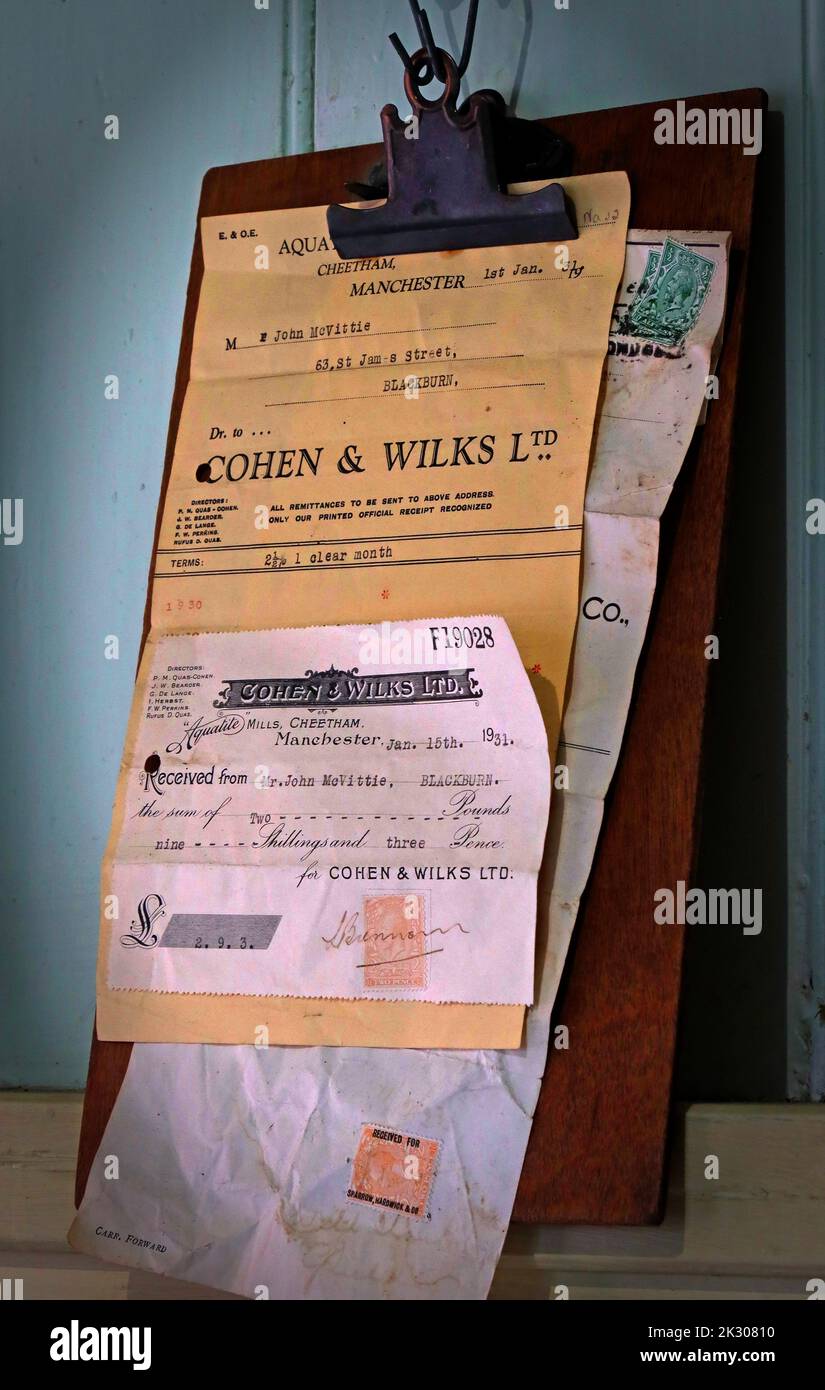
Image details
Contributor:
Tony SmithImage ID:
2K30810File size:
43.8 MB (1.7 MB Compressed download)Releases:
Model - no | Property - noDo I need a release?Dimensions:
3120 x 4912 px | 26.4 x 41.6 cm | 10.4 x 16.4 inches | 300dpiDate taken:
14 September 2022Location:
National Waterways Museum, South Pier Road, Ellesmere Port, Cheshire, England, UK, CH65 4FWMore information:
Collection of old receipts, invoices and business documents associated with Cohen & Wilks Ltd of Manchester is displayed on a wooden clipboard. The paperwork provides a visual example of the manual, paper-based administrative systems once used routinely by commercial organisations before computers, electronic document management and automated finance software became standard. The most prominent document is a large printed invoice headed Cohen & Wilks Ltd, with Manchester shown beneath the company name. It is layered above other sheets carrying handwritten entries, printed account details, stamps and marks created during processing. The papers have aged to different shades of cream, yellow and pale brown, while folded edges, fading and surface wear reflect repeated handling and long-term storage. A smaller receipt attached towards the centre includes handwriting, printed company information and an embossed or printed revenue stamp. Other correspondence is partially visible behind the main invoice, suggesting the way related documents might once have been grouped together to support a transaction, payment, delivery or account entry. The clipboard and metal fastening provide a simple physical method of keeping the papers together while they moved between employees or departments. Before digital accounting systems, invoices and receipts commonly passed through several manual stages. Documents could be received through the post, date stamped, checked against orders, coded to an account, authorised for payment, entered into ledgers and then filed for audit or future reference. Each stage depended upon staff handwriting, physical signatures, filing cabinets and the reliable movement of paper between desks. The photograph is suitable for illustrating traditional bookkeeping, historic business administration, accounts payable processes, office bureaucracy, paper records, document storage and the transition from manual working practices to digital systems. It may also sup

