
Original Bush, 1960s TV set, 405 line receiver, with Television guide to two channels, resting on top
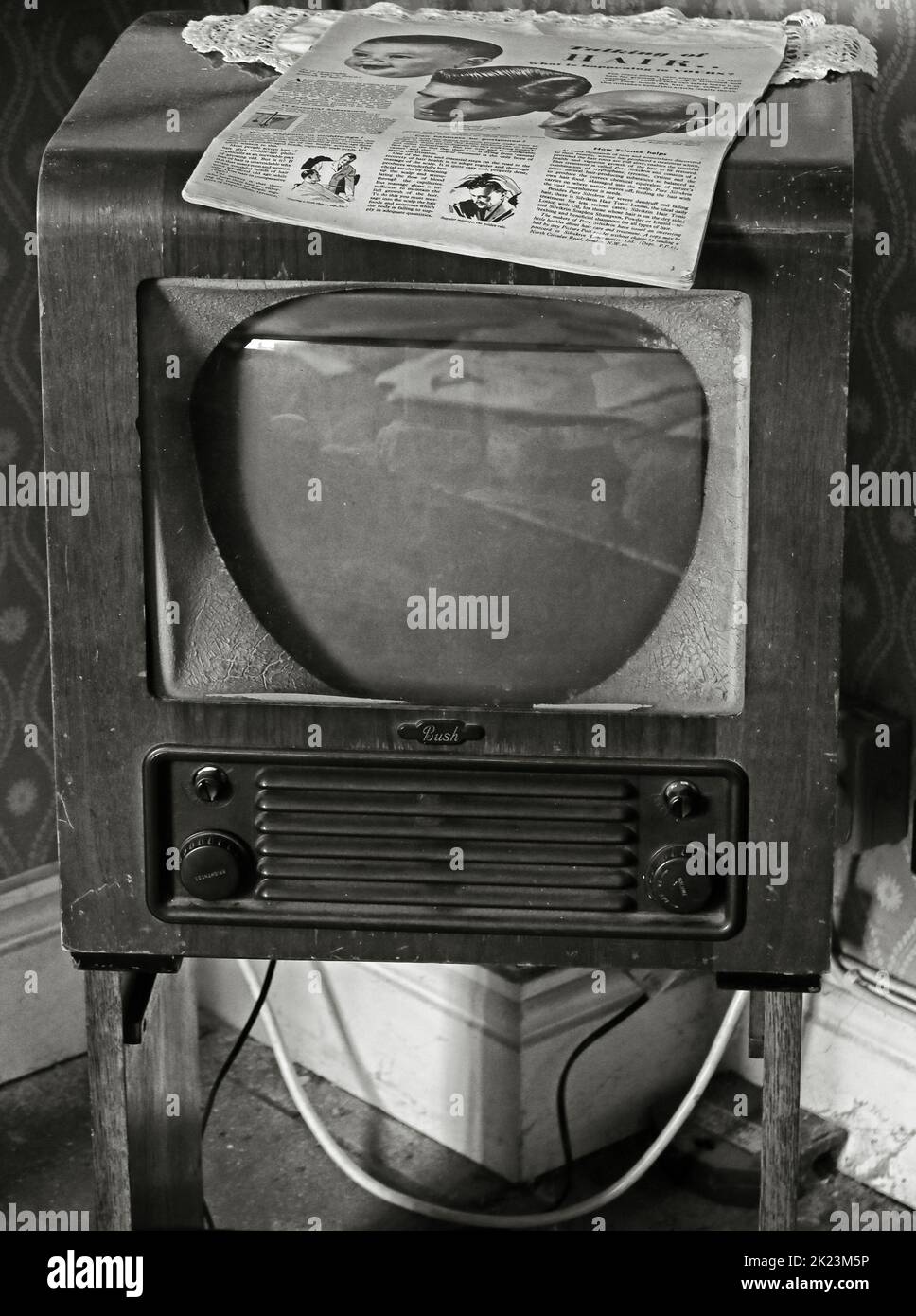
Image details
Contributor:
Tony SmithImage ID:
2K23M5PFile size:
51.1 MB (2.3 MB Compressed download)Releases:
Model - no | Property - noDo I need a release?Dimensions:
3648 x 4896 px | 30.9 x 41.5 cm | 12.2 x 16.3 inches | 300dpiDate taken:
14 September 2022Location:
UKMore information:
Vintage British monochrome television receiver stands inside a domestic interior, its deep wooden cabinet, rounded cathode-ray-tube screen, front loudspeaker grille and large rotary controls recalling the early decades of mass television ownership. A newspaper has been placed across the top of the set, reinforcing the period atmosphere and the historic relationship between printed news and broadcast media. The black-and-white photograph provides a strong visual contrast with today’s slim digital displays, smart televisions, smartphones and portable streaming devices. The receiver represents Britain’s former 405-line television system, which produced a comparatively coarse black-and-white picture transmitted through the VHF network. For much of the early commercial television era, viewers had a sharply limited choice compared with the hundreds of channels and near-unlimited online libraries now available. BBC Television and ITV formed the familiar two-channel landscape before BBC2 launched in 1964 using the higher-definition 625-line standard. Older 405-line broadcasting nevertheless remained operational for many years and was not finally closed until 1985. Television ownership also carried a legal obligation to obtain a UK television licence, making the set not merely an entertainment appliance but part of a regulated national broadcasting system. Scheduled programmes, fixed transmission times and published listings shaped domestic routines, with families often gathering around a single screen to watch the same entertainment, news, sport or major national event. The image also works as an editorial illustration for the continuing debate over the future of traditional television. Linear broadcast viewing has declined significantly, particularly among children and younger adults, as audiences increasingly favour YouTube, subscription streaming, short-form video and programmes available whenever they choose. Ofcom reported that broadcast television’s long-term decline

