
sign, Welcome to Manchester Arndale Market
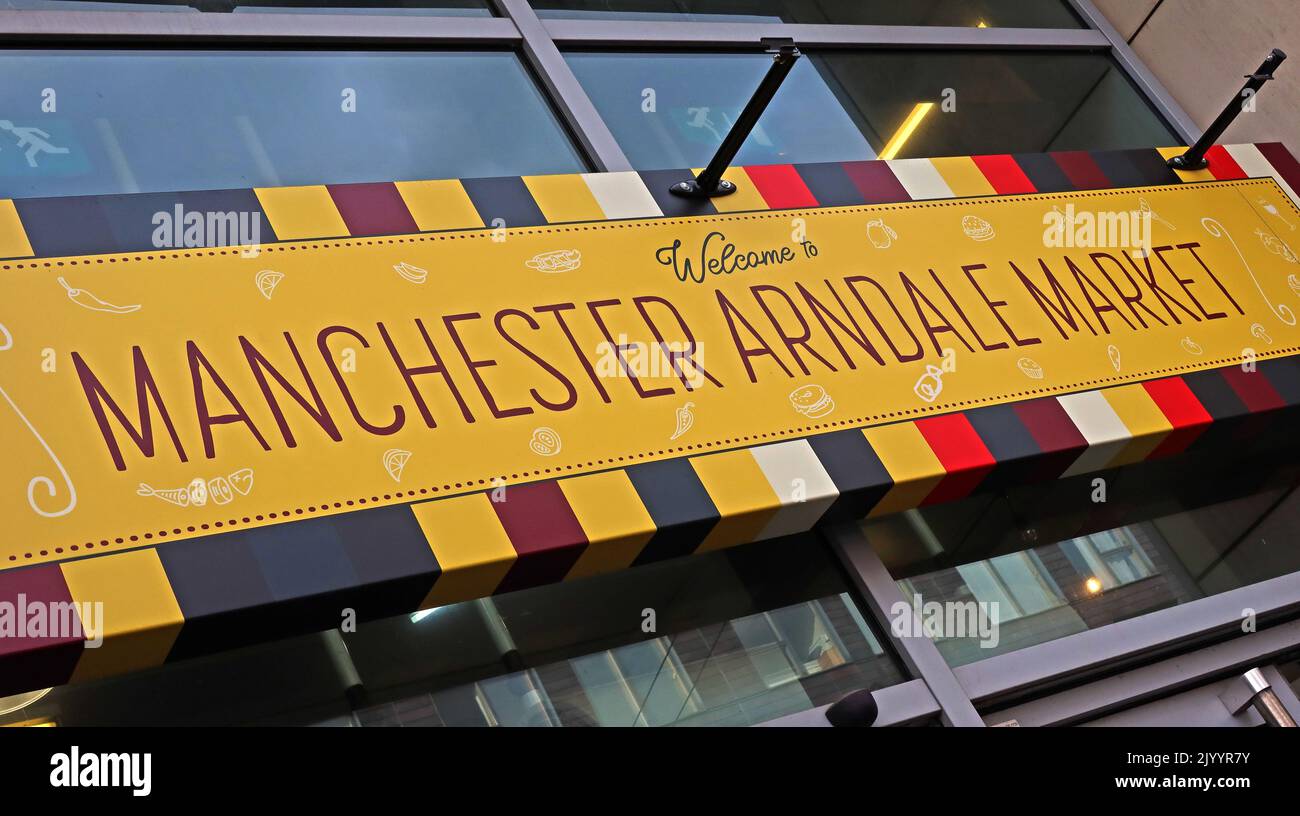
Image details
Contributor:
Tony SmithImage ID:
2JYYR7YFile size:
47.9 MB (1.5 MB Compressed download)Releases:
Model - no | Property - noDo I need a release?Dimensions:
5472 x 3060 px | 46.3 x 25.9 cm | 18.2 x 10.2 inches | 300dpiDate taken:
26 August 2022Location:
Arndale Centre Market, Manchester, England, UK, M4 3ABMore information:
. sign, Welcome to Manchester Arndale Market. Photographed on 26 August 2022. The recorded location is Arndale Centre Market, Manchester, England, UK, M4 3AB. Stalls inside the Arndale Shopping Centre selling international foods, plus fashions. Historically, markets and high-street businesses combine commercial history with everyday social life; Their changing occupiers, branding and uses document local economies, consumer culture, town-centre regeneration and the long shift from traditional retailing towards mixed shopping, food and leisure destinations. From a heritage perspective, signs and notices are ephemeral pieces of design that can become important historical evidence; Lettering, logos, warnings and directions record former businesses, regulations, transport systems and public messages that may disappear long before the surrounding building changes. In 2026, town-centre resilience continues to be a major policy issue in England, with government programmes aimed at high streets and community ownership of valued local assets; Changing retail patterns, vacancies and the growth of food-led destinations make older shop and market photographs useful for comparison. As of 2026, digital wayfinding is widespread, but physical signage remains essential for safety, accessibility and identity; Historic notices and ghost signs are also increasingly appreciated as part of the character of streets and buildings. The historical context is that shops and markets are a visible record of changing consumer life, from family businesses and specialist traders to chain stores, department stores and regenerated market halls; Fascias, signs and shopfronts can date a street scene as clearly as architecture or vehicles. Against the 2026 backdrop, much public information has moved onto smartphones and digital displays, making older fixed signs and printed notices increasingly valuable as evidence of how people once navigated places, bought services and followed rules.

