
Monopoly board, sterling notes, cost of buying property, new houses in Scotland, reducing effect of second homes to community
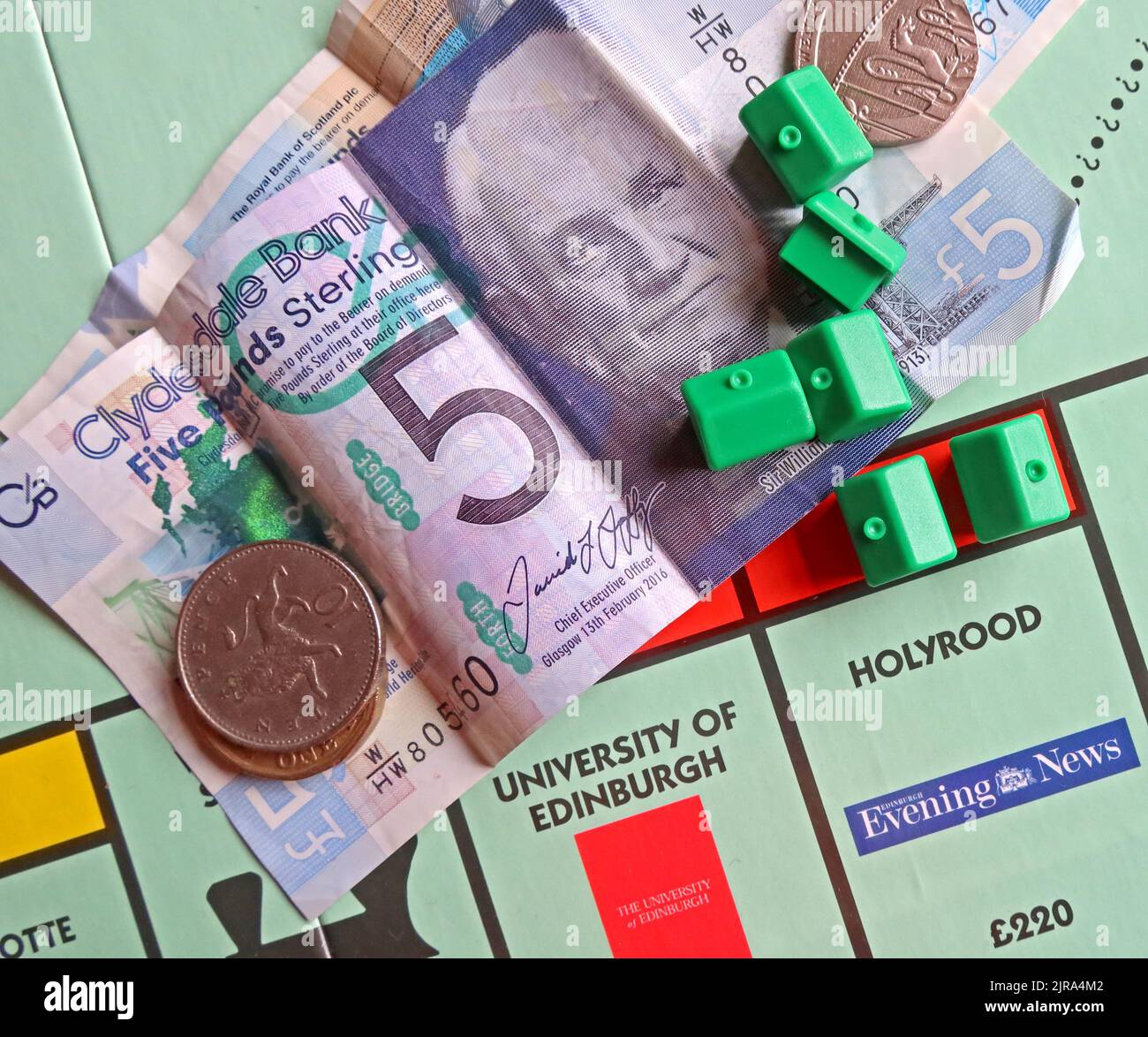
Image details
Contributor:
Tony SmithImage ID:
2JRA4M2File size:
37.9 MB (1.7 MB Compressed download)Releases:
Model - no | Property - noDo I need a release?Dimensions:
3984 x 3324 px | 33.7 x 28.1 cm | 13.3 x 11.1 inches | 300dpiDate taken:
23 August 2022More information:
. Made at the recorded location in 2022, this photograph records a real place and moment, preserving details that may later be altered by redevelopment, rebranding, changing ownership or different public use. The photograph centres on Monopoly board, sterling notes, cost of buying property, new houses in Scotland, reducing effect of second homes to community. The subject also carries associations with regional identity, changing streetscape, customer footfall, public realm, social history, town-centre economy, high-street commerce, community identity, before-and-after reference, documentary photography, mixed-use town centre, local character, independent trading, and shopfront economy. The modern context includes continuing discussion of store closures, changing footfall and the role of markets and independent shops in keeping town centres active. The image fixes local activity and public use within the recorded location at one identifiable point, providing a benchmark against conservation work. The surrounding story also includes changing land use, destination shopping, bricks-and-mortar retail, period detail, retail property, historical comparison, visual archive, and consumer retail. References to homes, Monopoly, houses, board, and buying give the picture a strong period identity and tie it closely to its named subject. By fixing the subject within the recorded location, the image preserves more than the headline object or building: it records part of the locality's everyday history. Another strand within the photograph is store closures and the rapid turnover of shopfronts and trading names without losing the local specificity of the recorded location. The setting also helps illustrate consumer spending and the role of markets and independent shops in keeping town centres active in a form that can be compared with future views of the recorded location. The photograph keeps part of the area's social history for later comparison.

