
Thermometer needle rises beyond the comfort zone, illustrating record-breaking UK and European temperatures during the June 2026 heatwave
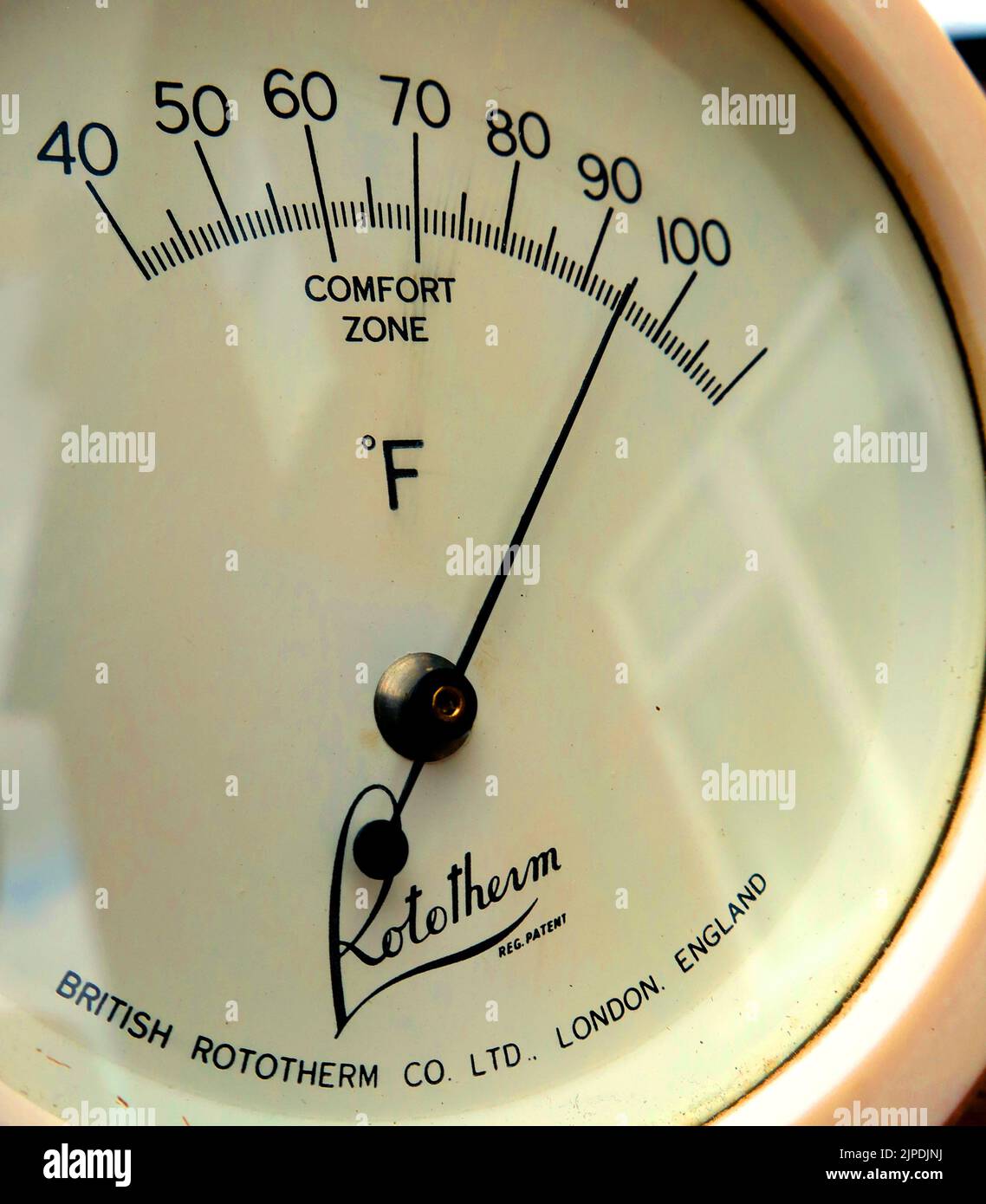
Image details
Contributor:
Tony SmithImage ID:
2JPDJNJFile size:
37.2 MB (866 KB Compressed download)Releases:
Model - no | Property - noDo I need a release?Dimensions:
3376 x 3856 px | 28.6 x 32.6 cm | 11.3 x 12.9 inches | 300dpiDate taken:
17 August 2022Location:
Cheshire, England, UK, WA4More information:
Close-up of a vintage British Rototherm analogue thermometer with its black needle positioned well beyond the marked comfort zone and approaching 100 degrees Fahrenheit. The cream-coloured instrument face carries a Fahrenheit scale from 40 to above 100, together with the visible wording “Comfort Zone”, “Rototherm”, “British Rototherm Co Ltd” and “London, England”. The image provides a direct visual concept for excessive warmth, overheating, temperature monitoring and conditions that have moved far outside what is normally considered comfortable. The photograph is particularly relevant to the exceptional late June 2026 heatwave affecting the United Kingdom and much of Europe. Britain provisionally recorded 36.7°C at Merryfield in Somerset on 25 June, breaking the previous national June maximum after records had already been exceeded the previous day. Across western and central Europe, a persistent area of high atmospheric pressure and an omega-shaped blocking pattern trapped intensely warm air, creating conditions widely described as a heat dome. The dial’s needle extending beyond the comfort range can illustrate the consequences of extreme weather for homes, offices, factories, schools, hospitals and public transport. Prolonged heat can increase cooling demand, reduce productivity, worsen indoor overheating and create serious health risks, particularly for older people, babies and those with existing medical conditions. It is also relevant to reporting on heat warnings, energy consumption, building design and adaptation to warmer summers. Individual heatwaves arise from particular weather patterns, but human-caused climate change is increasing their likelihood and intensity. The continuing accumulation of carbon dioxide and other greenhouse gases from burning coal, oil and gas raises average temperatures and makes extreme heat more severe. This image connects a traditional British measuring instrument with the modern climate emergency, record-breaking weather,

