
Monochrome portrait of Joy Division vocalist Ian Curtis, painted by Akse on a Macclesfield town-centre gable wall, Mill Street
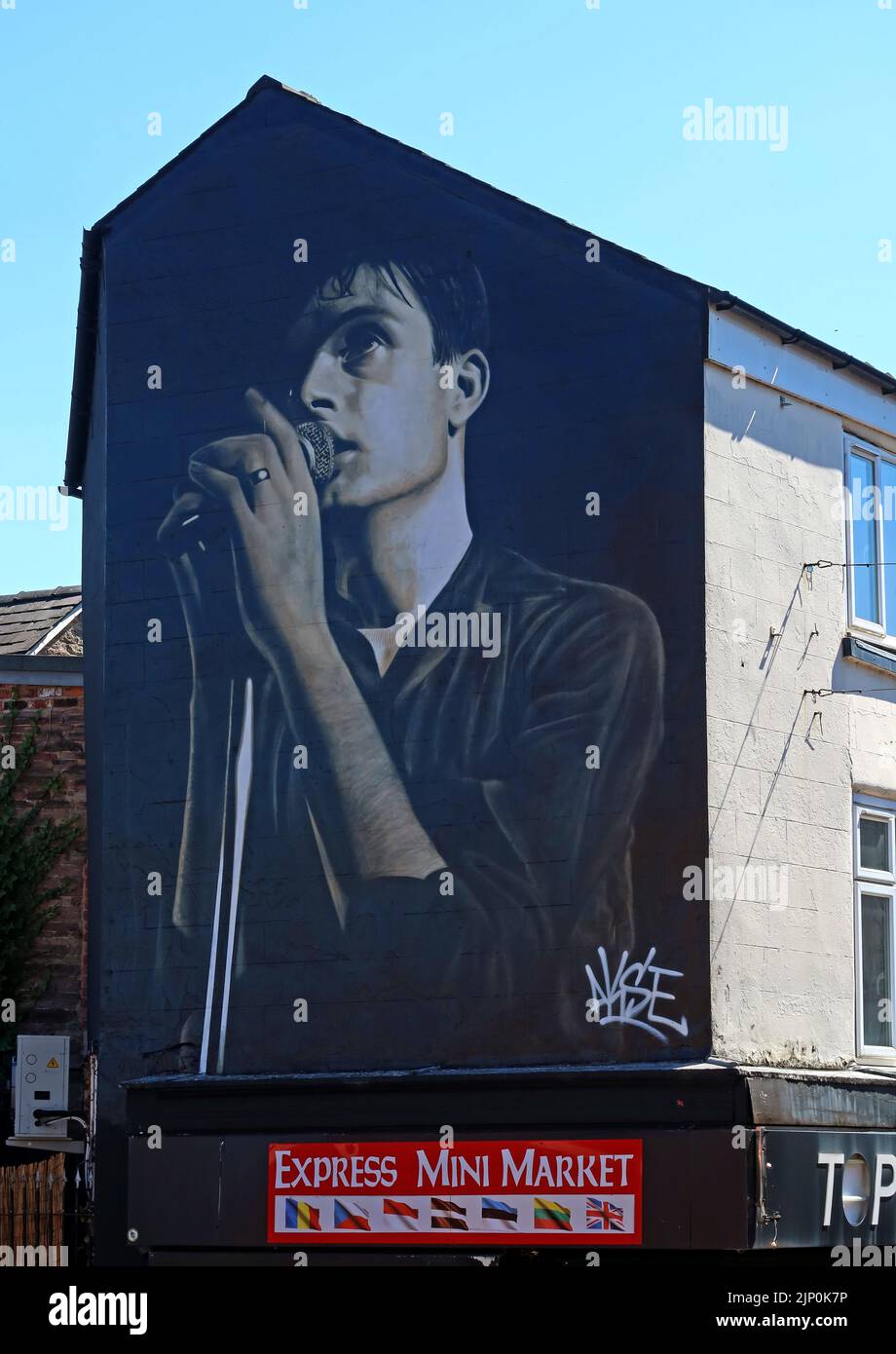
Image details
Contributor:
Tony SmithImage ID:
2JP0K7PFile size:
53.8 MB (1.4 MB Compressed download)Releases:
Model - no | Property - noDo I need a release?Dimensions:
3648 x 5152 px | 30.9 x 43.6 cm | 12.2 x 17.2 inches | 300dpiDate taken:
12 August 2022Location:
Mill Street, Macclesfield, Cheshire, England, UK,SK11 6NNMore information:
Monumental monochrome mural of Ian Curtis, singer and frontman of the influential post-punk band Joy Division, fills the gable wall of a building on Mill Street in Macclesfield, Cheshire. The close view shows Curtis holding a microphone during a performance, his face turned upwards against a deep black background. Manchester-based street artist Akse created the spray-painted portrait from a 1979 photograph by music photographer Kevin Cummins. The black-and-white artwork stands out beneath a clear blue summer sky, with the artist’s signature visible at the lower right. Commissioned by Cheshire East Council, the mural was completed in March 2022 and officially unveiled on 26 March by Joy Division co-founder and bass player Peter Hook. Positioned opposite Macclesfield bus station, it gives the town-centre building a powerful cultural presence and has become a public-art landmark for residents, visitors and fans exploring northern England’s music heritage. The work also supports efforts to celebrate Macclesfield’s identity and encourage town-centre regeneration. Ian Curtis was born in Stretford in 1956 but was brought up in Macclesfield, attended King’s School and remained closely associated with the town. His ashes are buried at Macclesfield Cemetery. Joy Division emerged from the Greater Manchester music scene in the late 1970s and became one of Britain’s most important post-punk groups. Their albums Unknown Pleasures and Closer, released through Factory Records, and songs including Love Will Tear Us Apart, Transmission and Atmosphere established an enduring international reputation. Following Curtis’s death in May 1980, the remaining members formed New Order. This tightly framed image emphasises the scale, emotional intensity and photographic detail of Akse’s work, presenting Curtis as both a locally connected musician and an internationally recognised figure in British alternative music

