
Arable farm production, affected by a warming climate, inflation and war in Ukraine - June 2026 UK and Europe heatwave & Heat Dome
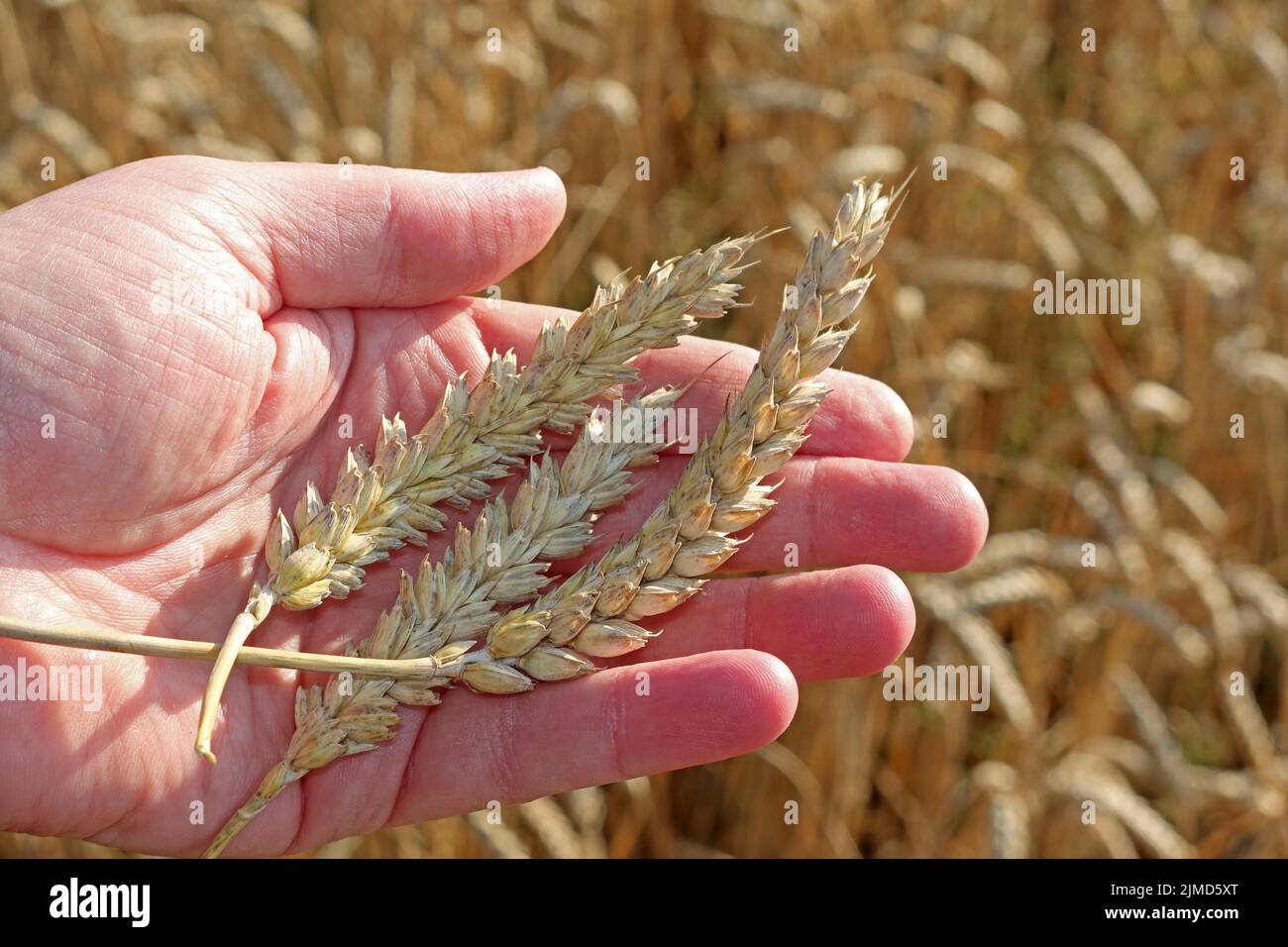
Image details
Contributor:
Tony SmithImage ID:
2JMD5XTFile size:
57.1 MB (1.6 MB Compressed download)Releases:
Model - no | Property - noDo I need a release?Dimensions:
5472 x 3648 px | 46.3 x 30.9 cm | 18.2 x 12.2 inches | 300dpiDate taken:
5 August 2022Location:
Cheshire, England, UK, WA4More information:
Close-up image of a hand holding several ripening wheat ears against a softly blurred backdrop of a golden arable field. The photograph works as a strong editorial illustration of food production, cereal farming, harvest prospects and the pressures facing growers during periods of extreme summer weather. The tactile inspection of the ears suggests concern over crop condition, grain development and the likely effect of heat and drought on final output. The image is especially relevant to the late June 2026 heatwave that affected Britain and large parts of Europe. The UK provisionally recorded 36.7°C at Merryfield, Somerset, on 25 June, setting a new national June maximum, while the wider European heat event brought temperatures well above seasonal norms and triggered warnings about impacts on health, ecosystems, infrastructure and agriculture. Meteorologists and climate specialists described a persistent blocking pattern, often referred to in media coverage as a heat dome or omega block, helping to trap very warm air over western and central Europe. For arable farming, intense heat at critical stages of crop development can reduce grain fill, accelerate ripening, increase moisture stress and ultimately lower yields and quality. This makes the photograph useful for stories about climate change, drought pressure, food security and the vulnerability of cereal production to more volatile weather. It also connects with wider economic themes. UK agricultural input prices remained under pressure in 2026, particularly for fertiliser, fuels and related essentials, while the longer-running effects of war in Ukraine continued to influence grain markets, supply chains and the cost environment faced by farmers and food producers. Overall, the picture offers a clear visual concept for reporting on the combined pressures of climate warming, extreme heat, inflationary farm costs and geopolitical disruption on UK and European arable agriculture.

