
The words “Social Care” spelt with tiles on a map of Central Scotland, illustrating Scottish care policy devolved responsibilities & Andy Burnham push
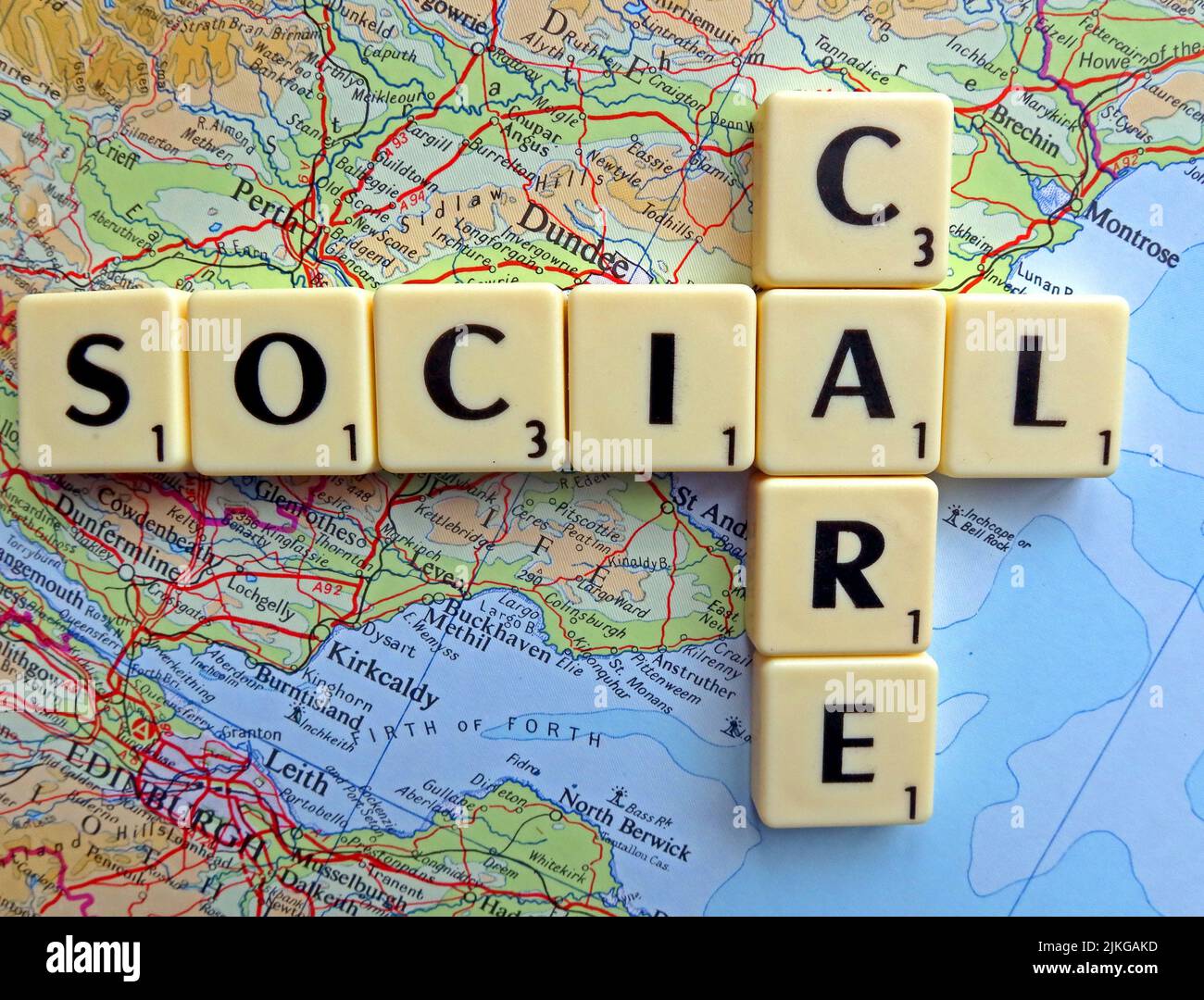
Image details
Contributor:
Tony SmithImage ID:
2JKGAKDFile size:
47.5 MB (2.3 MB Compressed download)Releases:
Model - no | Property - noDo I need a release?Dimensions:
4669 x 3557 px | 39.5 x 30.1 cm | 15.6 x 11.9 inches | 300dpiDate taken:
2 August 2022Location:
Scotland, UKMore information:
Words “Social Care” are spelled out using cream-coloured letter tiles laid across a road map of Central Scotland, creating a simple but effective conceptual illustration about care provision, public policy and the geography of service responsibility. The map background shows part of the Scottish mainland including the Dundee, Perth, Fife and Edinburgh corridor, helping anchor the image in a clearly Scottish context rather than a generic UK-wide setting. The combination of word tiles and cartography turns an abstract policy subject into a visual shorthand for debates about how care is planned, funded and delivered. In the political context of July 2026, the image can be read alongside renewed discussion at Westminster after Prime Minister Andy Burnham signalled a wish to engage with social care. However, the Scottish dimension is important, because health and social care are devolved matters in Scotland rather than being directed in detail from Westminster. That means major questions around adult social care policy, integration, reform and funding sit principally with the Scottish Government and Scottish Parliament, even though wider UK political debate may still shape expectations, spending pressures and public attention. The photograph is therefore well suited to stories about Scottish care services, care workforce shortages, demographic pressures, support for older people, disability services, unpaid carers, home care, residential care and the long-running debate over sustainable reform. It can also illustrate continuing discussion around a National Care Service for Scotland, local authority responsibilities, integrated health and social care partnerships and uneven access to support between different places and communities. Because the image is symbolic rather than literal, it has broad editorial use for news, features and opinion pieces about care policy, devolved government, welfare priorities and public spending choices. Overall, it presents social care as

