
Former Free Library and Municipal College Gymnasium stone - 101 Railway Rd, Leigh WN7 4AD
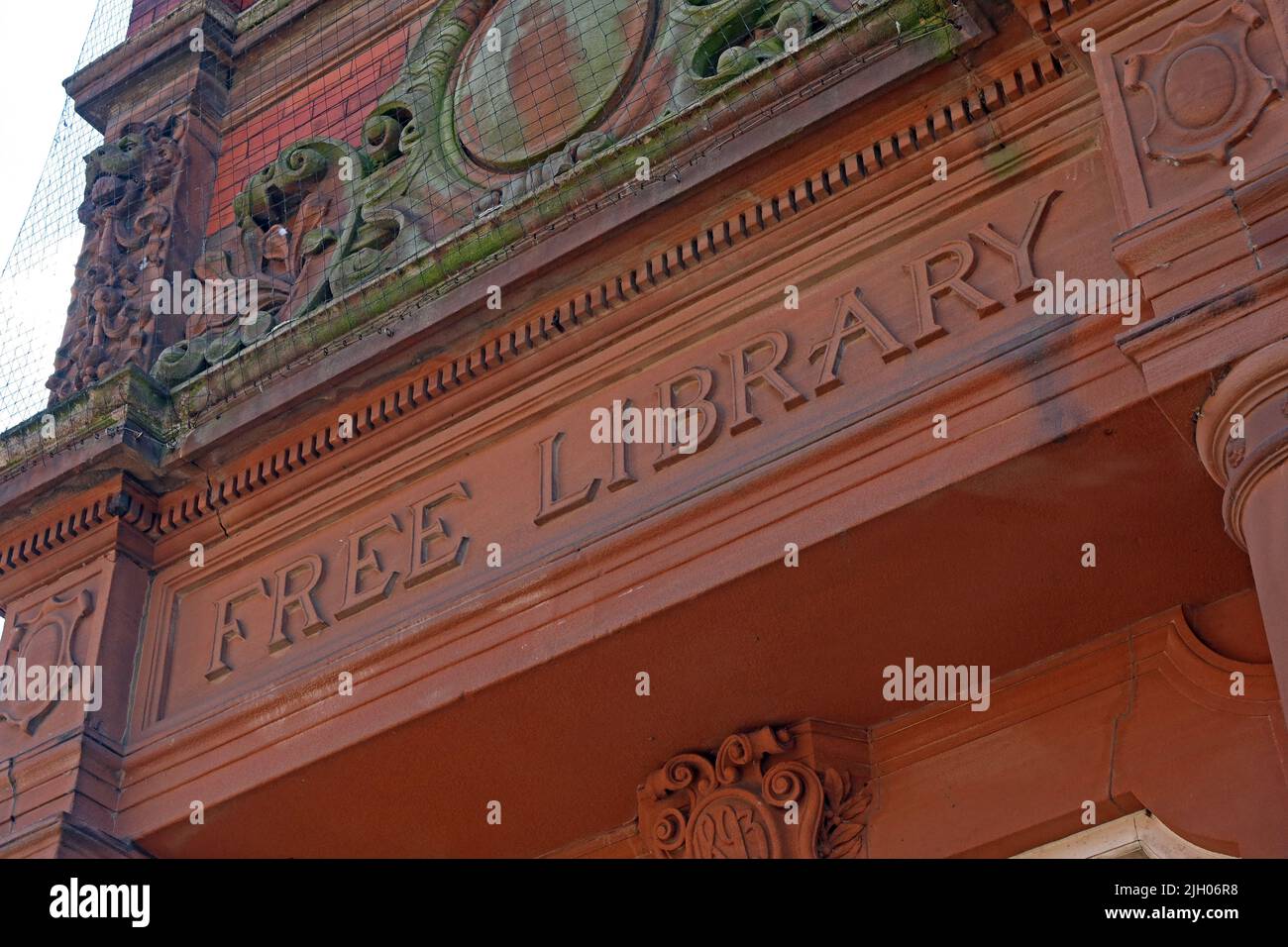
Image details
Contributor:
Tony SmithImage ID:
2JH06R8File size:
57.1 MB (2.6 MB Compressed download)Releases:
Model - no | Property - noDo I need a release?Dimensions:
5472 x 3648 px | 46.3 x 30.9 cm | 18.2 x 12.2 inches | 300dpiDate taken:
13 July 2022Location:
101 Railway Rd, Leigh, Lancashire, England, UK, WN7 4ADMore information:
. Former Free Library and Municipal College Gymnasium stone - 101 Railway Rd, Leigh WN7 4AD. Photographed on 13 July 2022. The recorded location is 101 Railway Rd, Leigh, Lancashire, England, UK, WN7 4AD. (1894 J C Prestwich and J H Stephen). Corner tower with complex ogee cap roof and open fretwork lantern, finial and lead roll ribs emphasising the roof shape. To the side the elaborate Dutch gable and also the window with red sandstone details. From a heritage perspective, libraries have continually adapted from reading rooms and reference collections to computers, events, study spaces and digital services; Interior details and staffing images show how the public library functions as both an information service and a community place. Historically, stations and railway infrastructure are both working transport assets and historical records; Their evolving operators, signage, ticketing systems, rolling stock and architecture chart the development of British rail travel from the Victorian era to modern inter-city and commuter services. In historical terms, architecture records the priorities of the period in which a building was designed: materials, ornament, scale and planning can reveal changing technologies, social status and commercial use; Later alterations and changes of tenant add further layers, so a single façade can embody several phases of local history. As of 2026, public libraries remain significant community infrastructure, particularly for people needing free access to information, digital services and shared space; Photographs of earlier staffing and buildings can support coverage of service change and community ownership. In 2026, rail reform gives this type of image extra context; The government is legislating for Great British Railways to coordinate infrastructure, services, fares and timetables, while historical operator liveries and station equipment increasingly become records of the post-privatisation era.

