
Manchester Piccadilly mainline railway station, west Coast mainline, England, UK, showing departure boards
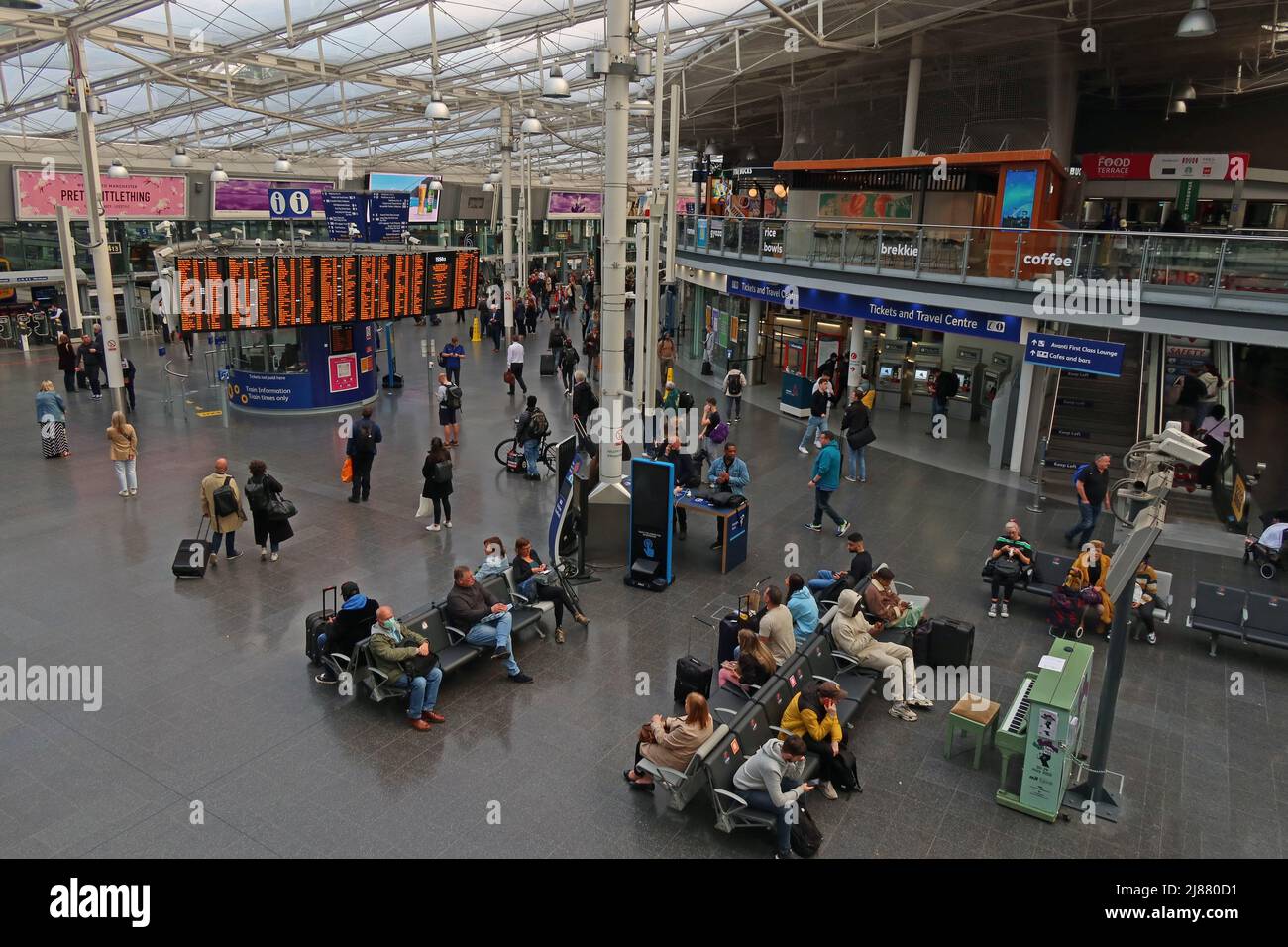
Image details
Contributor:
Tony SmithImage ID:
2J880D1File size:
57.1 MB (2.4 MB Compressed download)Releases:
Model - no | Property - noDo I need a release?Dimensions:
5472 x 3648 px | 46.3 x 30.9 cm | 18.2 x 12.2 inches | 300dpiDate taken:
13 May 2022More information:
. Photographed at the recorded location in 2022, this detailed editorial image records the subject within its real surroundings and preserves a specific stage in the life of the location. The photograph centres on Manchester Piccadilly mainline railway station, west Coast mainline, England, UK, showing departure boards. Another layer of the photograph includes everyday life, contemporary social history, local history, everyday street life, community identity, place identity, changing land use, townscape record, urban social history, local character, passenger railway, archival record, visual archive, and station environment. For current editorial use, fares and reliability provide additional context, especially through the continuing importance of rail to regional connectivity. Current relevance extends to transport and footfall, particularly through the documentary importance of recording everyday urban environments. As a dated visual record of the recorded location, the frame retains landscape treatment and surrounding development, making it especially useful if different community use subsequently changes the scene. A second descriptive layer includes rolling stock, period detail, pedestrian environment, changing streetscape, historical comparison, regional identity, social landscape, and before-and-after reference. The combination of Manchester, mainline, departure, railway, and boards anchors the frame to a recognisable activity, place or moment. Around the recorded location, apparently routine details can become historically useful once businesses close, buildings change use or familiar features disappear. The setting also helps illustrate fares and the balance between railway heritage and network modernisation in a form that can be compared with future views of the recorded location. The record includes period character before later change alters the scene. The frame retains a trace of local identity as a date-specific reference.

