
RNIB,Royal National Institute for the Blind, Braille pocket watch,for blind people
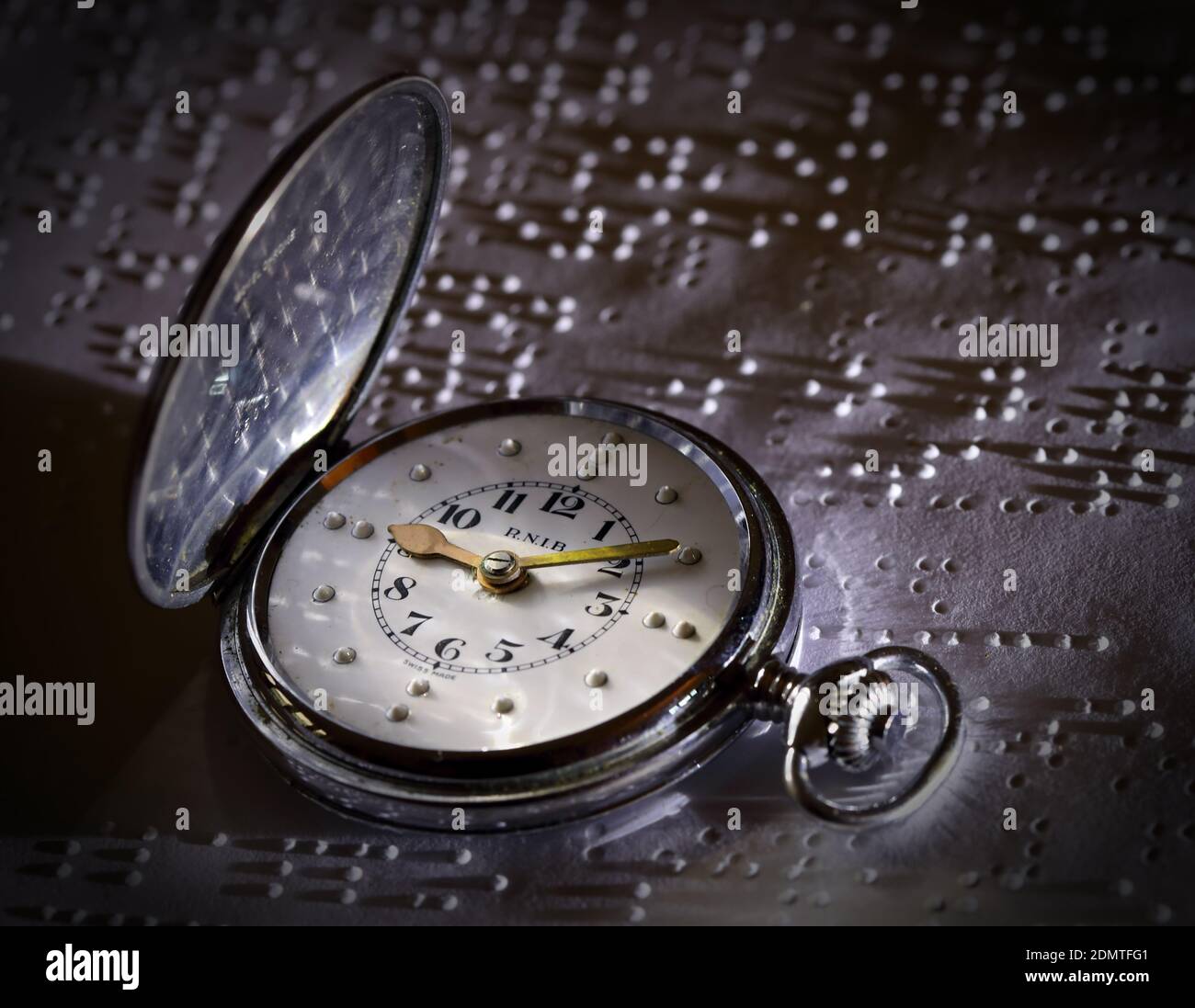
Image details
Contributor:
Tony SmithImage ID:
2DMTFG1File size:
56.7 MB (953.7 KB Compressed download)Releases:
Model - no | Property - noDo I need a release?Dimensions:
5056 x 3920 px | 42.8 x 33.2 cm | 16.9 x 13.1 inches | 300dpiDate taken:
10 December 2020Location:
RNIB braille pocket watch on raised Braille text, showing tactile timekeeping and assistive technoloMore information:
A braille or tactile pocket watch displayed on raised Braille text, connected with the Royal National Institute of Blind People and the long history of accessible timekeeping for blind and partially sighted people. The open watch face shows raised markers around the dial and sturdy hands designed to be read by touch, allowing a person to tell the time independently without relying on sight. The image is useful for editorial coverage of assistive technology, accessibility, disability history, inclusive design, RNIB, Braille literacy, tactile reading, visual impairment, blindness, personal independence and everyday objects adapted for blind users. RNIB traces its origins to 1868, when Thomas Rhodes Armitage founded the British and Foreign Society for Improving the Embossed Literature of the Blind, reflecting the wider nineteenth century drive to improve access to reading, education, employment and practical tools for blind people. Tactile watches are still sold and discussed today as accessible devices, although RNIB notes that products described as “braille watches” may vary, so the actual tactile features should always be checked. This close-up composition places the historic watch directly on embossed Braille, making the photograph especially strong for illustrating touch, reading by hand, independence, sensory design and development of technology before talking watches and smartphones. The dark background, polished metal case, open cover, visible crown and angled light give the object a museum-like quality, suitable for articles on social history, product design, disability rights, accessible consumer goods, charities, adaptive equipment and the evolution of assistive devices. It can also support educational material about Louis Braille’s system, raised dots, inclusive communication, sight loss, low vision support and the importance of practical design that allows blind and partially sighted people to manage daily life with dignity and privacy.

