
RFA Fort Austin Fort Rosalie-class dry stores ship,A386, Birkenhead, Wirral, Merseyside, England, UK , CH41
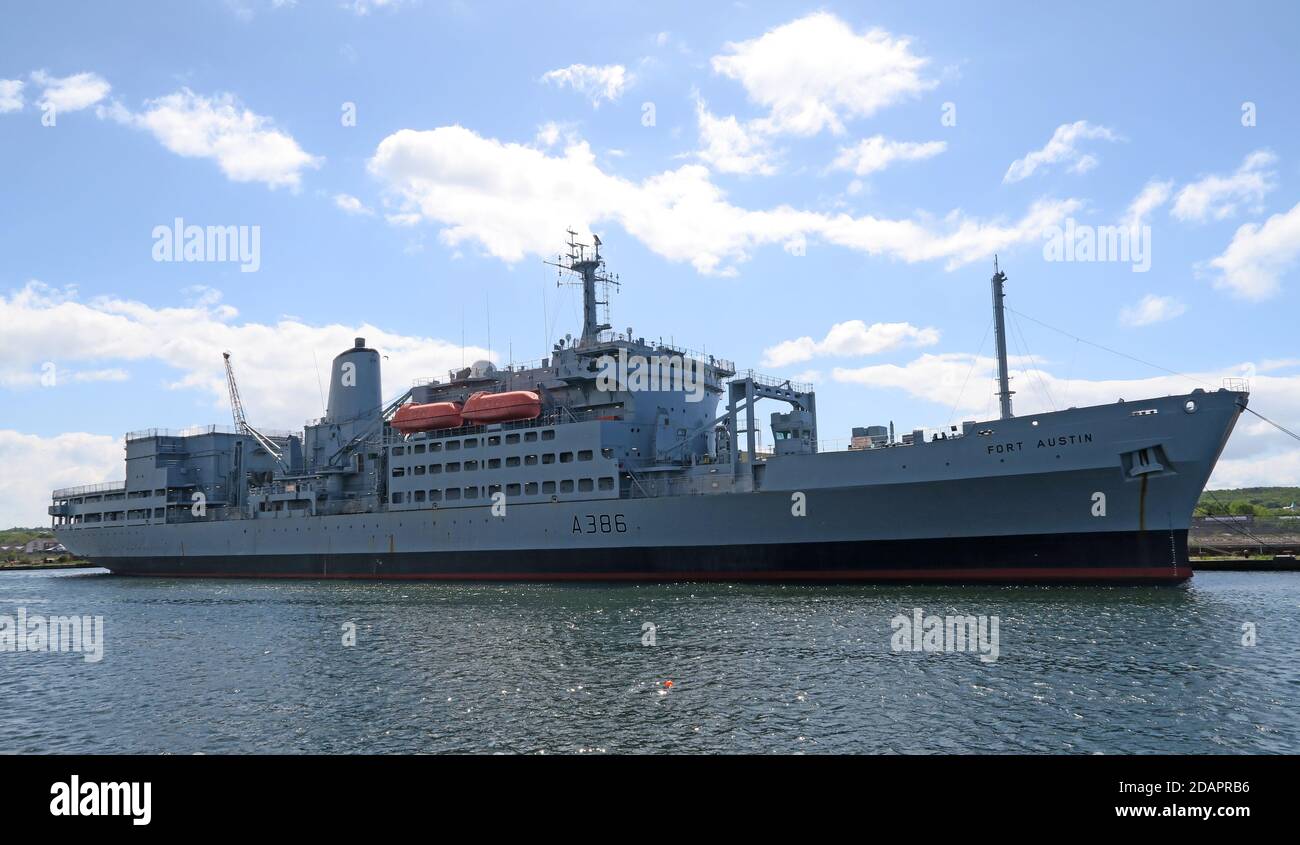
Image details
Contributor:
Tony SmithImage ID:
2DAPRB6File size:
49.8 MB (1.7 MB Compressed download)Releases:
Model - no | Property - noDo I need a release?Dimensions:
5472 x 3180 px | 46.3 x 26.9 cm | 18.2 x 10.6 inches | 300dpiDate taken:
4 May 2019Location:
Birkenhead, Wirral, Merseyside, England, UK , CH41More information:
RFA Fort Austin, pennant A386, is pictured moored in Birkenhead, Wirral, Merseyside, with her long grey hull filling the frame under a bright blue sky dotted with white clouds. This broadside port-side view shows the Royal Fleet Auxiliary dry stores ship with the name FORT AUSTIN clearly marked on the bow and the hull number A386 painted amidships, while lifeboats, cranes, replenishment gear, superstructure and deck equipment are all visible. Fort Austin was a Fort Rosalie-class fleet support vessel built to carry ammunition, food, stores and other dry cargo needed to sustain Royal Navy warships and task groups at sea, making her an important part of British naval logistics and maritime defence support. The ship entered service in 1979 and went on to serve the Royal Fleet Auxiliary for decades, including support duties associated with major operations and deployments. In this image she is seen alongside in the Birkenhead docks area, associated with the Cammell Laird shipyard, West Float and the wider working waterfront of the River Mersey. The scene combines naval heritage, industrial dockland character and maritime engineering interest, with dark dock water in the foreground and the vast auxiliary vessel dominating the composition. The clean side-on profile, calm conditions and open summer light make the vessel’s size and purpose easy to read, while the dockside setting roots the image firmly in Merseyside’s maritime landscape. Fort Austin later reached the end of her long British service career, being withdrawn from operational service in 2021 before subsequent disposal and transfer, which adds further historical interest to photographs made while she remained in UK waters. The picture is therefore useful both as a documentary editorial view of a named Royal Fleet Auxiliary vessel and as a record of Merseyside’s continuing connection with ship repair, naval support and seafaring history.

