
3d,9d,5d,11d,day return,single Bury Corporation bus tickets, from 1960's, Greater Manchester, Lancashire, England, UK - Preprinted bus Tickets
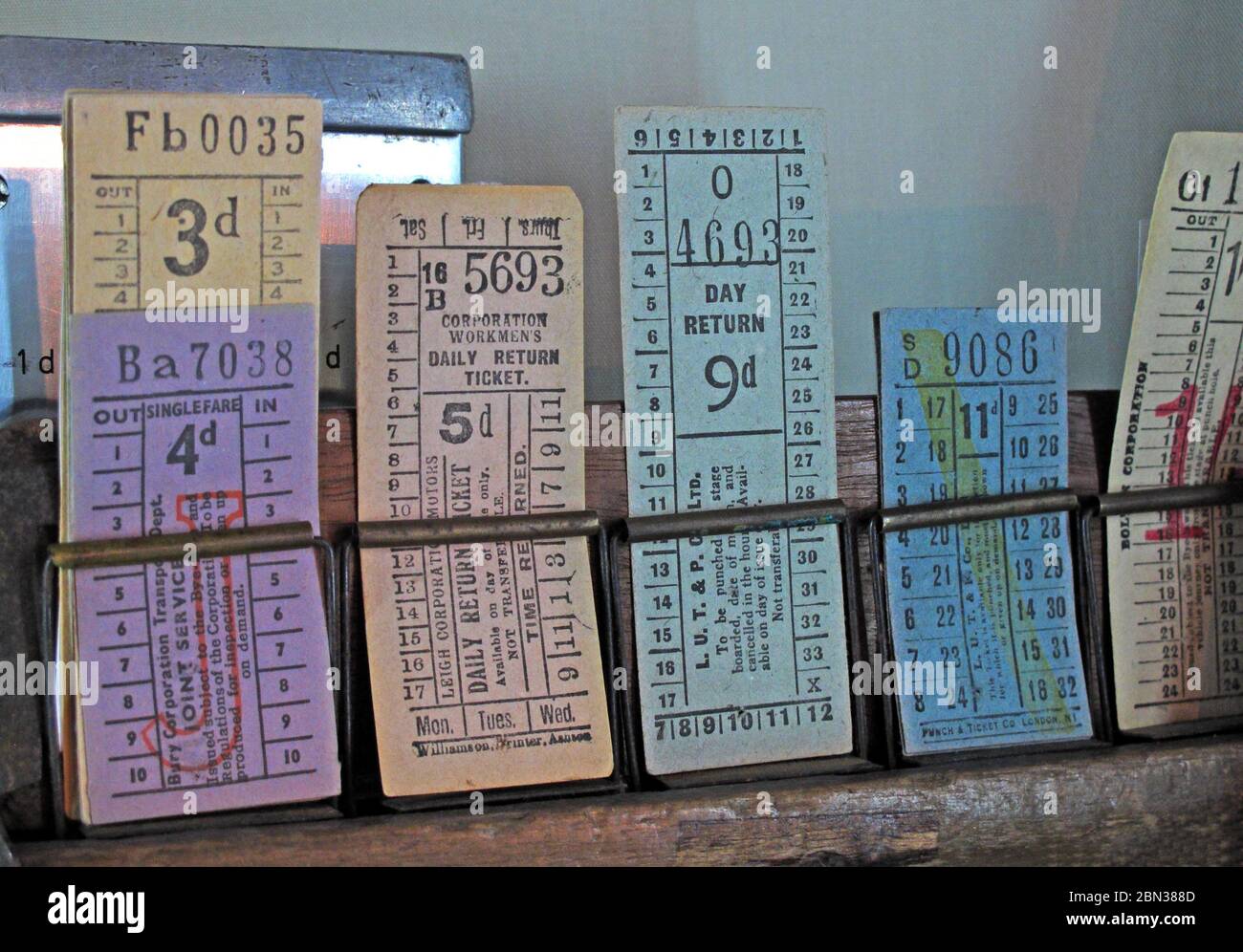
Image details
Contributor:
Tony SmithImage ID:
2BN388DFile size:
26.6 MB (1.4 MB Compressed download)Releases:
Model - no | Property - noDo I need a release?Dimensions:
3648 x 2544 px | 30.9 x 21.5 cm | 12.2 x 8.5 inches | 300dpiDate taken:
19 June 2011More information:
. An on-location editorial image made at the recorded location, showing a subject whose wider significance extends beyond the immediate scene. The defining feature is 3d, 9d, 5d, 11d, day return, single Bury Corporation bus tickets, from 1960's, Greater Manchester, Lancashire, England, UK - Preprinted bus Tickets. The scene can also be read in terms of built environment, railway branding, rail modernisation, rail corridor, passenger connectivity, local character, railway heritage, community identity, visual archive, rail mobility, before-and-after reference, commuter travel, trackside infrastructure, and rail transport. Today's wider story includes accessibility, reliability and the practical question of reducing congestion and car dependency. Future viewers can use this scene from the recorded location to compare equipment and working practice with whatever follows after changing public expectations. The photograph additionally reflects public realm, documentary photography, place identity, public transport network, contemporary history, historical comparison, social landscape, and passenger railway. Elements such as Greater, Corporation, Preprinted, Lancashire, and return add documentary specificity and may become useful when the scene is compared with later records. By fixing the subject within the recorded location, the image preserves more than the headline object or building: it records part of the locality's everyday history. The scene further reflects accessibility and preserving railway heritage while modernising the network when considered against later change at the recorded location. Its period value extends to accessibility and linking trains more effectively with buses and trams without losing the local specificity of the recorded location. The location additionally provides evidence for rail reform and linking trains more effectively with buses and trams in a form that can be compared with future views of the recorded location.

