
3d,9d,5d,11d,day return,single Bury Corporation bus tickets, from 1960's, Greater Manchester, Lancashire, England, UK - Preprinted bus Tickets
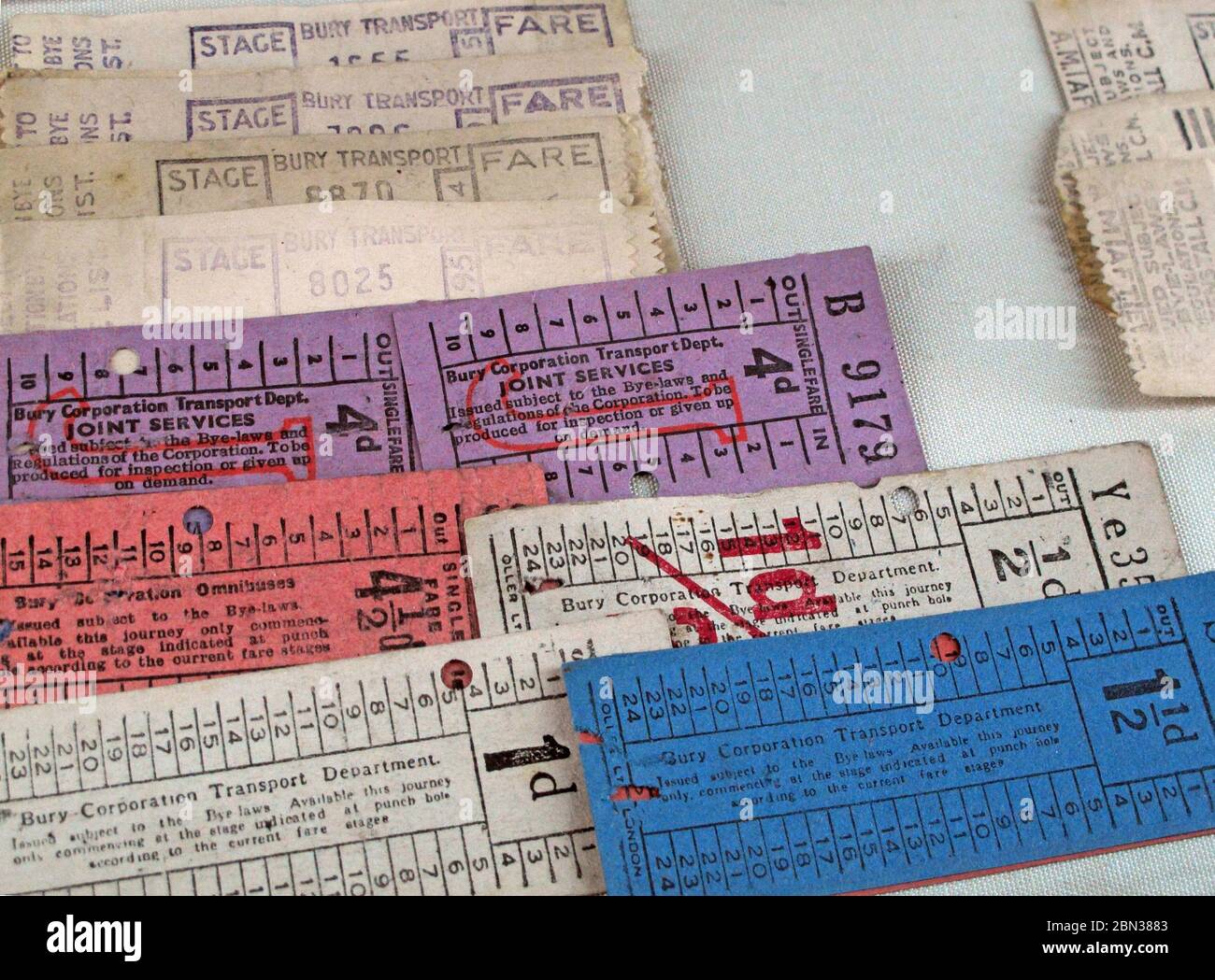
Image details
Contributor:
Tony SmithImage ID:
2BN3883File size:
25.4 MB (1.7 MB Compressed download)Releases:
Model - no | Property - noDo I need a release?Dimensions:
3466 x 2558 px | 29.3 x 21.7 cm | 11.6 x 8.5 inches | 300dpiDate taken:
19 June 2011More information:
. A detailed documentary view from the recorded location, preserving the appearance and character of the subject at a particular point in time. At the heart of the image is 3d, 9d, 5d, 11d, day return, single Bury Corporation bus tickets, from 1960's, Greater Manchester, Lancashire, England, UK - Preprinted bus Tickets. Its broader subject matter includes everyday Britain, railway branding, passenger railway, passenger connectivity, period detail, social history, railway heritage, local history, mass transit, changing streetscape, local character, place identity, historical comparison, and before-and-after reference. Today's wider story includes fares, integrated transport and the practical question of making passenger rail simpler and more dependable. Small period details of transport arrangements and public activity at the recorded location may become more significant with time, especially following closure or conversion. Further associations include contemporary history, urban change, built environment, visual archive, regional rail, rail corridor, public realm, and documentary photography. References to return, tickets, 1960's, Lancashire, and Greater give the picture a strong period identity and tie it closely to the named subject. By fixing the subject within the recorded location, the image preserves more than the headline object or building: it records part of the locality's everyday history. That also gives the frame relevance to fares and making passenger rail simpler and more dependable within the real-world context of the recorded location. Another useful connection is rail reform and reducing congestion and car dependency within the specific setting of the recorded location. The scene further reflects reliability and preserving railway heritage while modernising the network as part of the longer story of the recorded location. The frame therefore remains a dated reference for the recorded location and the changing story of the subject shown.

