
Wallace and Grommet Austin A35 blue van,HOP 2IT, at Pier Head waterfront,Royal Liver Building,Three Graces, Liverpool city centre, Merseyside
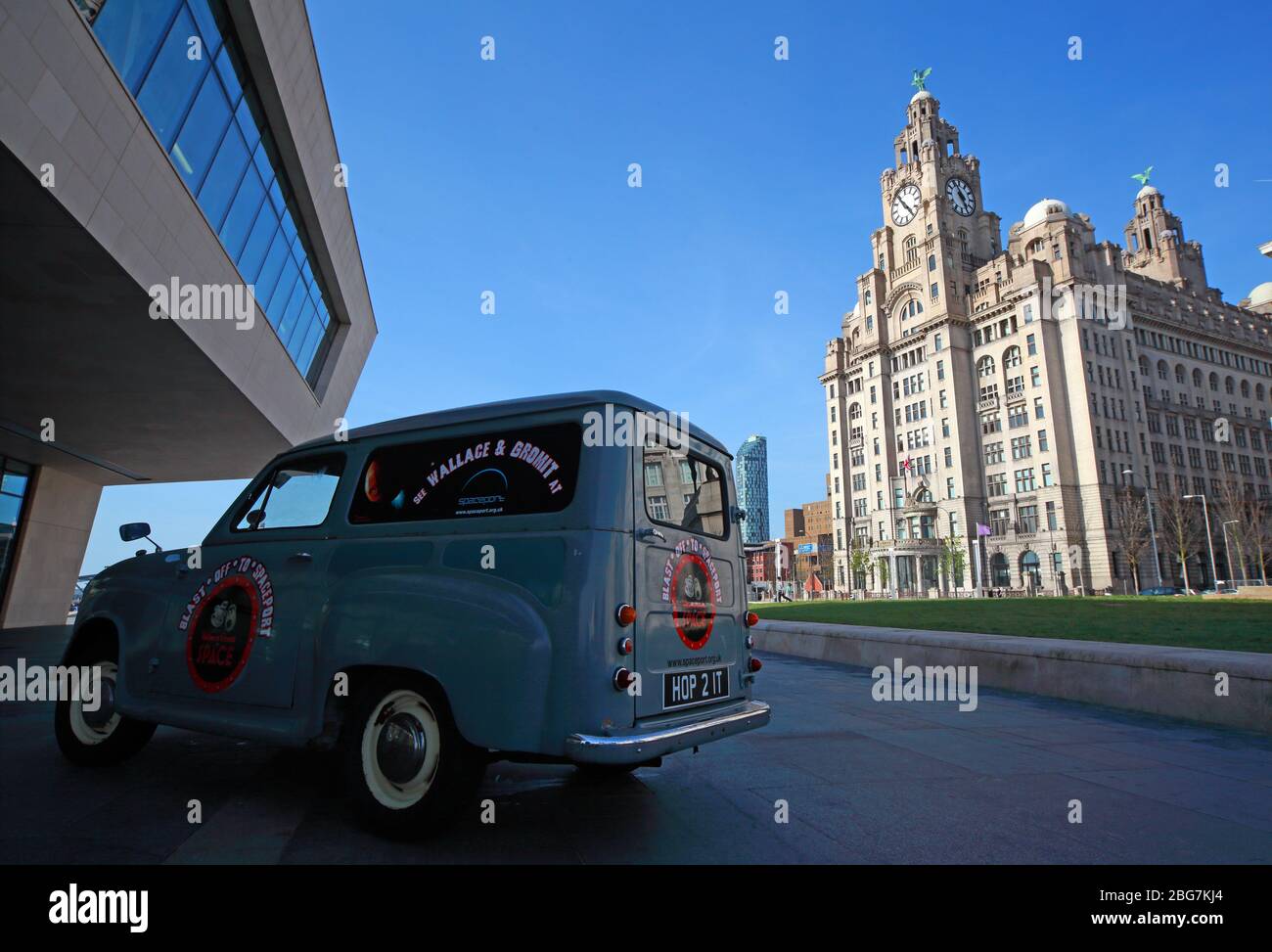
Image details
Contributor:
Tony SmithImage ID:
2BG7KJ4File size:
53.6 MB (1.3 MB Compressed download)Releases:
Model - no | Property - noDo I need a release?Dimensions:
5248 x 3568 px | 44.4 x 30.2 cm | 17.5 x 11.9 inches | 300dpiDate taken:
25 April 2011More information:
. Photographed at the recorded location, the scene provides a dated reference to the subject and the surrounding social, commercial or physical environment. The principal subject is Wallace and Grommet Austin A35 blue van, HOP 2IT, at Pier Head waterfront, Royal Liver Building, Three Graces, Liverpool city centre, Merseyside. Its broader subject matter includes traditional masonry, period building, heritage asset, architectural contrast, conservation architecture, architectural character, documentary photography, local history, archival record, visual archive, changing streetscape, regional identity, built heritage, and historic streetscape. For contemporary context, historic townscape and adaptive reuse are closely related themes, especially where the issue becomes the contrast between historic fabric and modern development. As a dated visual record of the recorded location, the frame retains landscape and surrounding development, making it useful if closure or conversion subsequently changes the scene. The photograph additionally reflects before-and-after reference, local character, built environment, historical comparison, public realm, contemporary history, social landscape, and place identity. The recorded references to Wallace, Grommet, centre, Austin, and Royal preserve clues that can help identify how the subject was presented or used at the time. For the recorded location, the photograph contributes to a cumulative visual history in which small changes in use, signs, access and appearance can be traced over time. The scene retains a connection with historic townscape and the contrast between historic fabric and modern development within the specific setting of the recorded location. That also gives the frame relevance to heritage conservation and using existing buildings rather than demolishing them as part of the longer story of the recorded location. The image adds a further period reference to the visual history of the recorded location.

