
Italian stamp, poste Italia used and franked stamp, Roma, 1976 R.Di.Giuseppe Inc, 150lire, 150L,V.Carpaccio, 1455-1526 Carpaccio
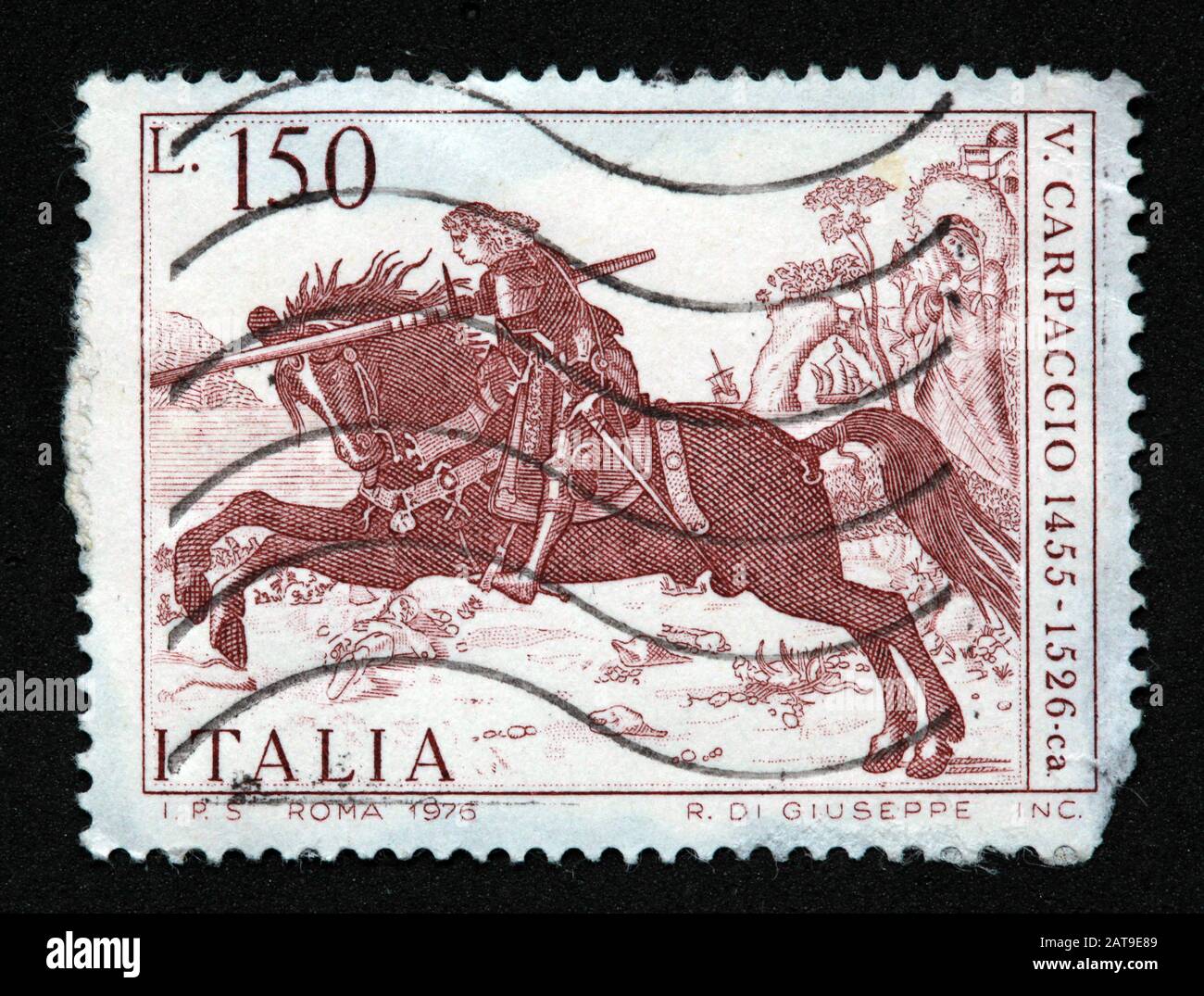
Image details
Contributor:
Tony SmithImage ID:
2AT9E89File size:
40.2 MB (2 MB Compressed download)Releases:
Model - no | Property - noDo I need a release?Dimensions:
4304 x 3264 px | 36.4 x 27.6 cm | 14.3 x 10.9 inches | 300dpiDate taken:
26 July 2015Location:
ItalyMore information:
. Recorded at Italy in 2015, the image fixes a particular place, use and appearance for later comparison as buildings, businesses, signs and public activity change. At the centre of the frame is Italian stamp, poste Italia used and franked stamp, Roma, 1976 R.Di.Giuseppe Inc, 150lire, 150L, V.Carpaccio, 1455-1526 Carpaccio. The scene additionally carries associations with period streetscape, architectural detailing, regional identity, historic townscape, community identity, visual archive, period detail, conservation interest, heritage asset, before-and-after reference, local history, documentary photography, archival record, and historic commercial architecture. In the mid-2020s, historic townscape and heritage conservation keep the subject current, particularly through reusing existing buildings rather than demolishing them. Looking back from the mid-2020s, the photograph anchors the combination of built form, activity and local identity within the setting of Italy. The subject sits alongside architectural character, changing streetscape, local character, period building, contemporary social history, public realm, changing land use, and cityscape history. References to Italia, Italian, poste, Carpaccio, and Giuseppe help fix the photograph to its own subject and period rather than reducing it to a generic view. For Italy, the photograph contributes to a cumulative visual history in which changes in use, signs, access and appearance can be traced over time. The image also provides a reference for historic townscape and keeping older buildings useful without erasing their character when considered against later change at Italy. Another useful connection is embodied carbon and keeping older buildings useful without erasing their character without losing the local specificity of Italy. The scene further reflects planning control and keeping older buildings useful without erasing their character in a form that can be compared with future views of Italy.

