
Manchester Love Locks,Oxford Road,bridge over canal,Manchester city centre, North West,England, UK
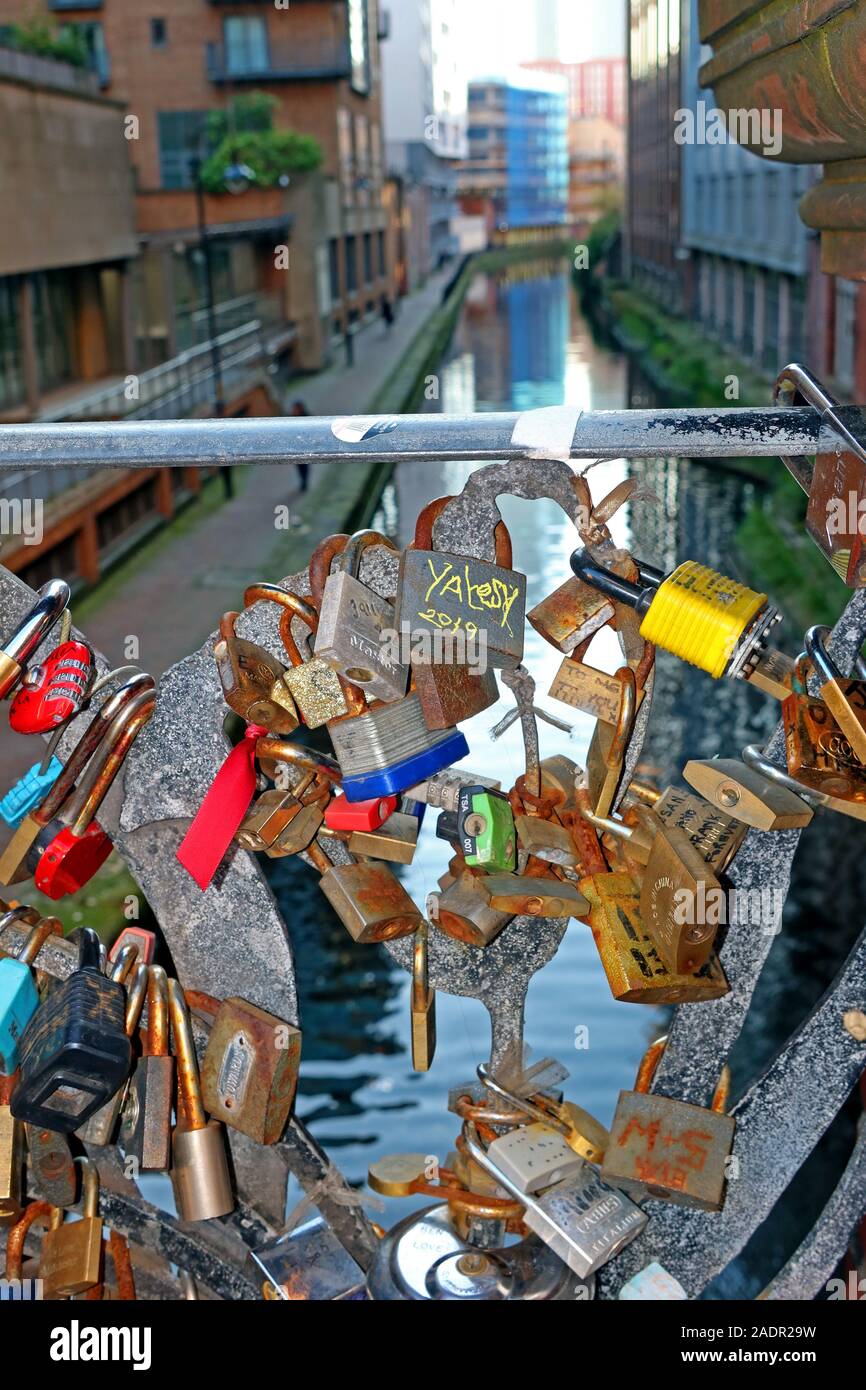
Image details
Contributor:
Tony SmithImage ID:
2ADR29WFile size:
57.1 MB (2.4 MB Compressed download)Releases:
Model - no | Property - noDo I need a release?Dimensions:
3648 x 5472 px | 30.9 x 46.3 cm | 12.2 x 18.2 inches | 300dpiDate taken:
3 December 2019Location:
60 Oxford St, Manchester,England,UK, M1 5EEMore information:
. Manchester Love Locks, Oxford Road, bridge over canal, Manchester city centre, North West, England, UK. Photographed on 3 December 2019. The recorded location is 60 Oxford St, Manchester, England, UK, M1 5EE. Love locks in Manchester to get a special city centre location. Would you leave a love lock in Manchester? Plenty of people would apparently and council wants to make it a 'thing' for tourists to do when they visit. Historically, working locks, bridges and canal-side buildings reveal the engineering system that underpinned industrial Britain; Many former commercial waterways have been restored for recreation and heritage use, creating a distinctive mixture of historic infrastructure, modern development and linear green space. In historical terms, urban street scenes capture the cumulative effect of planning, architecture, transport, retail and public space; Shopfronts, signs, street furniture and pedestrians can date an image precisely and show how a district changes between periods of investment, decline and regeneration. In 2026, today the canal network is valued as much for heritage, leisure, walking routes and wildlife as for navigation. the condition and funding of ageing waterway infrastructure remain recurring issues, adding contemporary relevance to images of locks, towpaths and historic canal engineering. During 2026, urban regeneration in England continues to focus on town-centre renewal, housing, public realm and reuse of vacant commercial property; Earlier street scenes provide valuable before-and-after evidence of these changes and of the businesses or structures lost along the way. In the longer view, canal infrastructure is a legacy of the Industrial Revolution, when navigable waterways linked mines, mills, factories and ports; The same lock chambers, bridges and towpaths now support leisure cruising, cycling, walking, wildlife corridors and redevelopment, while retaining evidence of their freight-carrying past.

