
. Bulletin - United States National Museum. Science. Sometimes pottery was worked as stone. This piece (fig. 47) is remarkable for the amount of labor which has been expended in drill- ing, grinding, and finishing a fragment of pottery to produce a result requiring some ingenuity to interpret. It is a good example, however, of the working of pottery in the manner of stone, examples of which, usually quite simple, are observed in the spindle whorls, scrapers, and disks found with com- parative frequency in the ruins in the Pueblo region. The carving appears to represent an animal or perhaps two
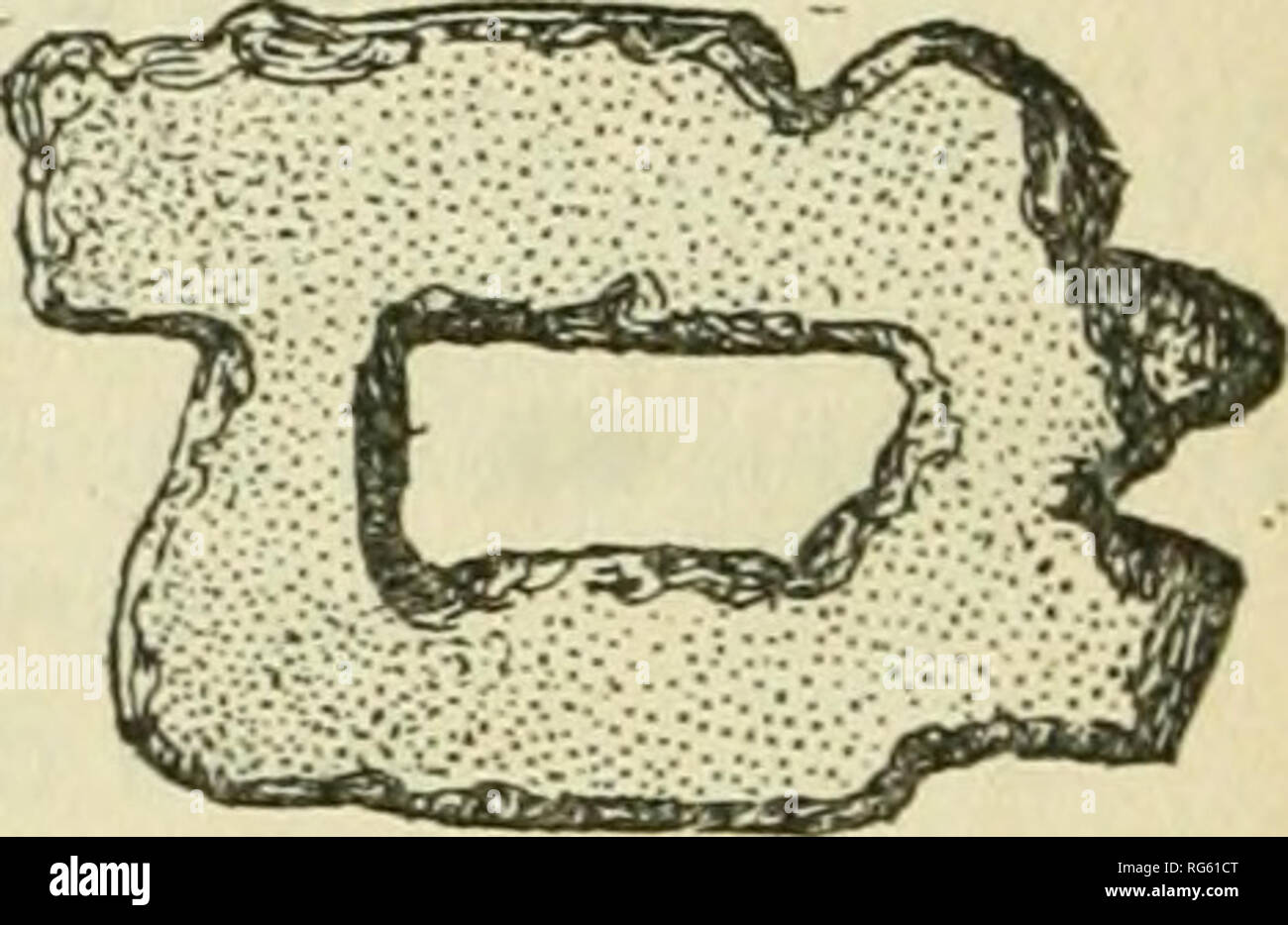
Image details
Contributor:
Book WormImage ID:
RG61CTFile size:
7.1 MB (248.4 KB Compressed download)Releases:
Model - no | Property - noDo I need a release?Dimensions:
1961 x 1274 px | 33.2 x 21.6 cm | 13.1 x 8.5 inches | 150dpiMore information:
Access rights only. This is a handout or public domain image supplied by a third party. Alamy grants access to the digital file but provides no warranties regarding copyright or moral rights. Alteration, modification, or cropping is prohibited without prior approval. All commercial uses require advance authorization from the content provider.
This image could have imperfections as it’s either historical or reportage.
. Bulletin - United States National Museum. Science. Sometimes pottery was worked as stone. This piece (fig. 47) is remarkable for the amount of labor which has been expended in drill- ing, grinding, and finishing a fragment of pottery to produce a result requiring some ingenuity to interpret. It is a good example, however, of the working of pottery in the manner of stone, examples of which, usually quite simple, are observed in the spindle whorls, scrapers, and disks found with com- parative frequency in the ruins in the Pueblo region. The carving appears to represent an animal or perhaps two and mny be a puzzle figure. (Cat. No. 231814, U.S.N.M.; length, 1^ inches; width, 1 inch; Spur Ranch, Luna, New Mexico.) Fig. 46.—Lava block with scorings from blue. CRYSTALS AND BEFLECTOBS.. Quartz crystals are found among the house plans in every ruin, though the specimens are fig. 47.—carved pottery not plentiful. Occasionally they are found in ornament from spur T • 1111 Ranch. graves. It is probable that quartz crystals were here used as among the Hopi fraternities for reflecting the sun's rays into the charm liquid employed in certain ceremonies. An interesting specimen is a piece of trans- lucent milky chalcedony worked into circular shape by pecking and chipping, ground down and polished on one surface which reflects with reasonable accuracy. (Fig. 48.) This was prob- ably not a mirror for personal use, but was no doubt employed in ceremonies for throwing sun- light into the charmed medicine liquid, an office for which the facets of crystals are often found useful. The specimen was found in a large cere- monial chamber. (Cat. No. 231869, U.S.N.M.; diameter, 2^ inches; thickness, IJ inches; Spur Eanch, Luna, New Mexico.). Please note that these images are extracted from scanned page images that may have been digitally enhanced for readability - coloration and appearance of these illustrations may not perfectly resemble the original work.. United States National Mu

